



seatbelt furniture
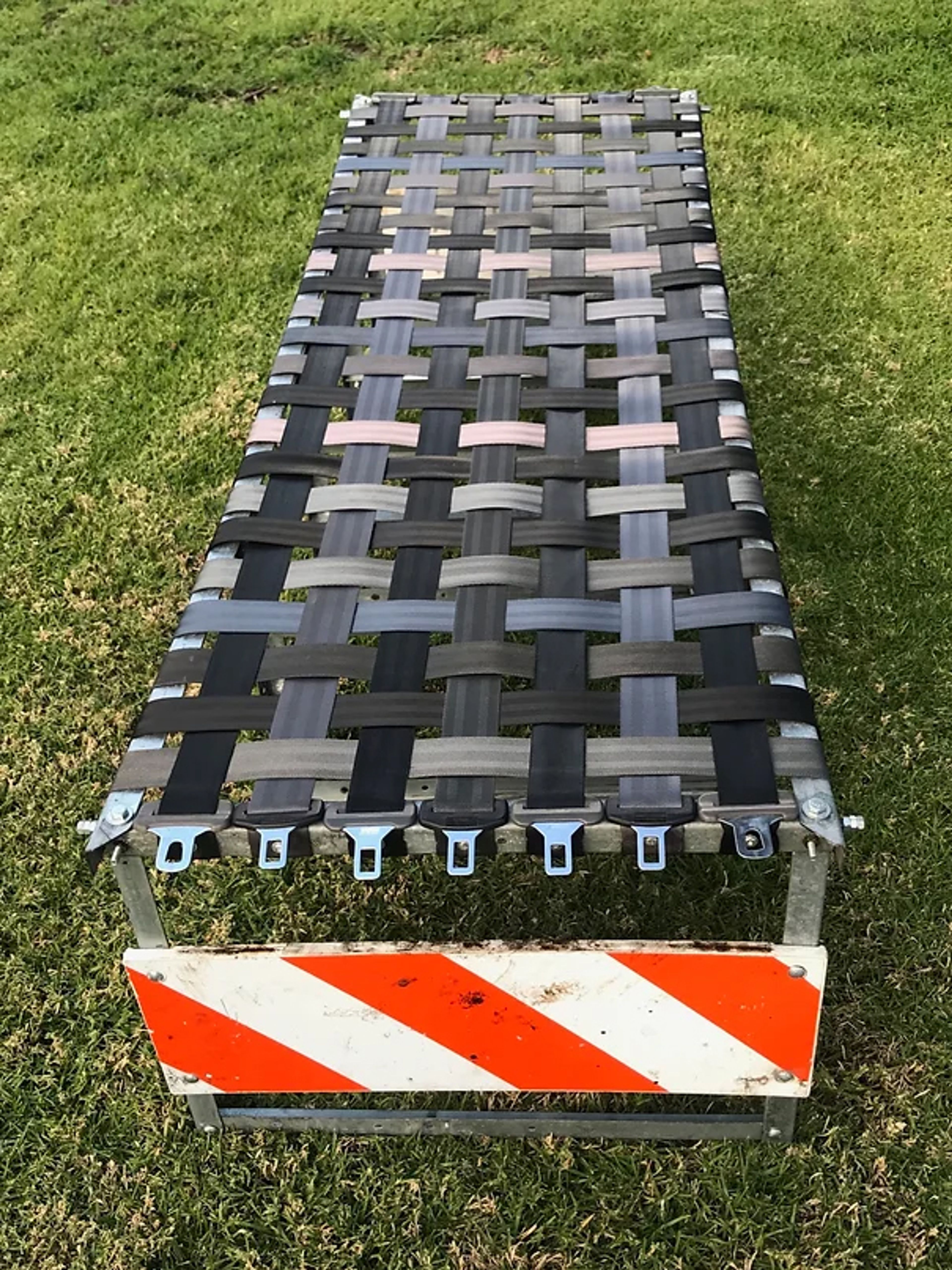
A series of benches made from discarded seatbelts and street signs, sourced from junkyards in Tijuana. Commissioned for residential and commercial interiors.
Each bench is woven from seatbelts pulled from cars at the end of their life, stretched and interlaced across a frame welded from discarded street signs. Two waste streams that share the same condition: high-grade materials, engineered for safety and visibility, discarded the moment the object they belonged to was no longer useful.
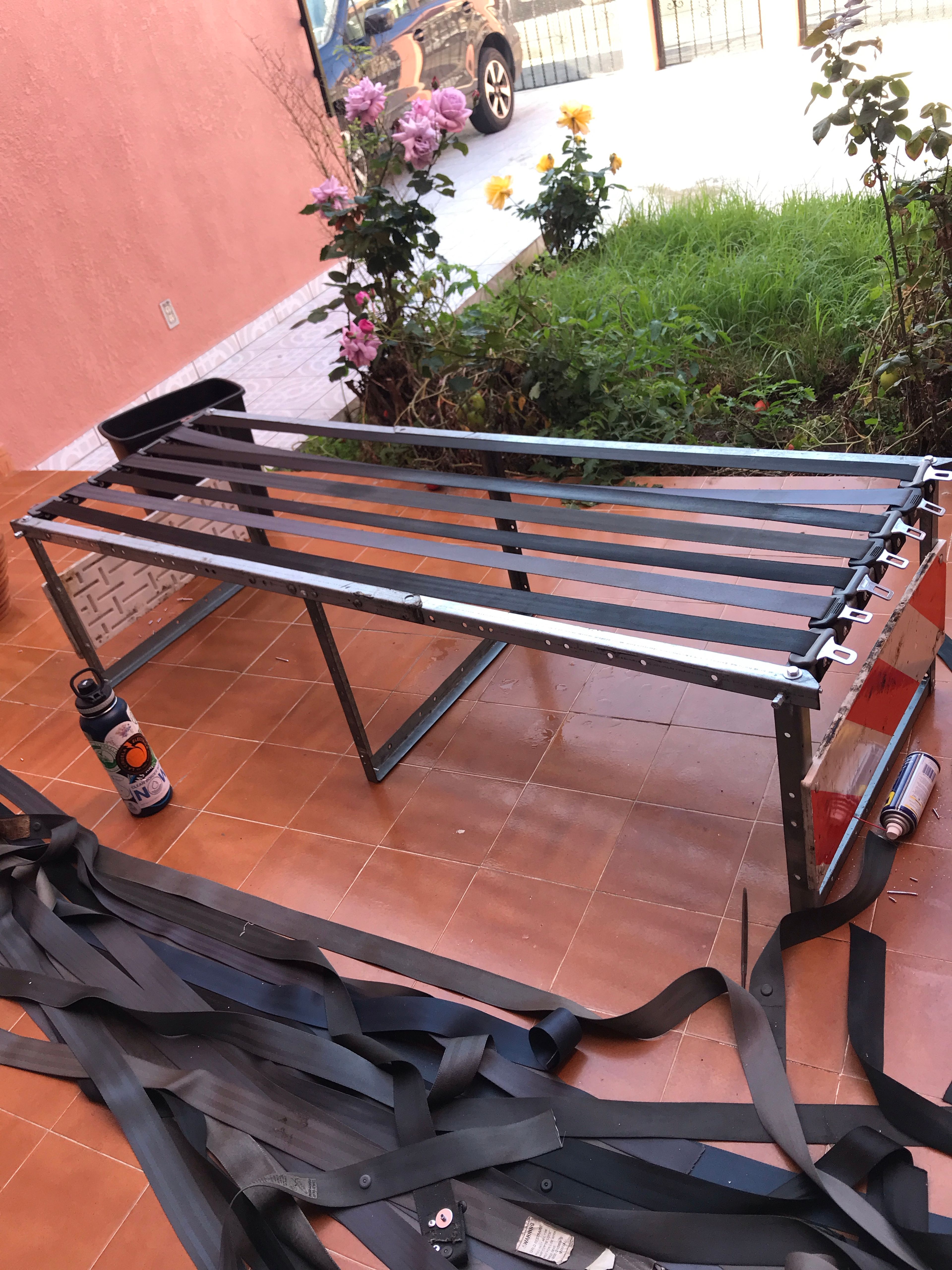
The seatbelts hold the body. They're already built for it — designed to take load, resist abrasion, and outlast the cars they came in. Woven across the seat and backrest, they perform the same job, just at rest instead of in motion. The colors are whatever the cars gave up: black, charcoal, occasional tan or red. The frames are cut and bent from street signs, their original surfaces — reflective coatings, paint, lettering fragments — left visible.
The benches are made to commission. Each one varies depending on what's in the junkyard that week. No two are identical, and the variation is part of the work.
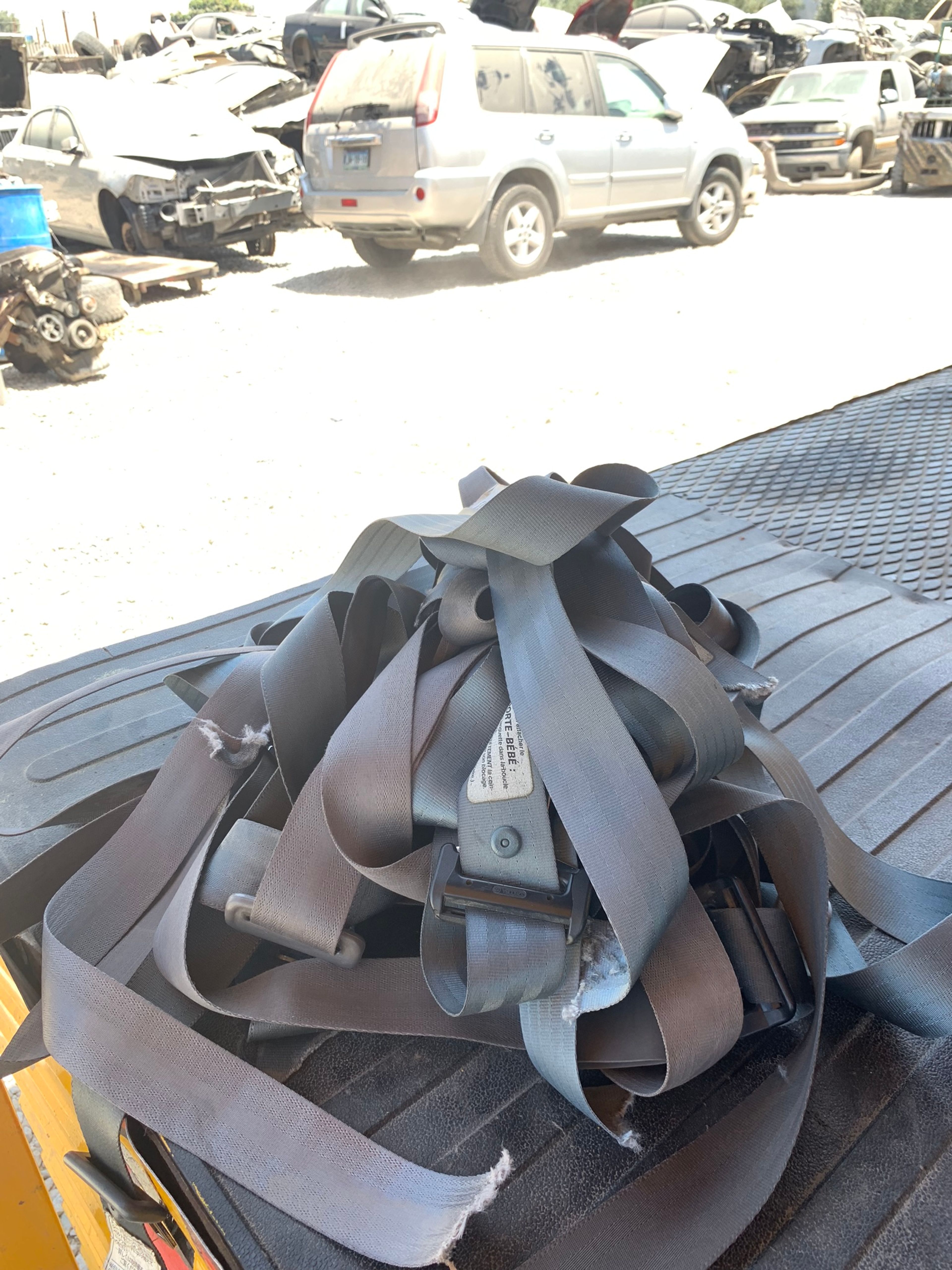
vernacular from the salvage yard
Tijuana has a deep informal economy built on what crosses the border and ends up junked here. Cars, signs, appliances, plastic, everything. The benches treat that economy as a material library — not a problem to clean up, but a supply chain already in place. The work it takes to assemble them is the same work that's already happening on the ground in Tijuana, formalized into furniture.