



raveena aurora — stage design
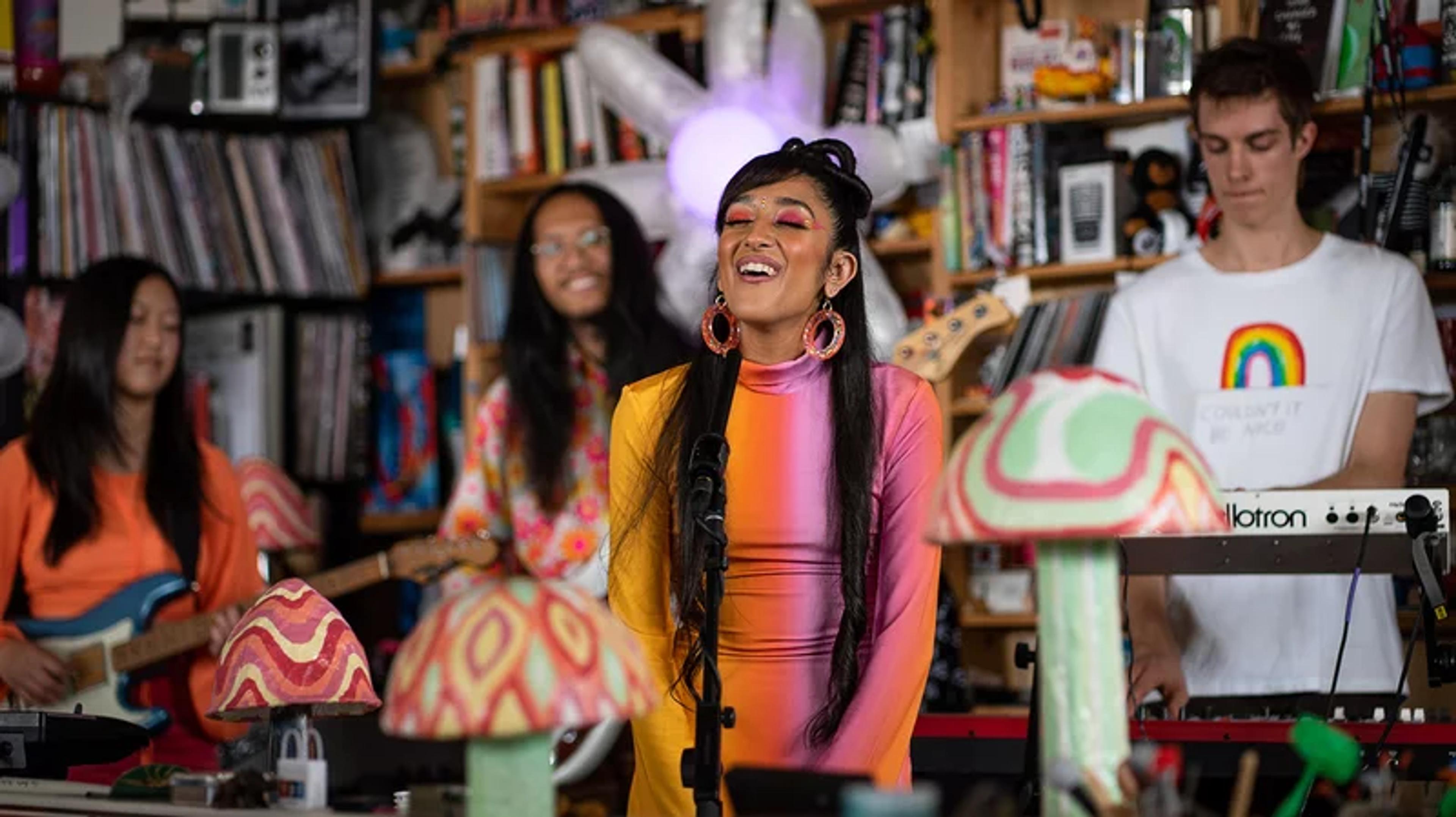
A two-year collaboration with the singer Raveena Aurora — stage design and props made from recycled materials, developed with local artisans in Tijuana. 2018–2020.
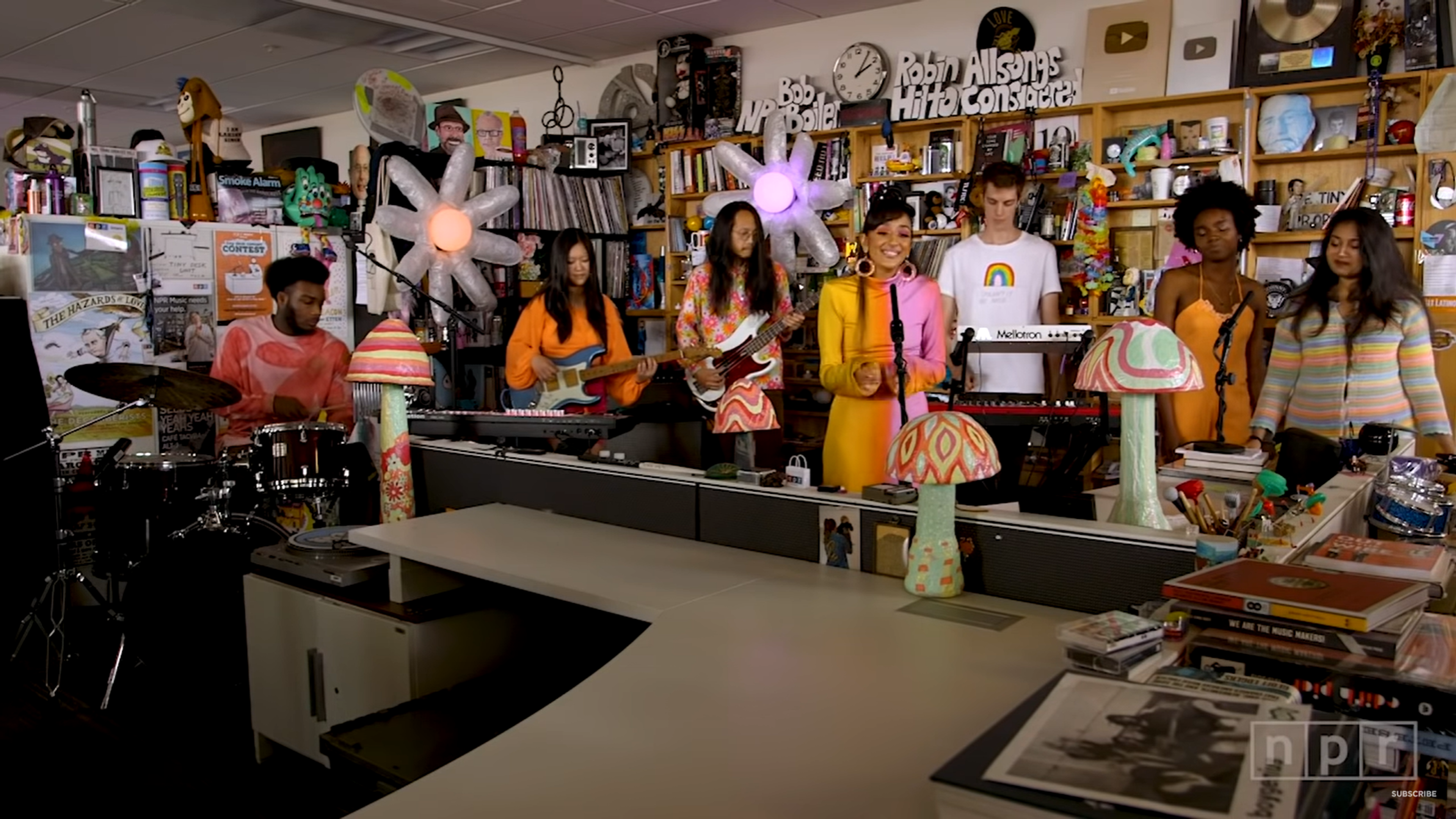
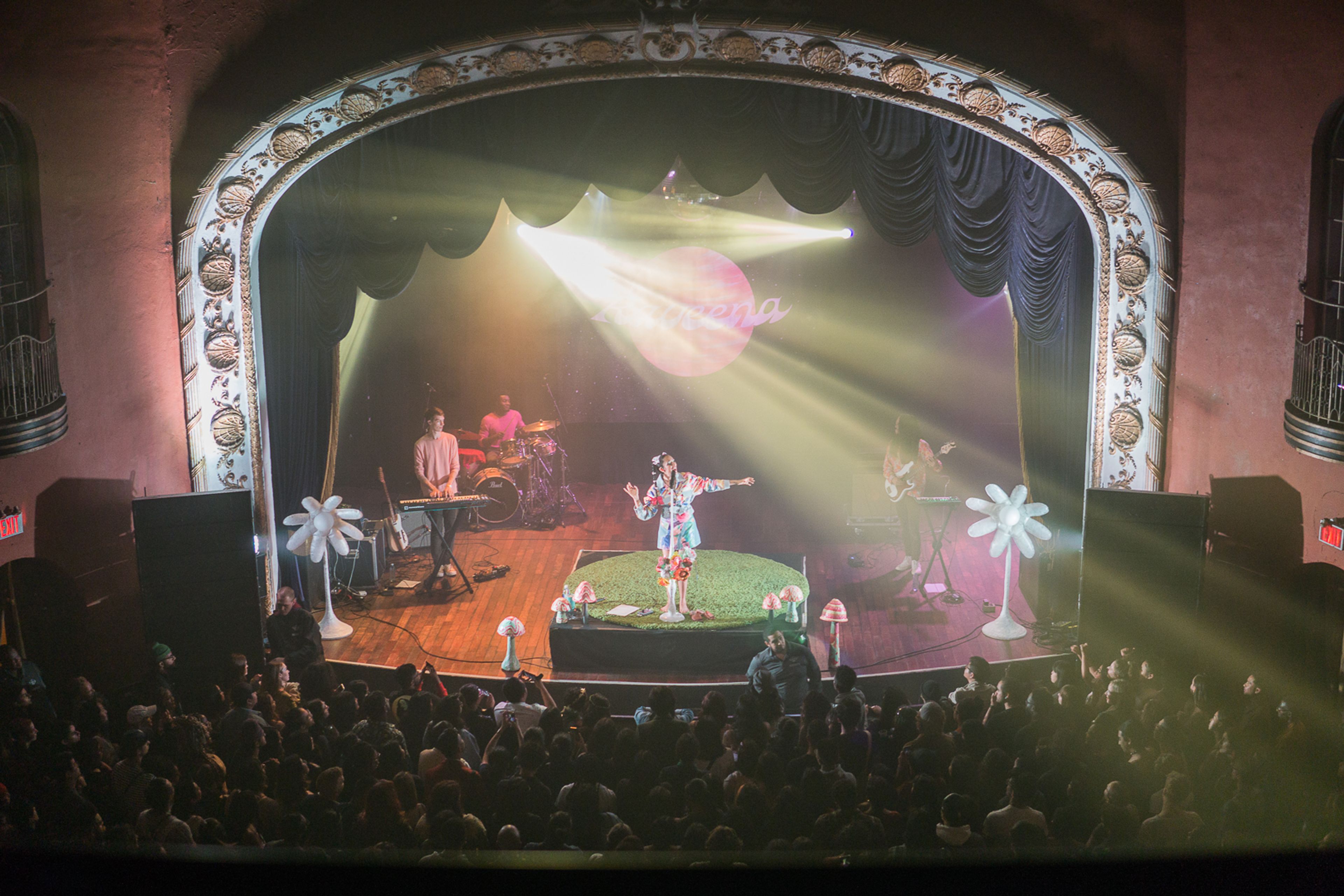
The collaboration began in 2018 with a set of recycled-plastic flowers, made in Tijuana from waste collected across the city. The flowers — alongside homemade mushrooms — became part of Raveena's NPR Tiny Desk performance in October 2019, arranged across the desk and the office around it. They traveled with the show after, appearing on her international tour.
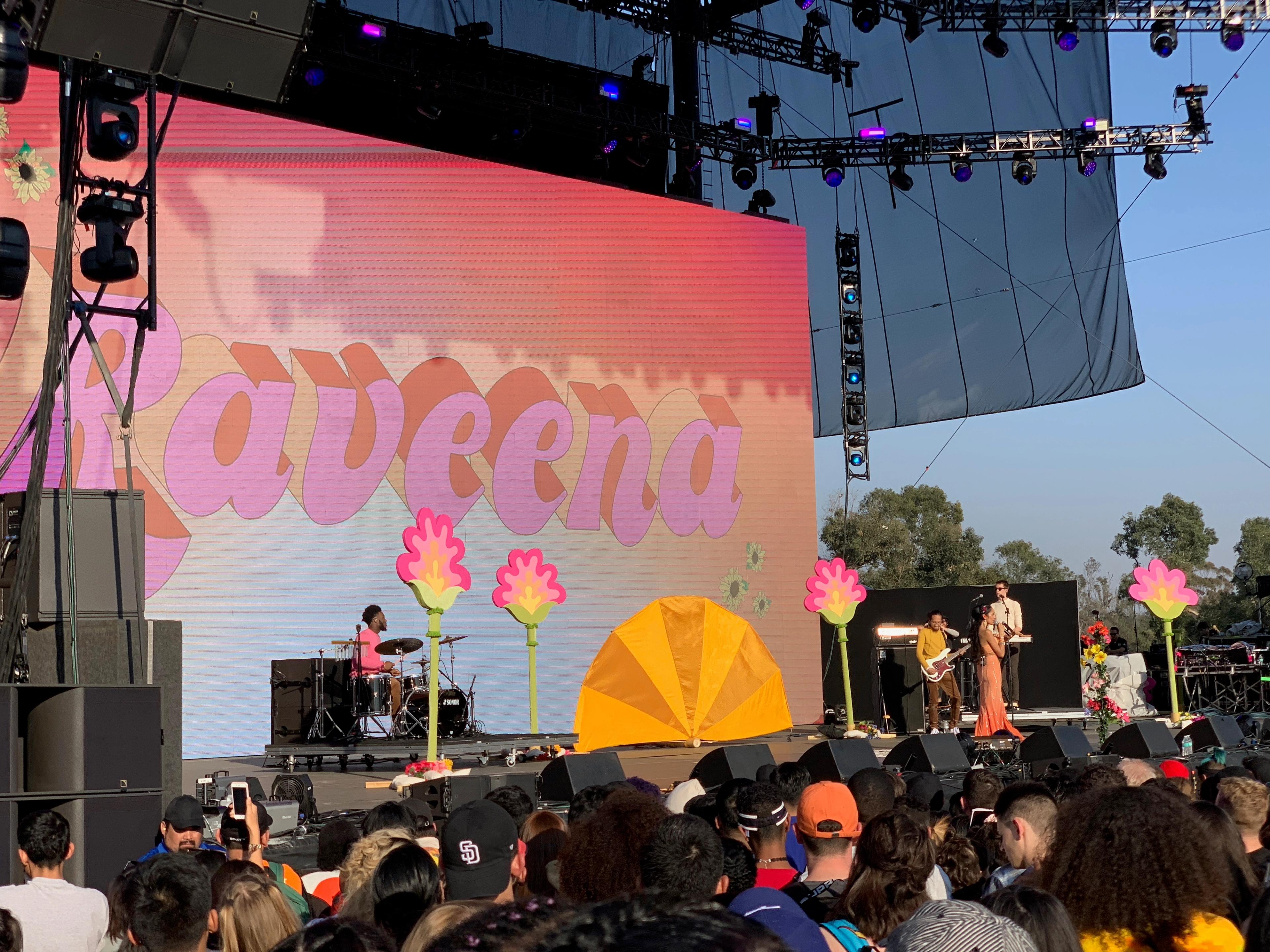
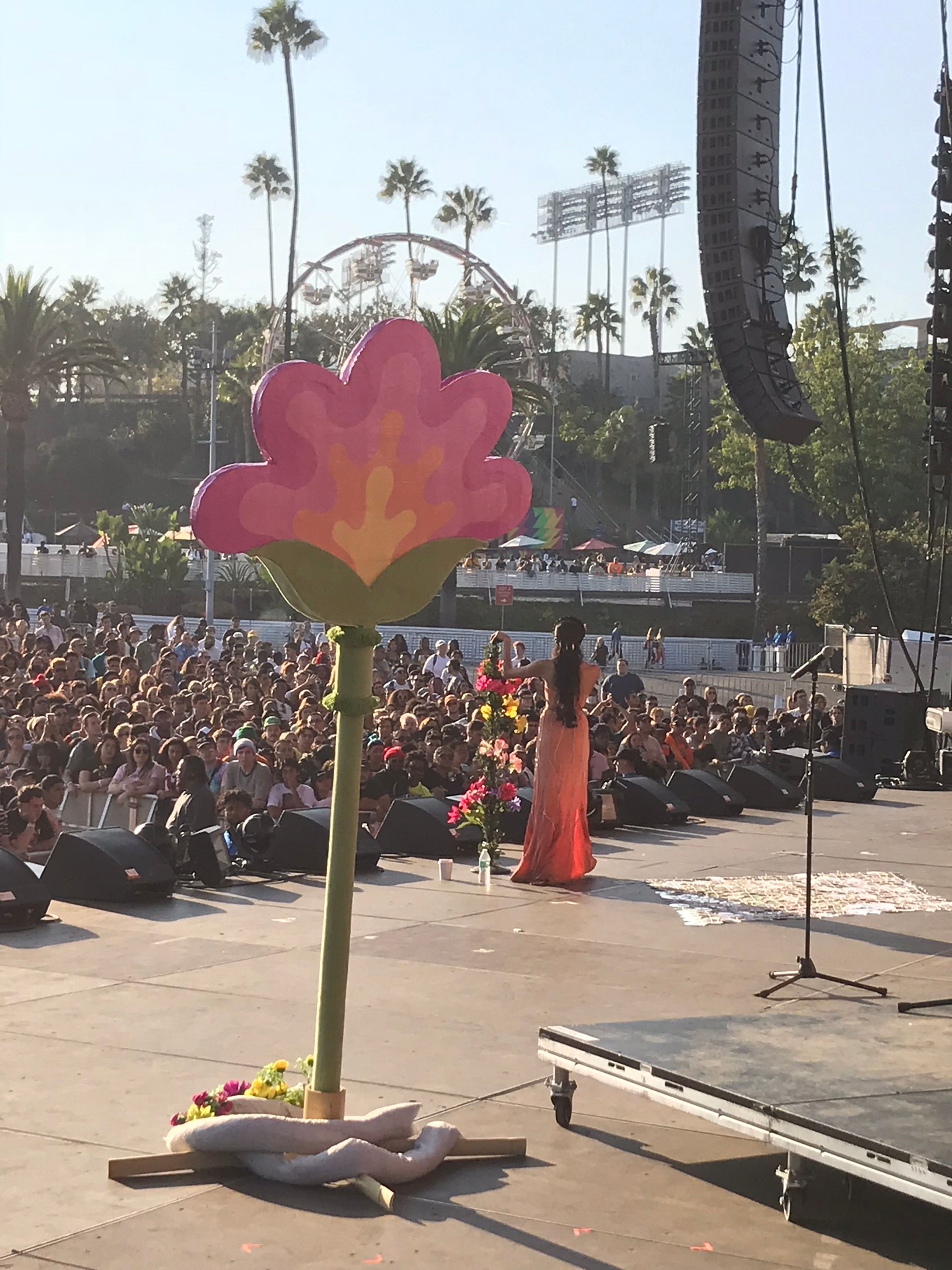
Each flower is made by hand. Plastic bags, packaging waste, and bottle scraps are fused, cut, and shaped by artisans in Tijuana — working out of the same waste streams that feed the studio's other plastic projects. Color and form come from whatever the city throws away that week. No two flowers are identical, and the variation is part of why they read as flowers and not as props.
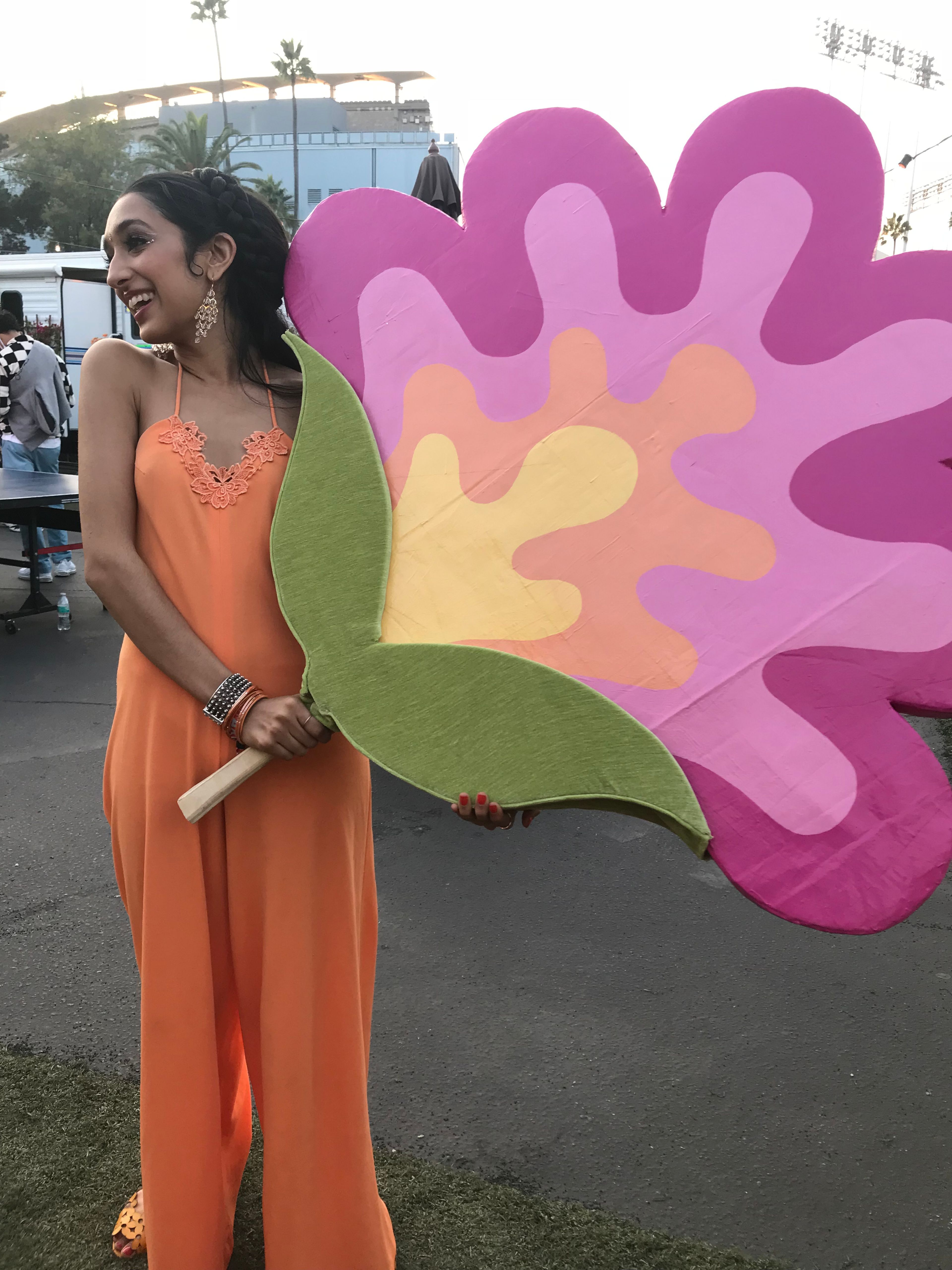
Over the two years of collaboration, the work extended to other live shows, including stage design for Raveena's set at Camp Flog Gnaw in Los Angeles — different materials, different scale, but built from the same logic of working with what's already in circulation rather than ordering fresh material for a one-night use.
music as a site for material work
Stages are usually treated as backdrops — dressed, lit, then struck. The collaboration with Raveena works the opposite way: the materials carry the meaning the music is already making. Her songs are about safety, community, growing out of trauma. Flowers made by hand from discarded plastic, in a border city, sit comfortably inside that argument. The set is not decoration. It's part of the work.