


ombra rodant
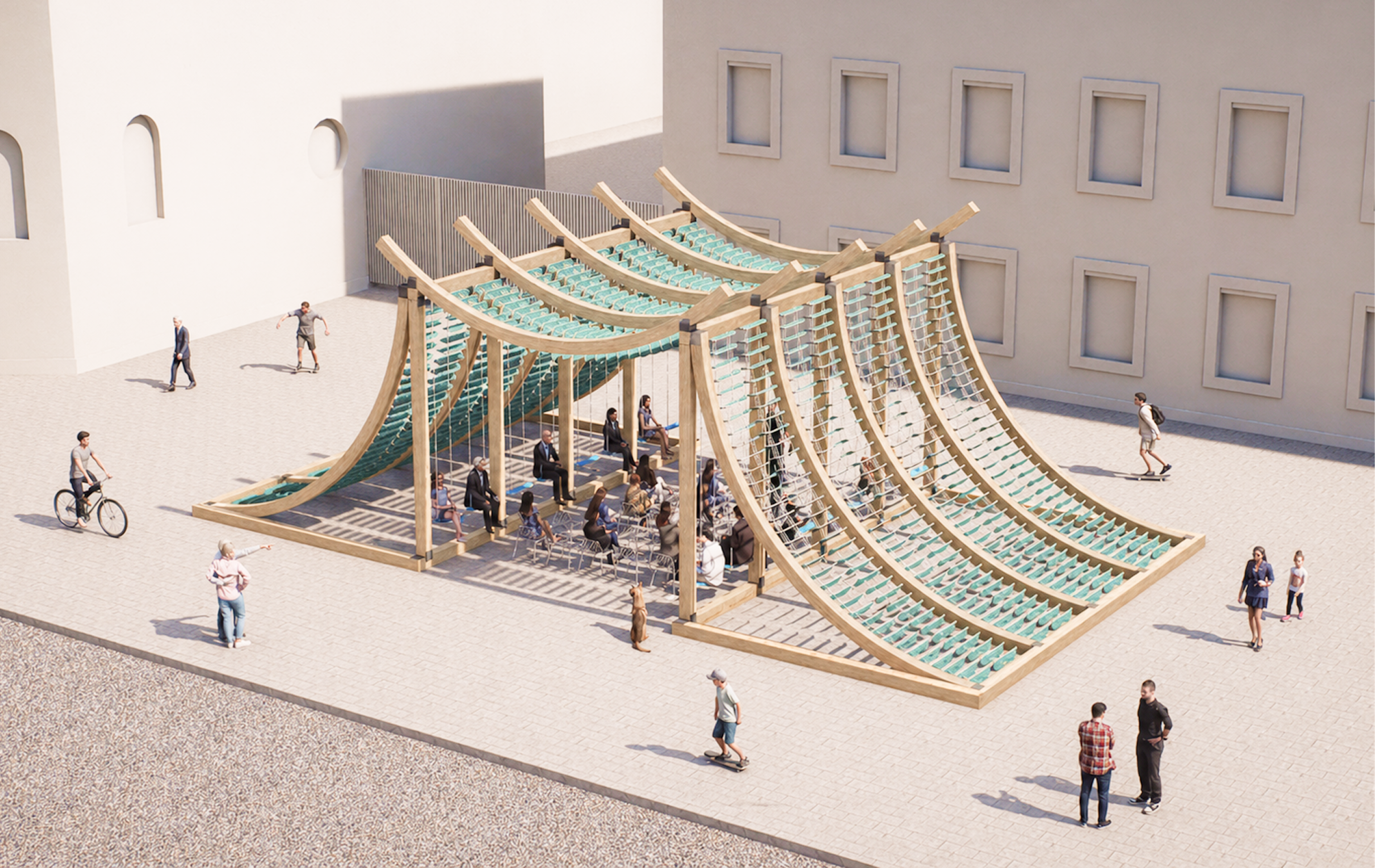
A pavilion for a Barcelona plaza, built from fifteen curved glulam porticoes and 800 recycled skate decks strung on recycled nylon cable and separated by Catalan cork. The roof is a habitable lattice that filters light and moves with the wind.
Barcelona taught the world to slide. Its surfaces, edges, and plazas wrote a vocabulary no architect drew: a contemporary vernacular born from use, from the everyday energy of the body moving across the city. Ombra Rodant is a homage to that urban skate culture, and to its capacity to appropriate public space. The city gave skateboarding its form. This pavilion returns the gesture.
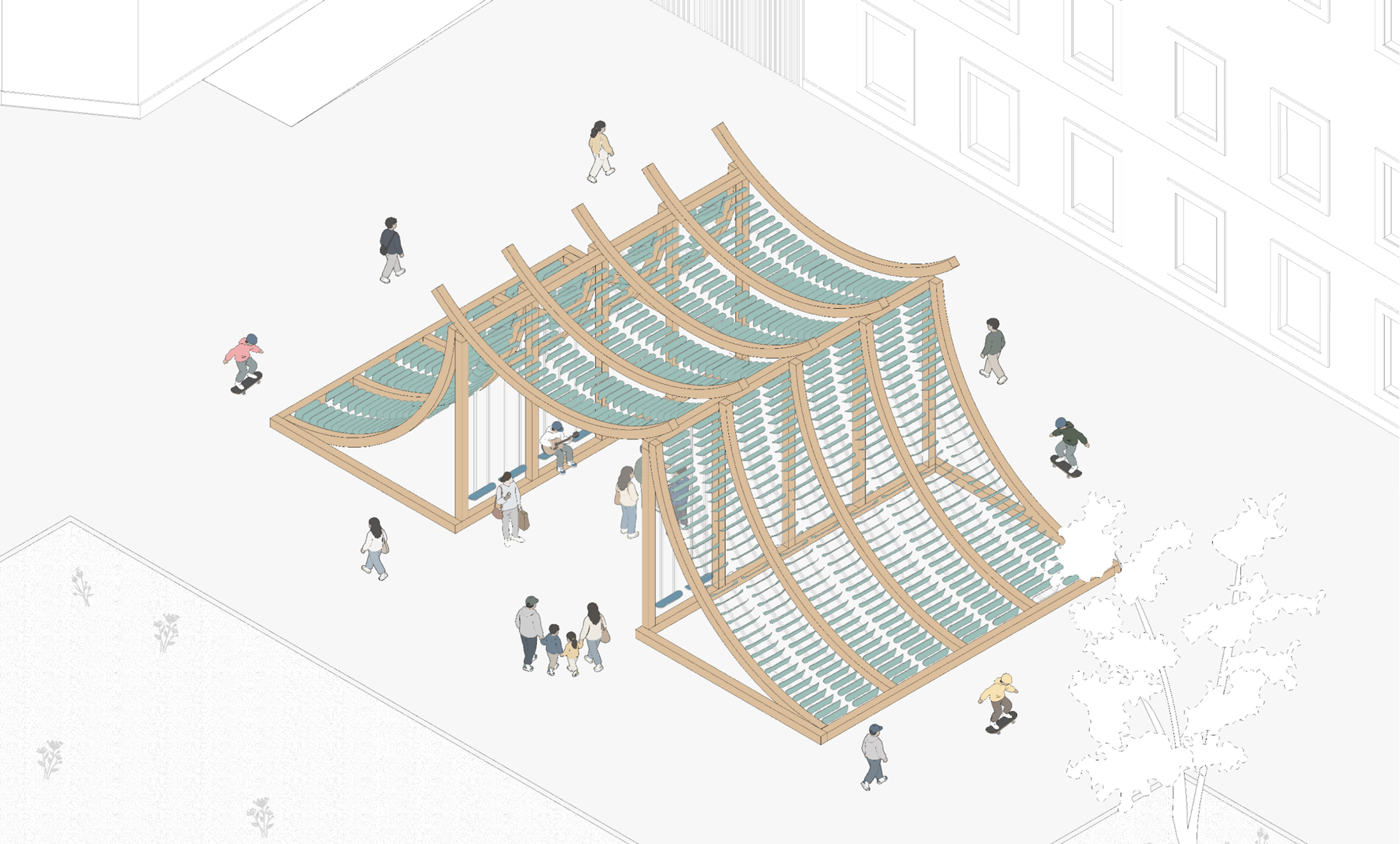
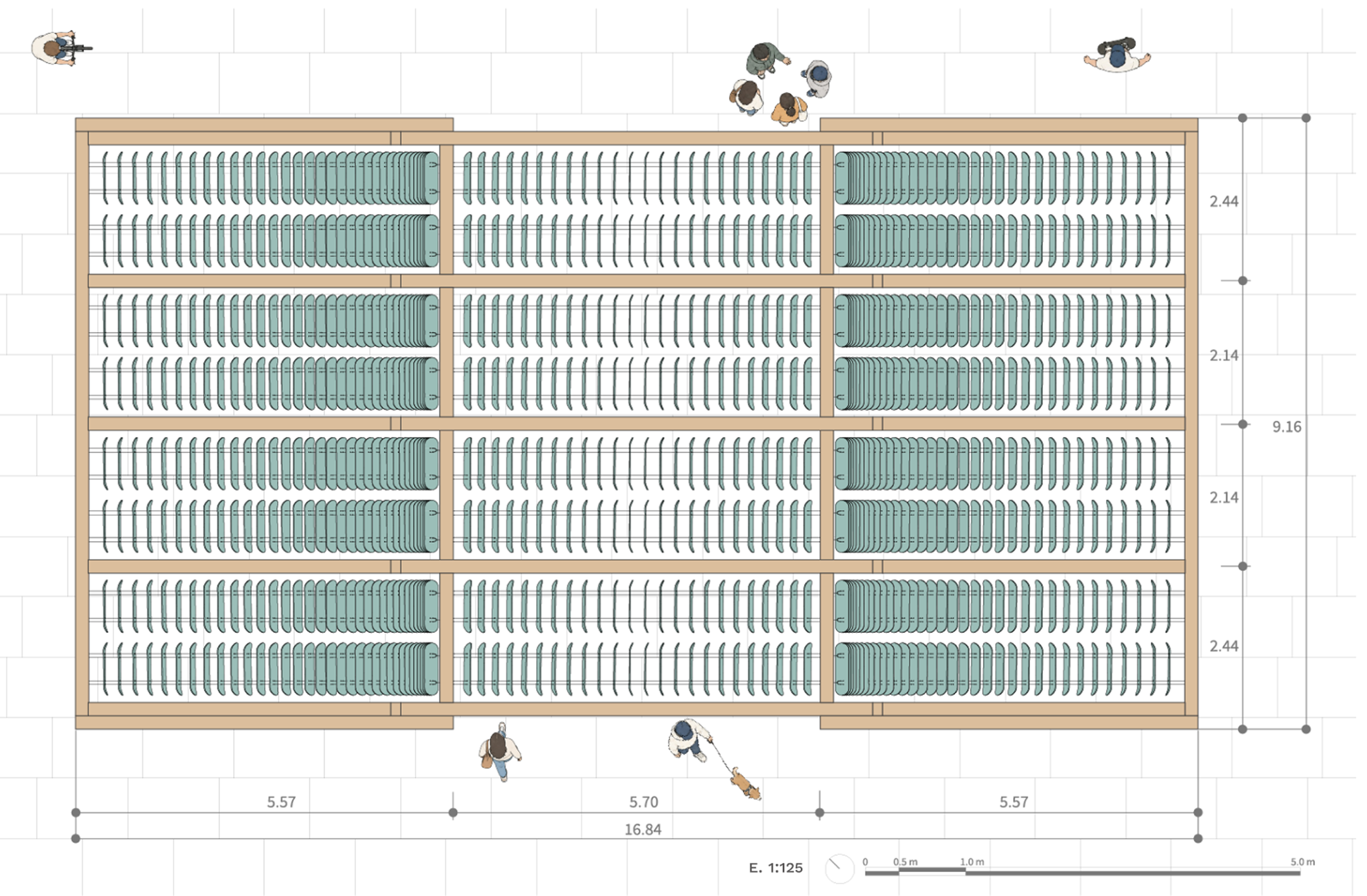
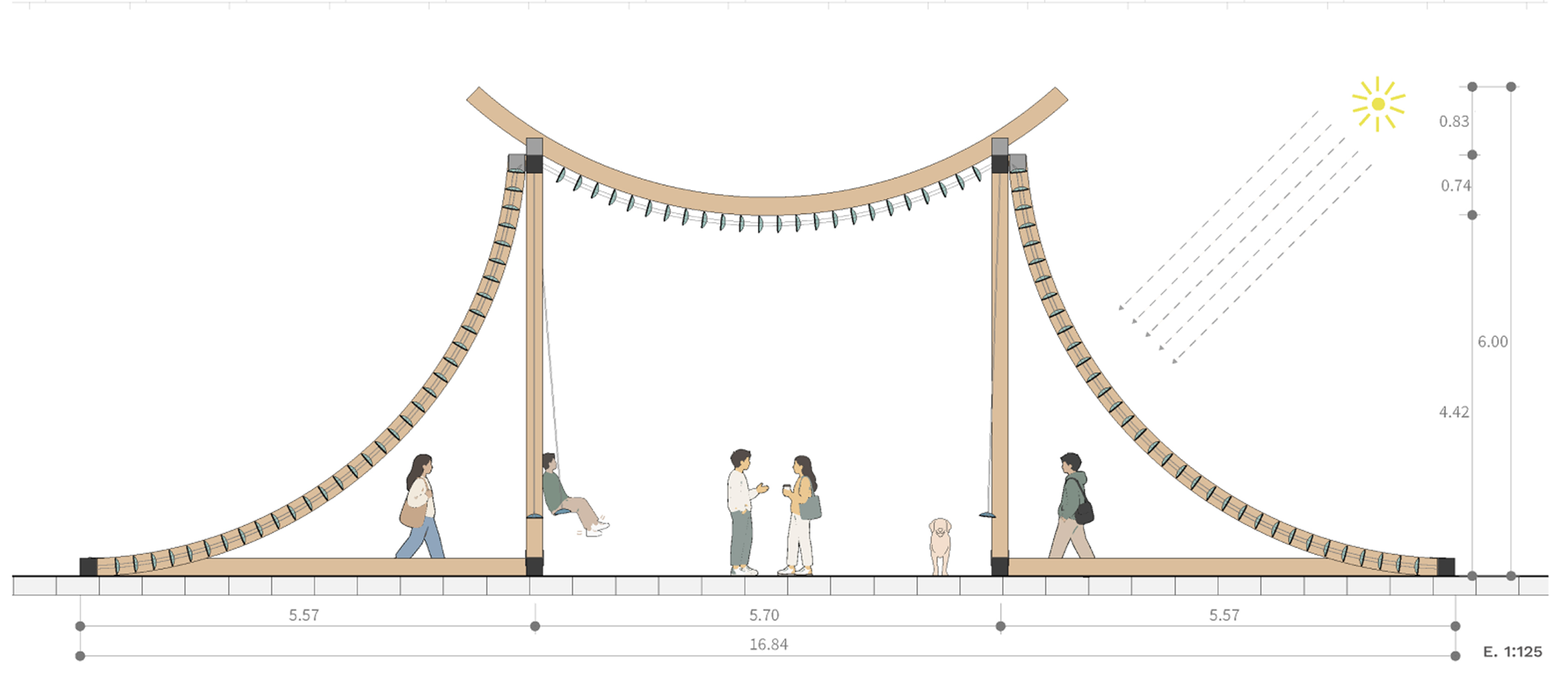
The skateboard — a tool for traversing, reading, and appropriating Barcelona — becomes architecture here: capable of building space, filtering light, and registering the memory of use. GL24h glulam porticoes descend in continuous curves to a permeable perimeter plinth that defines the space without closing it. The project translates movement into matter, and energy into form.
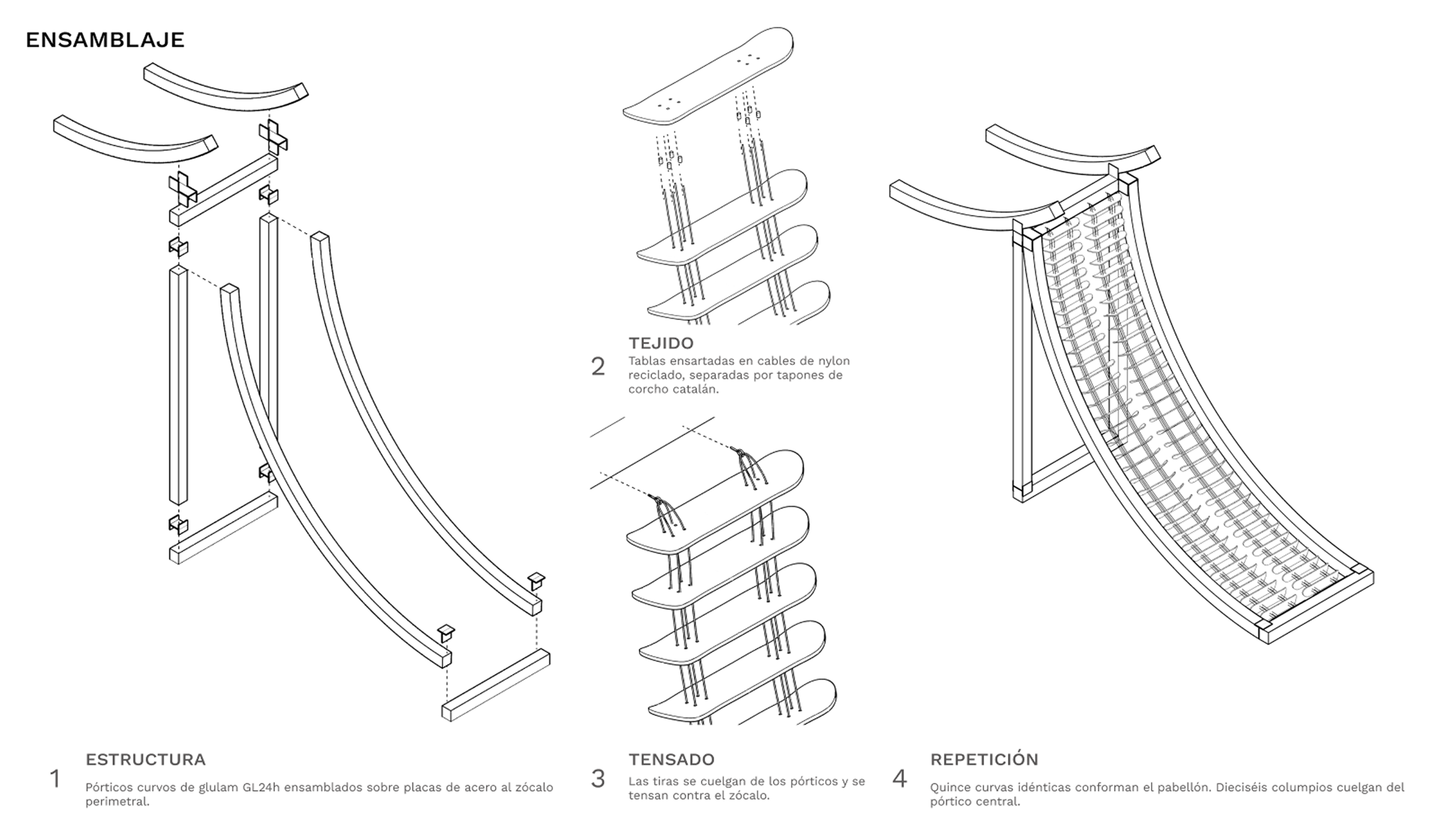
The system is modular, demountable, and reversible: dry joints, standardized porticoes, components developed with Catalan fabricators. The decks are threaded in workshops open to the community, turning assembly into a shared cultural act.
a habitable lattice
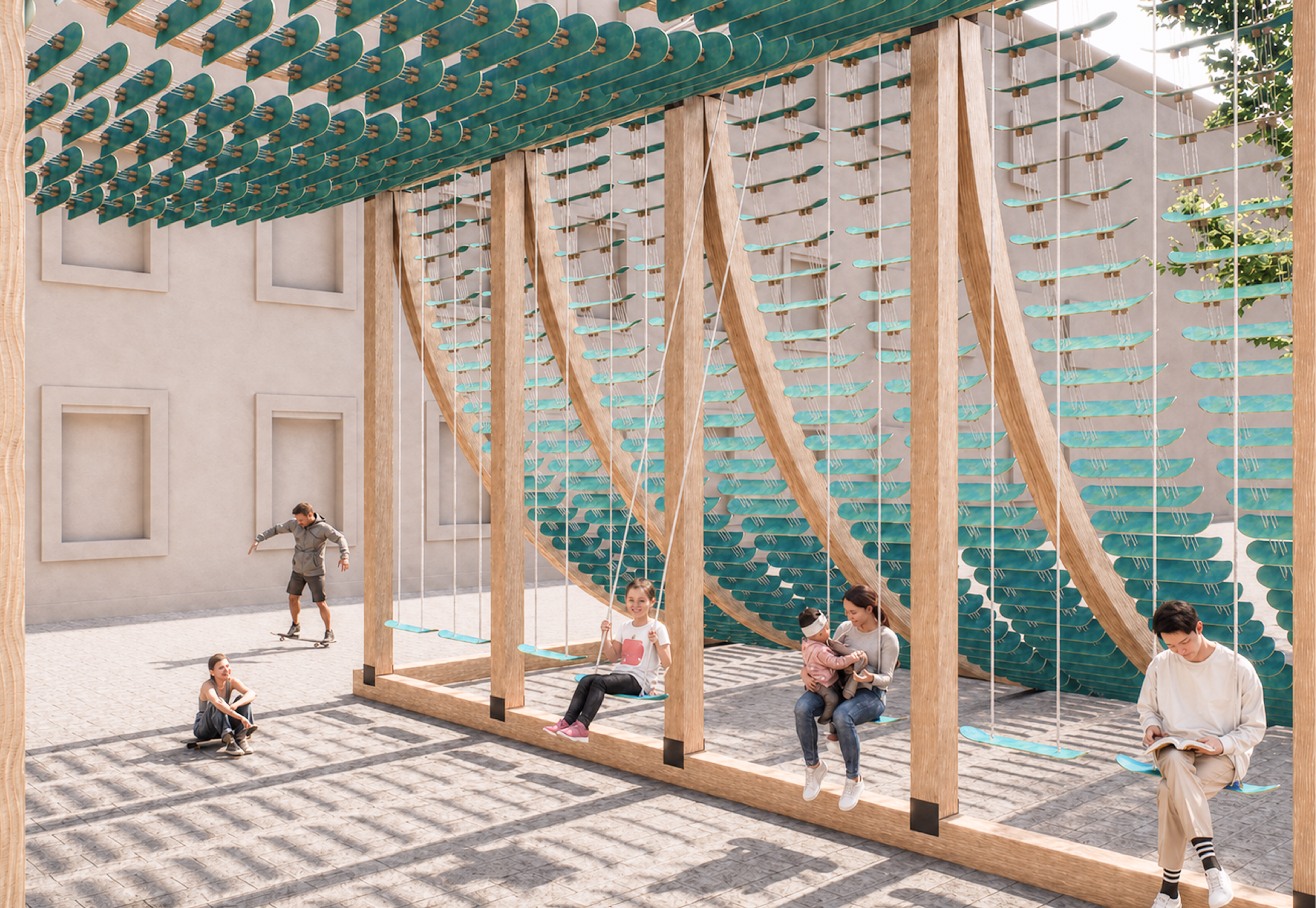
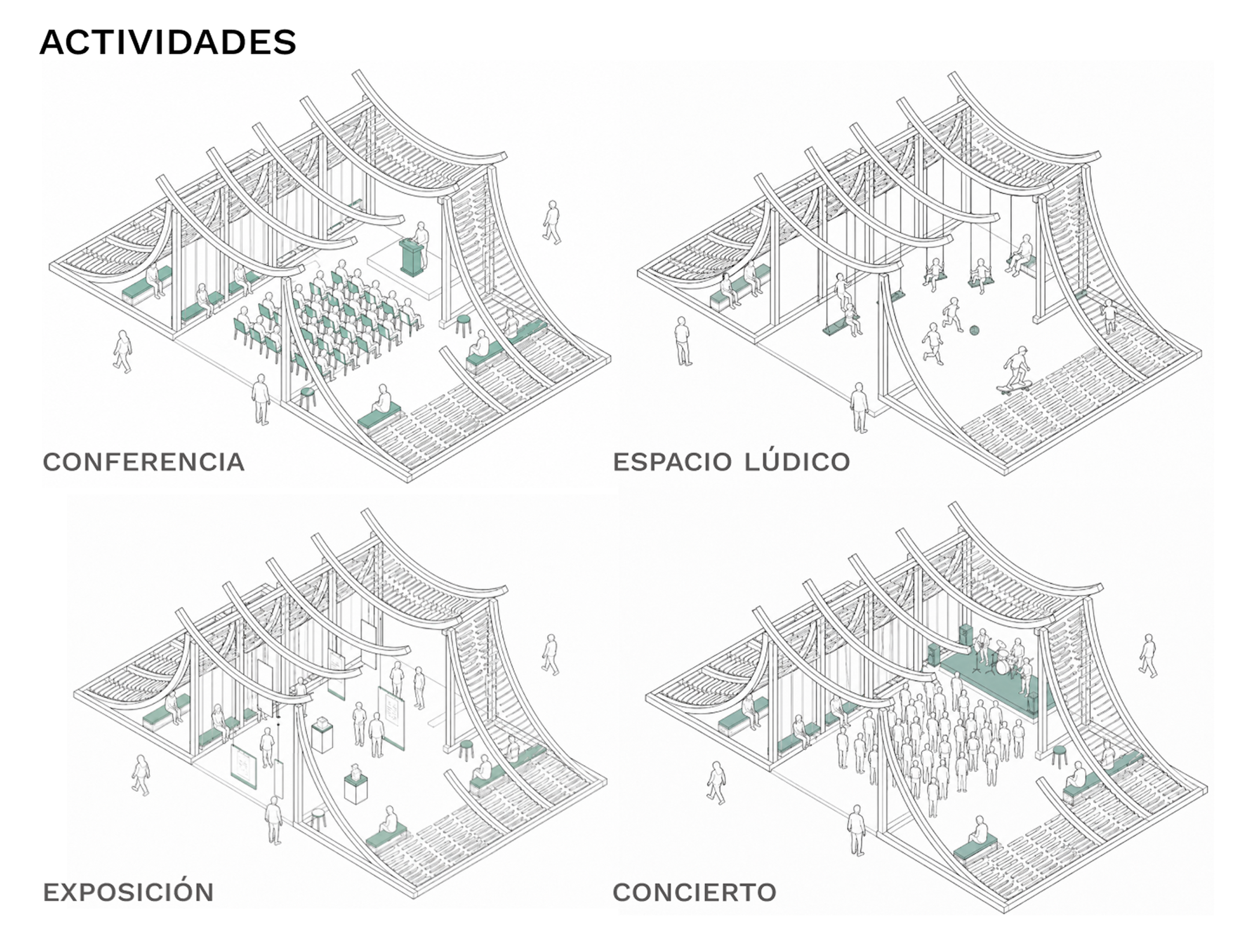
The roof works as an inhabitable screen — it does not close the space, it does not make it dense. The decks, threaded on recycled nylon cable and separated by pieces of Catalan cork, let the wind pass and filter the light into bands that shift across the day: a shade that changes with the sun. From the central portico hang sixteen swings built from skateboards, activating the pavilion from the body. So the roof channels two movements: the air crossing the structure, and the bodies swinging beneath it. More than a canopy, Ombra Rodant proposes a public atmosphere — light, permeable, and in constant motion.
a mediterranean lineage
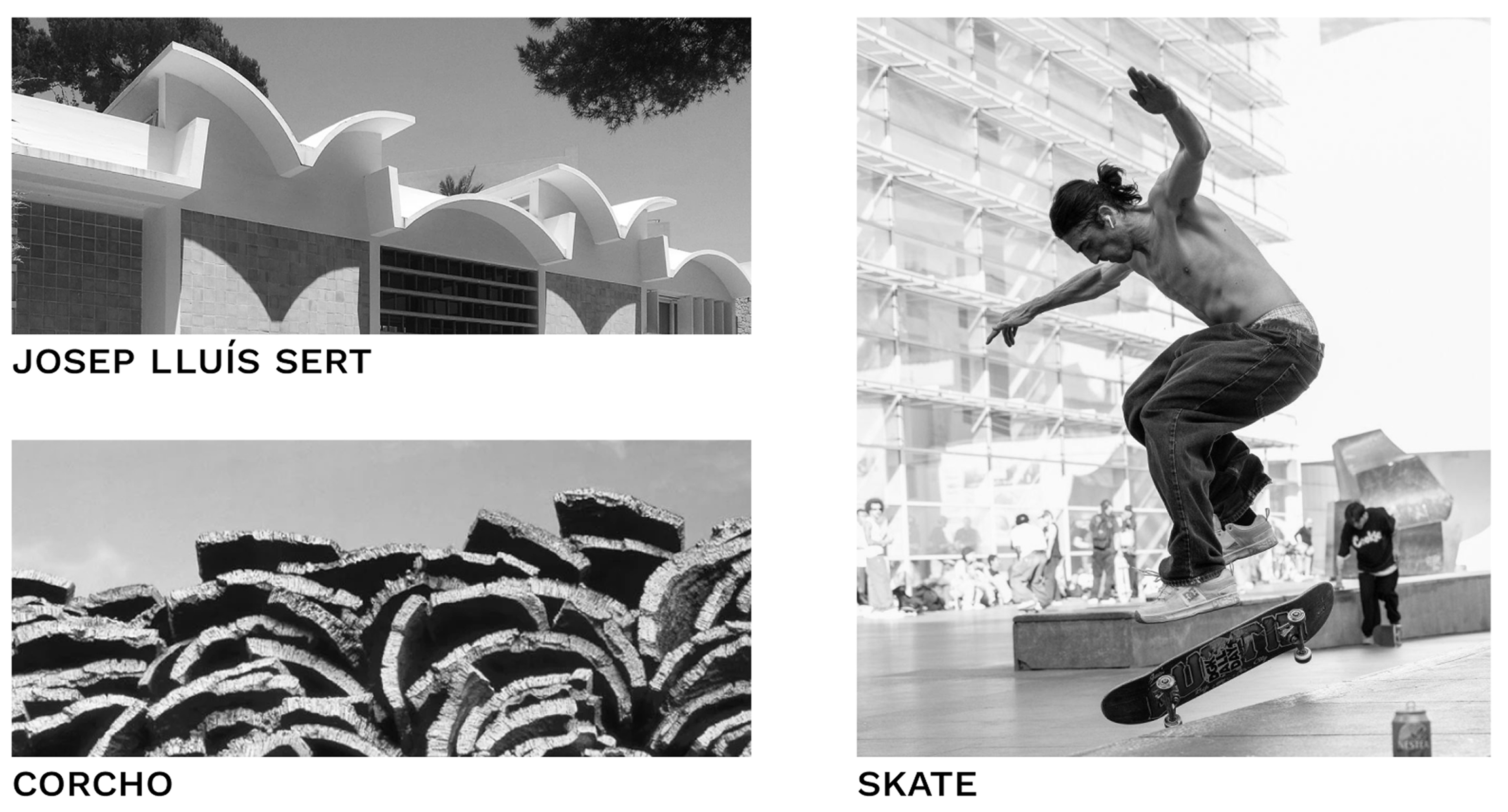
Ombra Rodant is, above all, a celebration of Josep Lluís Sert: of his Mediterranean geometries and of the inverted roofs that understood the sky as material. That legacy crosses here with skateboarding, and — with Catalan cork — with one of the oldest industrial inheritances of the territory, which separates each deck and lands the whole assembly.
an assembly designed to leave no trace
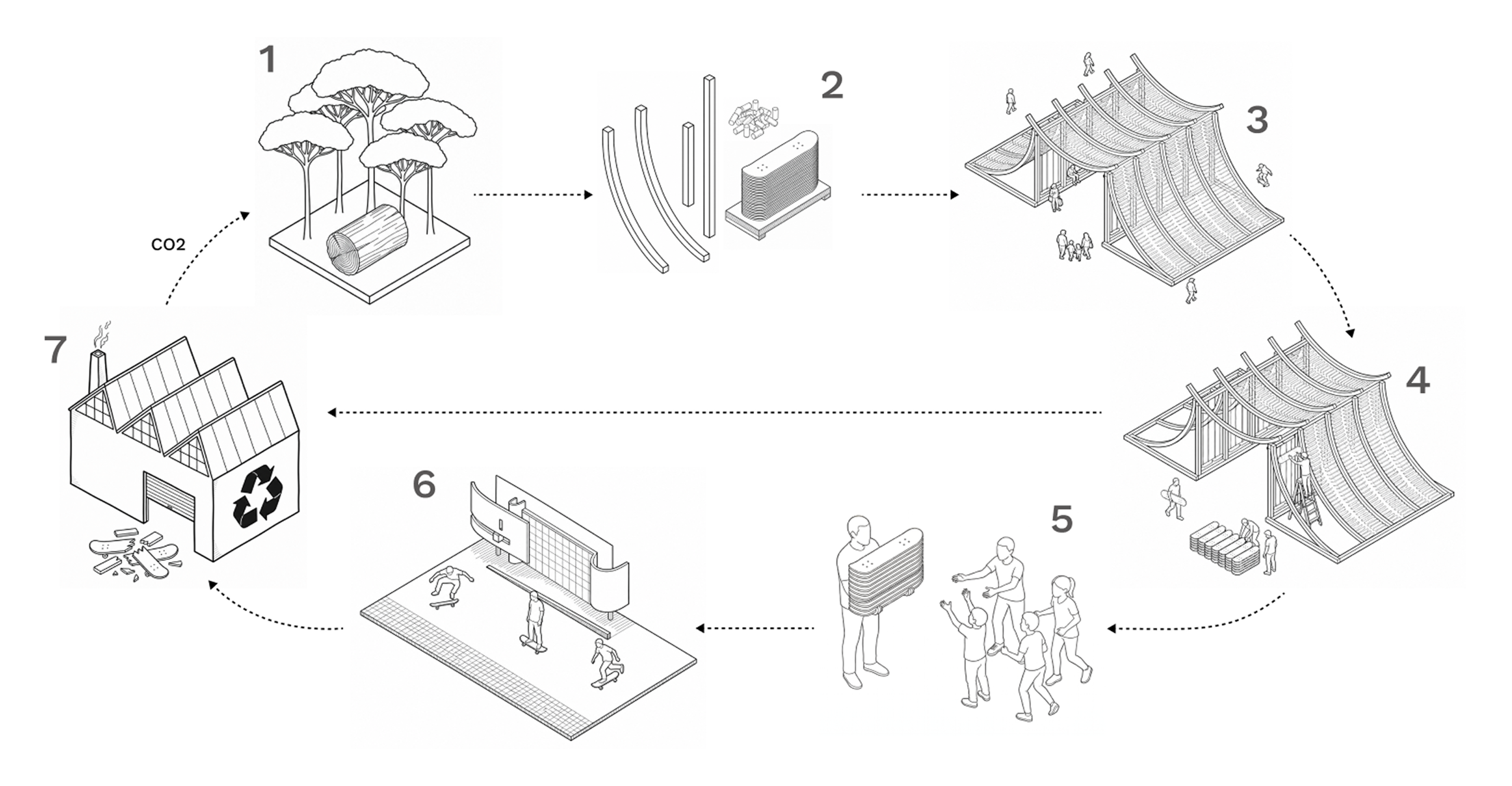
Fifteen curved glulam porticoes form the structure. Between them, recycled nylon cables hold 800 skate decks separated by Catalan cork stoppers. The design, refined through solar studies, generates continuous shade without a closed roof. Structural calculations and suppliers are confirmed. Each component is dimensioned for fast assembly and disassembly. After the festival, the decks are donated to the community, the cork returns to industry, and the structure goes back to fabrication — a system designed to leave no trace, and to live on beyond the festival.