



axolotuario
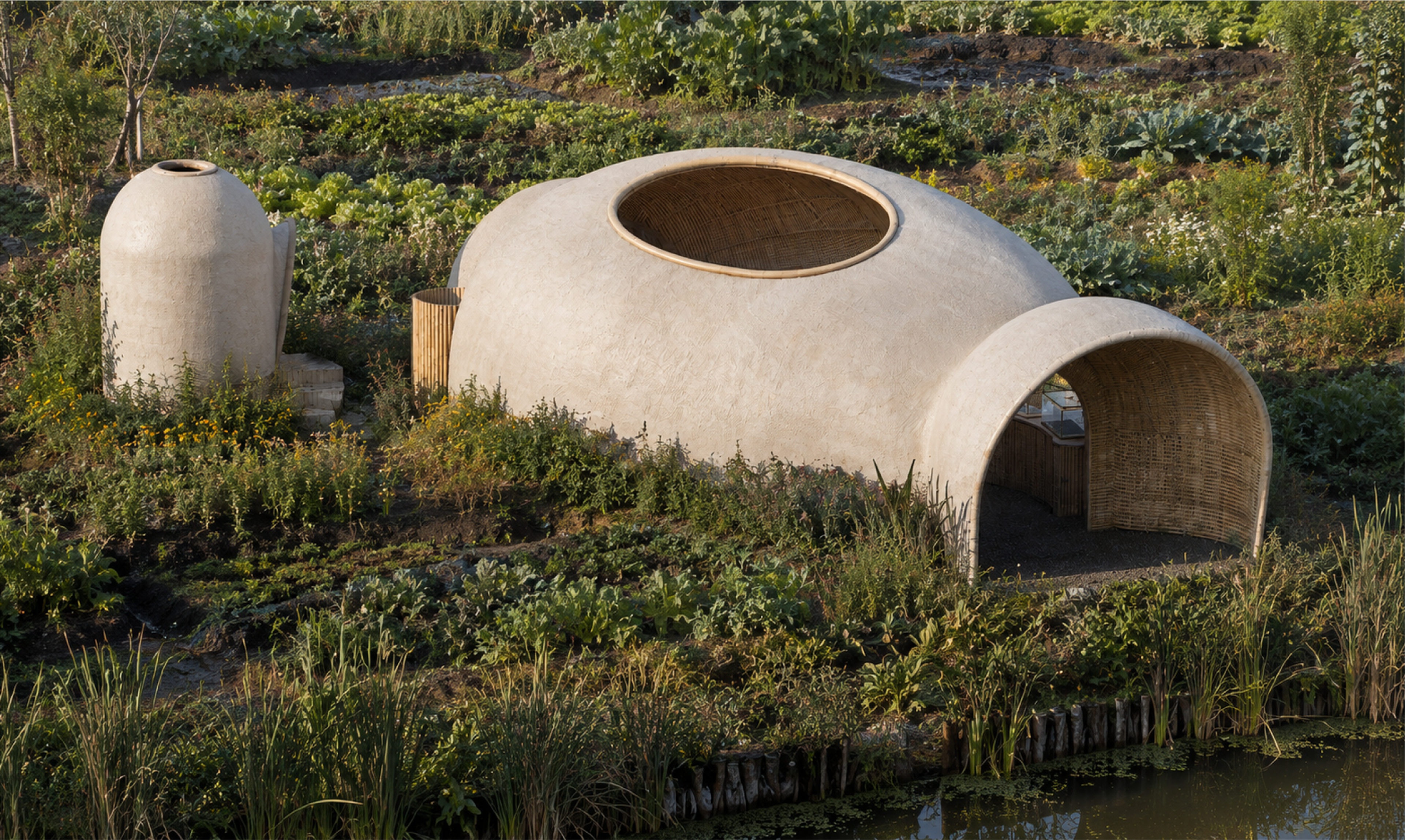
A community axolotl sanctuary and education space on a chinampa in Xochimilco, built from reed, earth, and water hyacinth harvested on the chinampa itself. Honourable Mention, Building Trust International — Small Project Big Impact 2026.
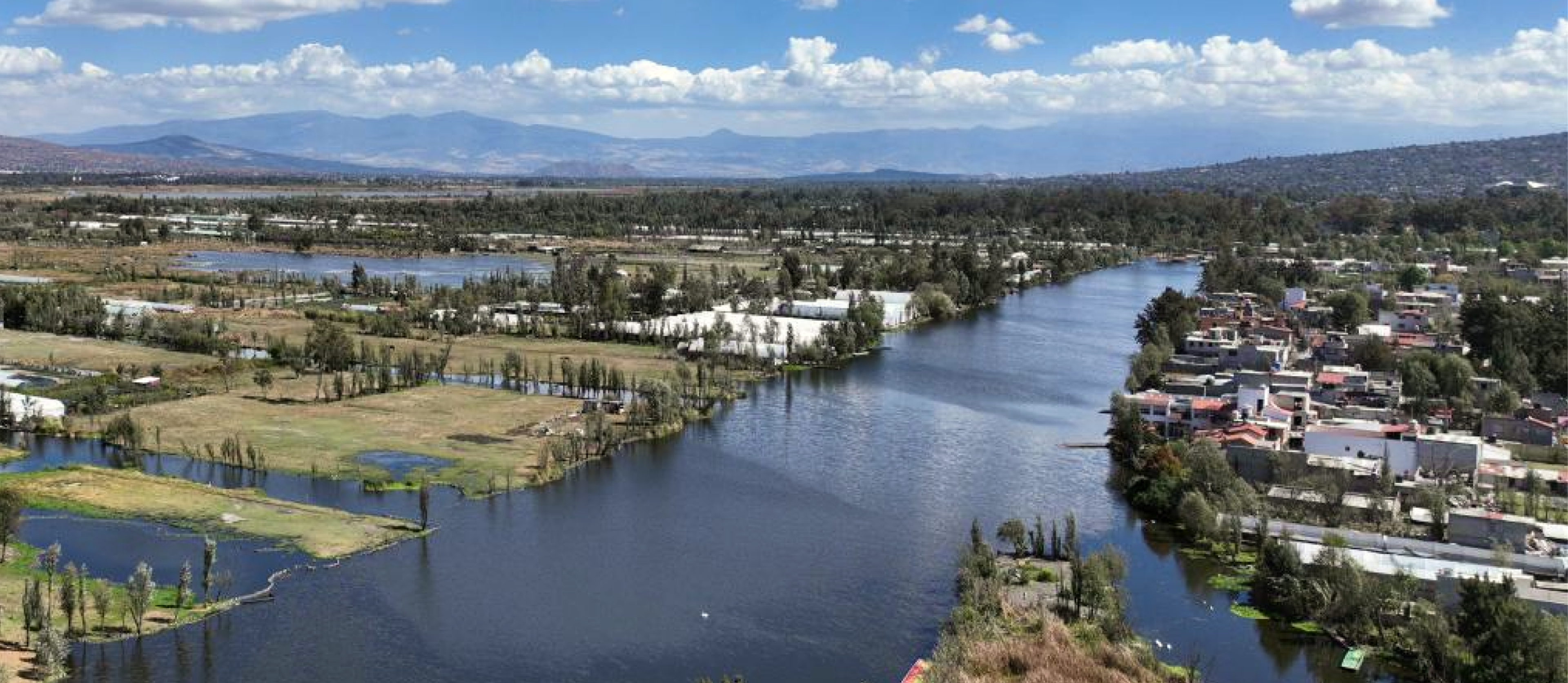
Mexico City was built on a lake. Centuries of drainage reduced it to almost nothing, and Xochimilco is what remains — roughly two percent of the original lacustrine system, a UNESCO World Heritage site since 1987, and the last wild habitat of the axolotl. The axolotuario is built from the materials of that land itself: a sanctuary and education space that helps restore the habitat as it is made.
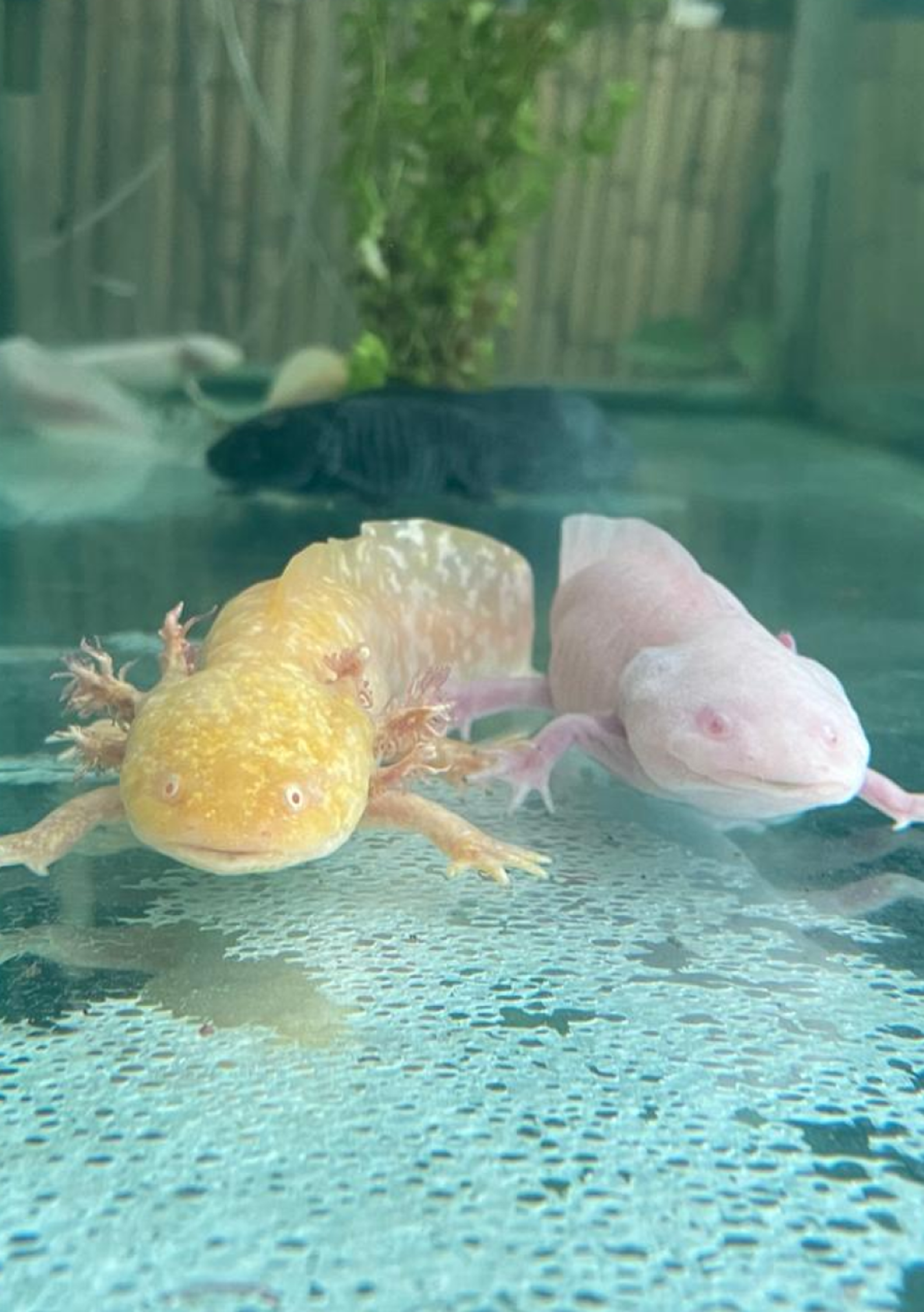
The axolotl (Ambystoma mexicanum) is critically endangered, with fewer than a thousand left in the wild. It is disappearing on several fronts at once — introduced carp and tilapia prey on its eggs, agrochemicals degrade water its skin cannot tolerate, and around eighty percent of the chinampas sit abandoned. Building on those islands is already happening, six hectares lost each year to informal construction, and much of it is well intended but built of plywood, plastic, and scrap the lake cannot carry. The useful question is not whether to build, but how.
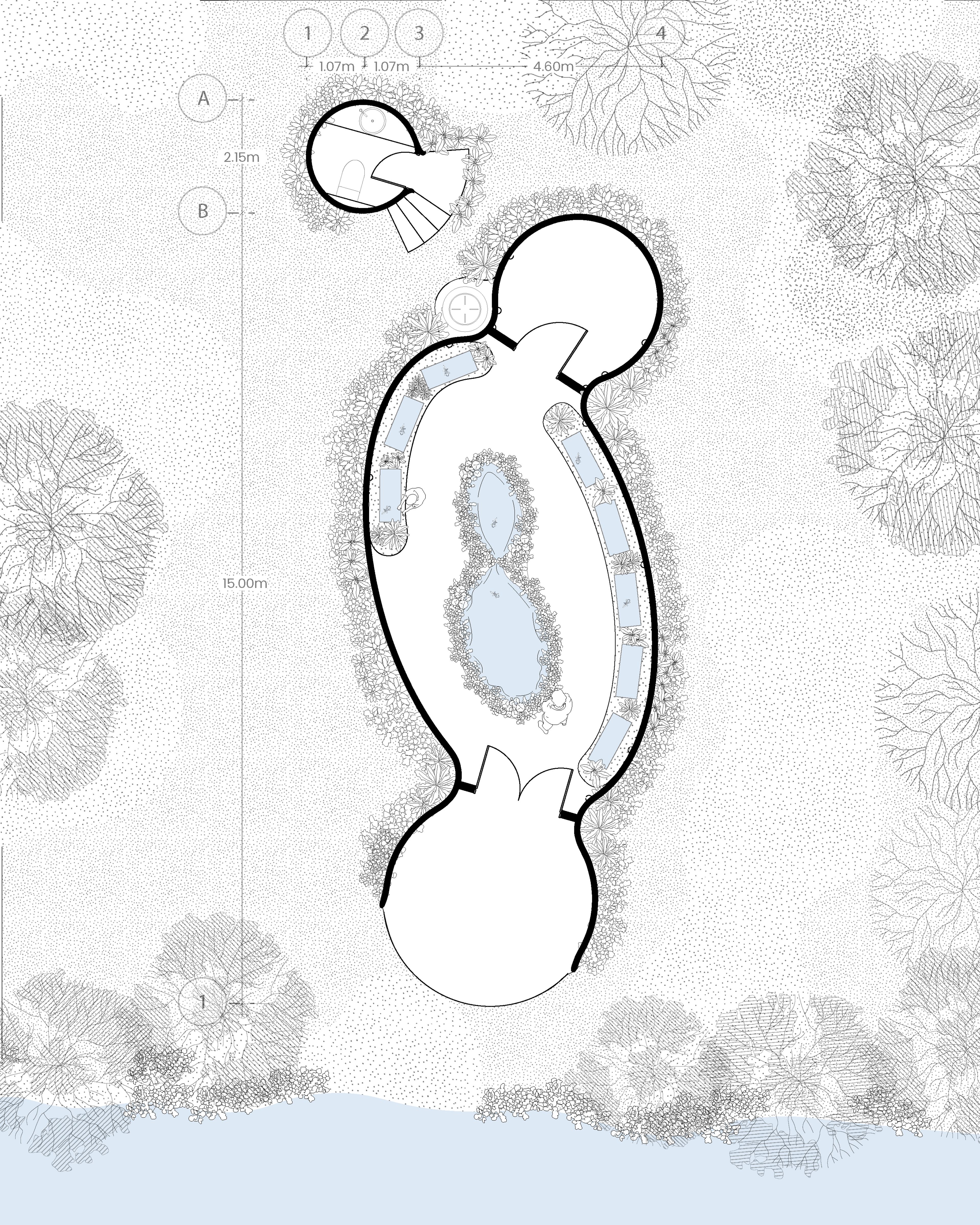
The building is small — around sixty-three square metres within a site intervention of roughly one hundred and fifty — and reversible. Because it is made only of the land, it can return to the land: if it is ever no longer needed, it leaves nothing behind. It is delivered within USD 48,600, using on-site materials and community labour.
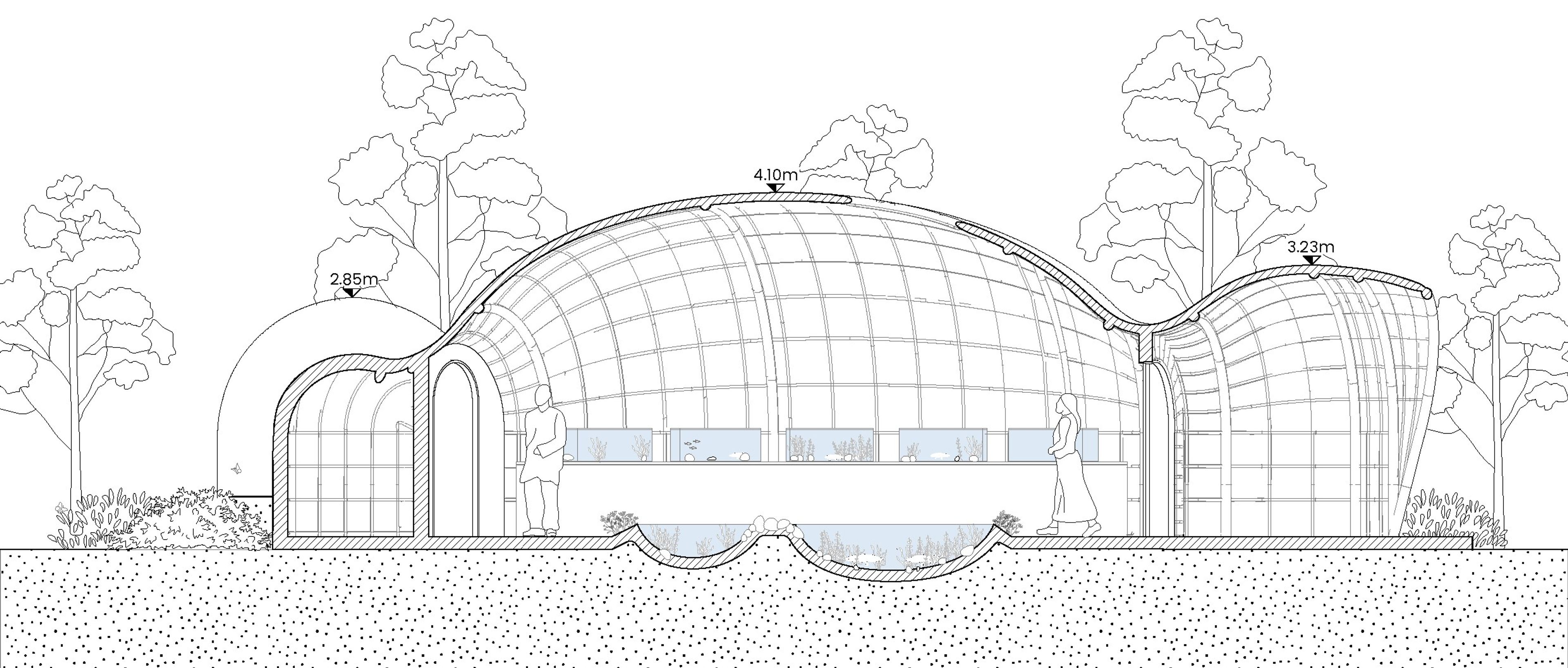
how it works
Aquariums set along the inner wall hold the axolotl nurseries. At the centre, a sunken pond is biofiltered through native aquatic plants rooted in a volcanic-rock bed — the method UNAM and local farmers use in their chinampa refuges, brought here into a public, educational space. The earthen mass keeps the interior cool, humid, and low-lit, as axolotls need, without mechanical cooling. First and foremost it is a community and education space for school groups, visitors, and neighbours, reached by trajinera and centred on the axolotl and these methods.
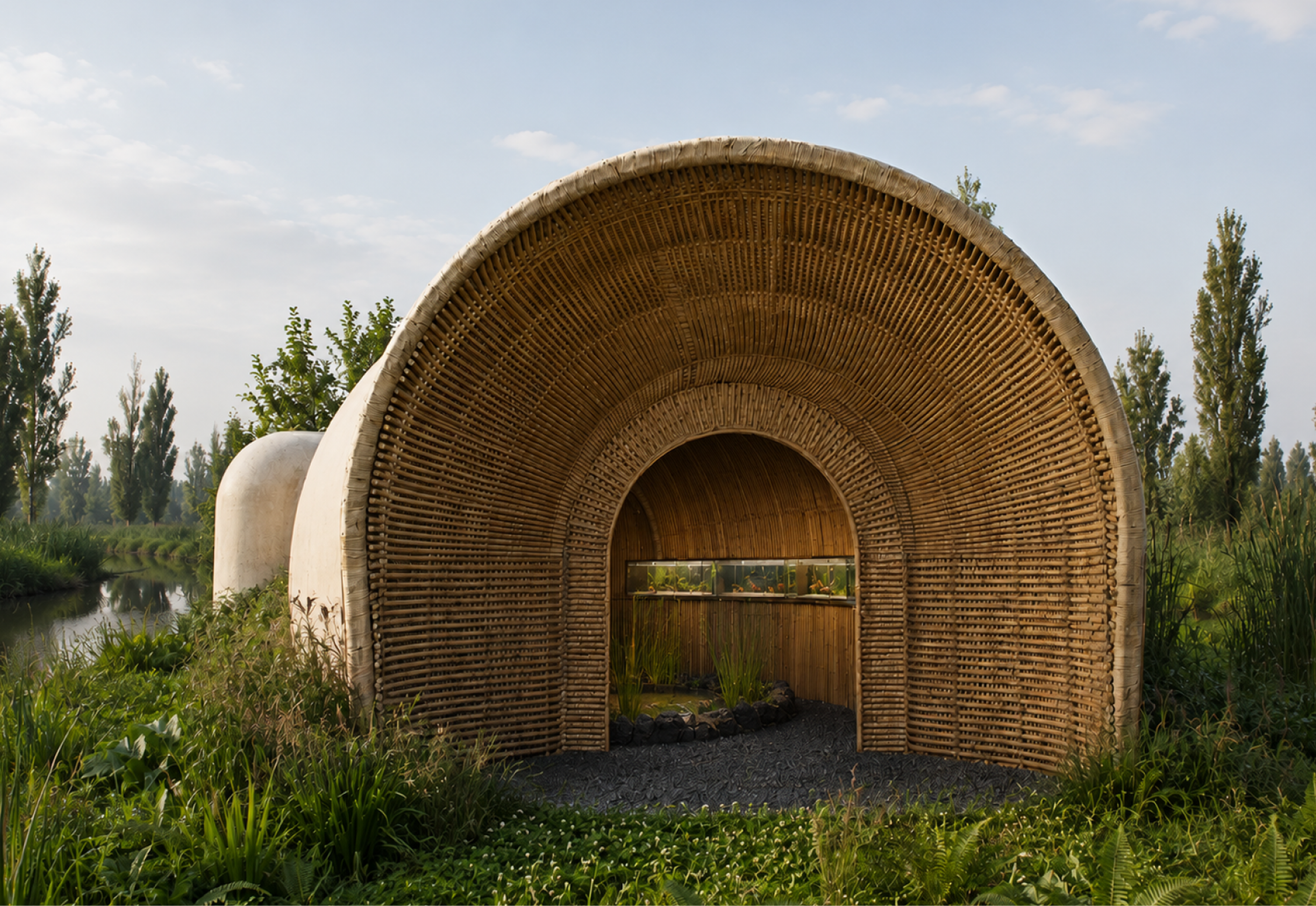
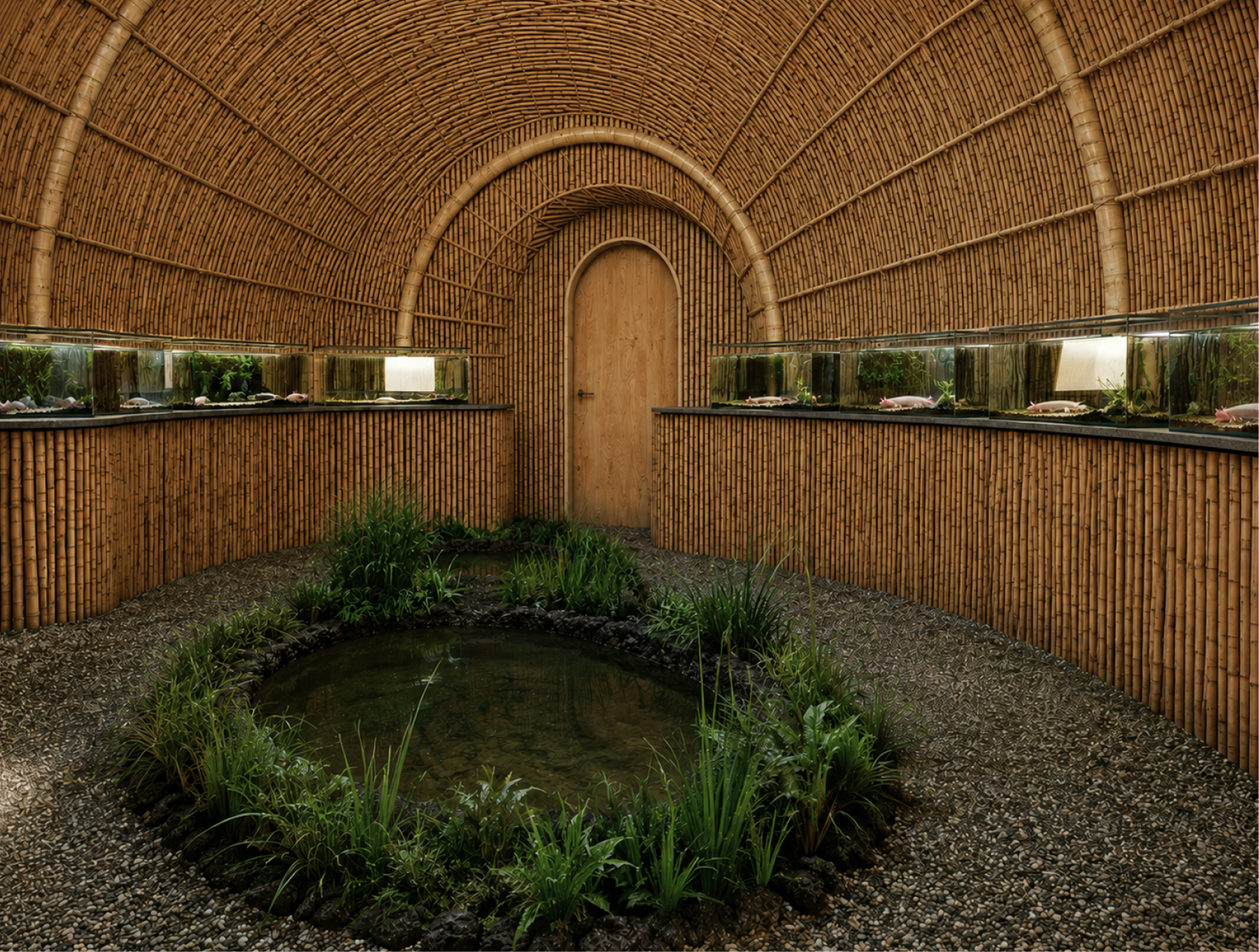
a method proven for centuries
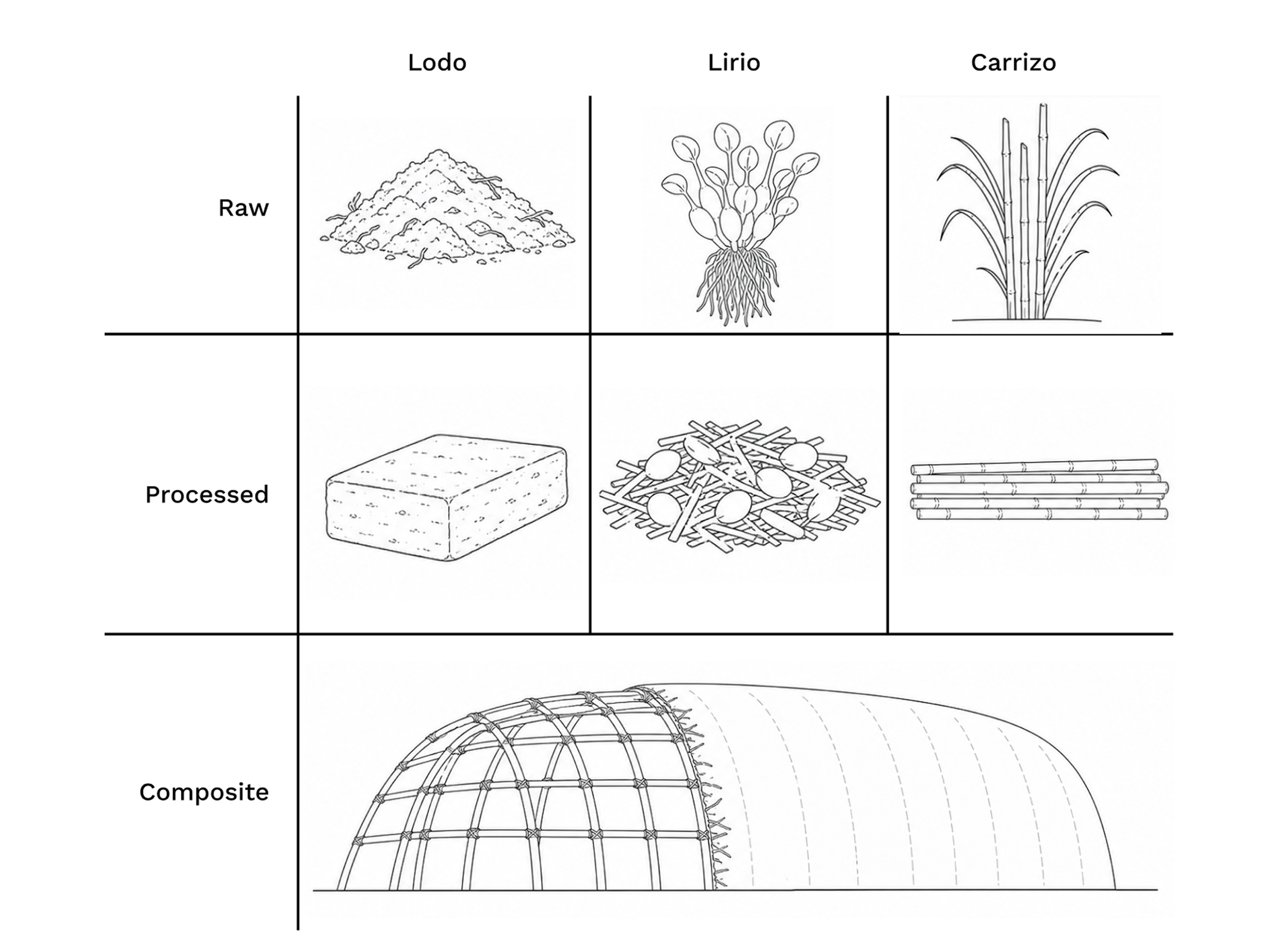
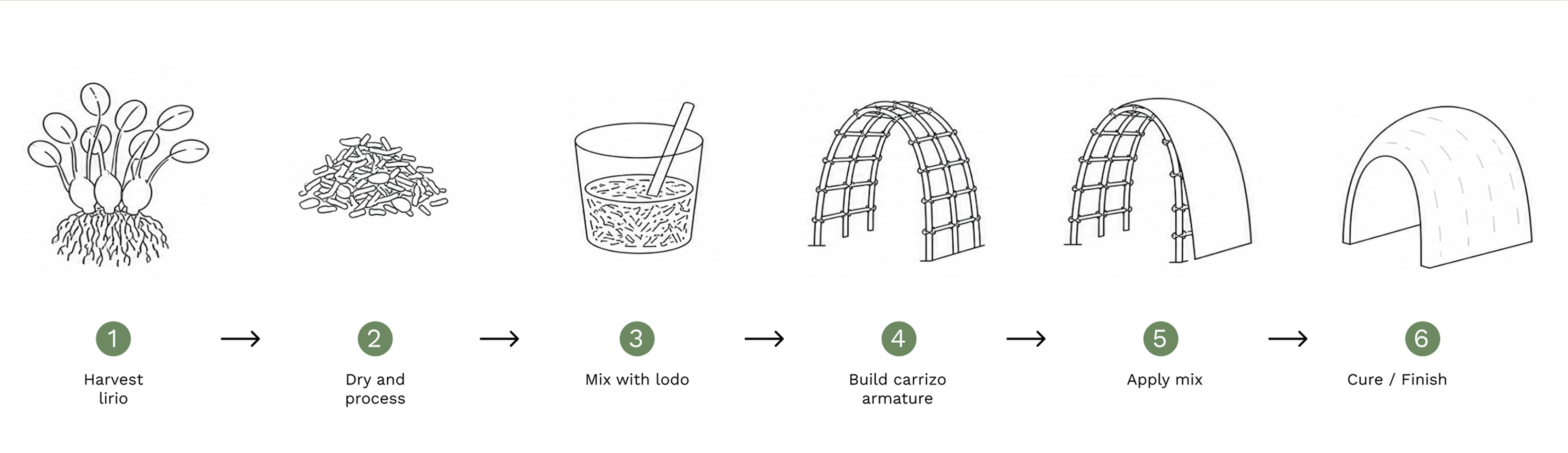
The axolotuario uses reed-and-earth shells — the same structural family as bamboo and straw building. A reed (carrizo) frame is raised lightly on the surface with no foundation, and walled in earth (lodo). Both already grow on the chinampa. The one thing added is mixing lirio (water hyacinth) into the earth to lighten it: an invasive plant that chokes the canals becomes building material, and removing it also helps clean the water.
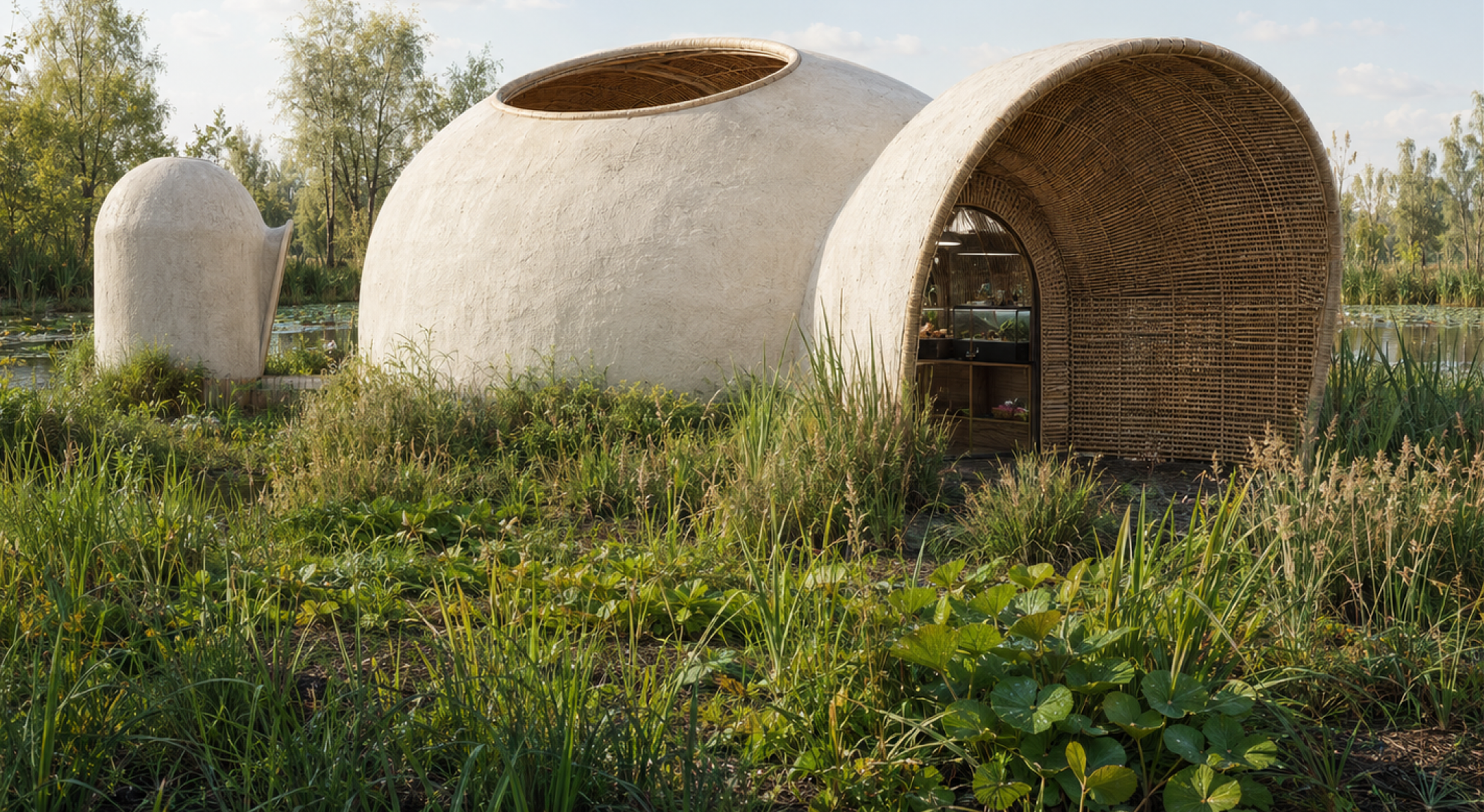
Reed and earth are strongest as arches and shells, so the geometry does what the materials want to do. Flat walls and right angles would need beams, lintels, and imported structure; by letting the form follow the material, the building spans and stands using almost nothing but reed and earth. Lime waterproofs the outside, and earth is mounded against the shell so it settles into the ground — built up rather than cut into.
architecture that regenerates
Raised lightly on the chinampa with no excavation and no foundation, every layer is local and pure. A central filtration pond and a refuge canal along the chinampa edge mean the building helps clean the water around it. It is built with the community, who learn the technique as they build — a method any chinampa can repeat, and the first step in a wider plan for the canals. Husbandry and biofilter design are developed using Dr. Luis Zambrano's Laboratorio de Restauración Ecológica (UNAM) methods.