


not a hotel: yakushima
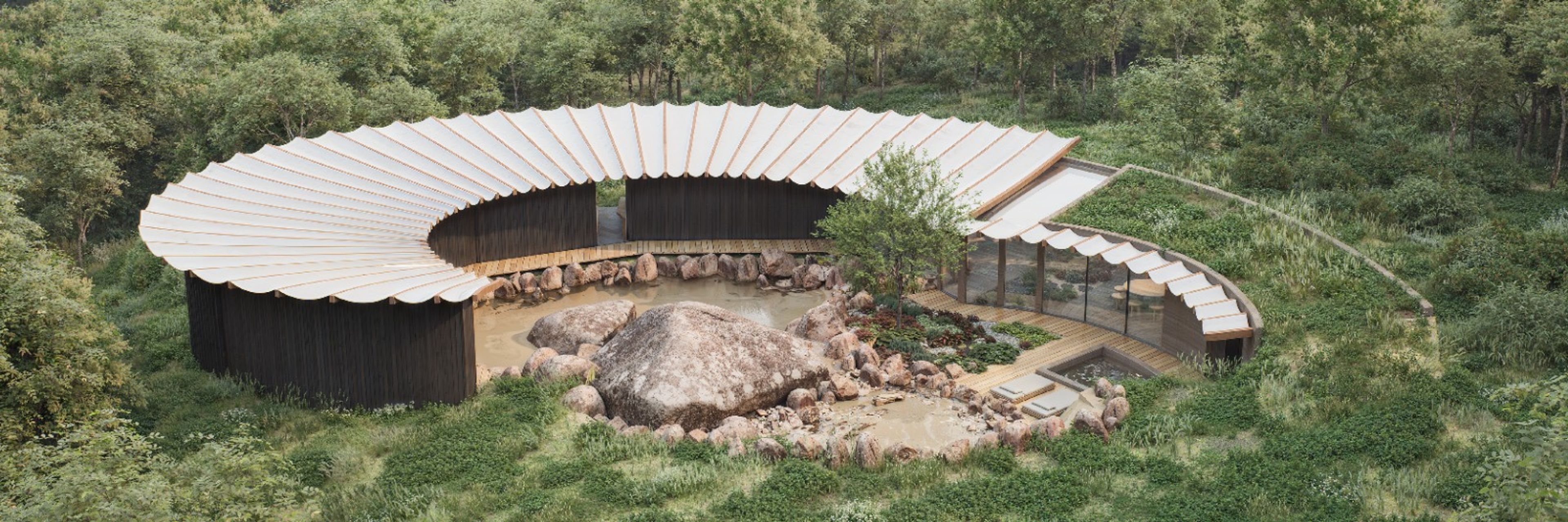
ensō — a competition entry for Not a Hotel on the island of Yakushima, Japan. A single curved building organized around a rain-fed waterfall, built from cedar and volcanic stone. Collaboration with Andrea Reimers.
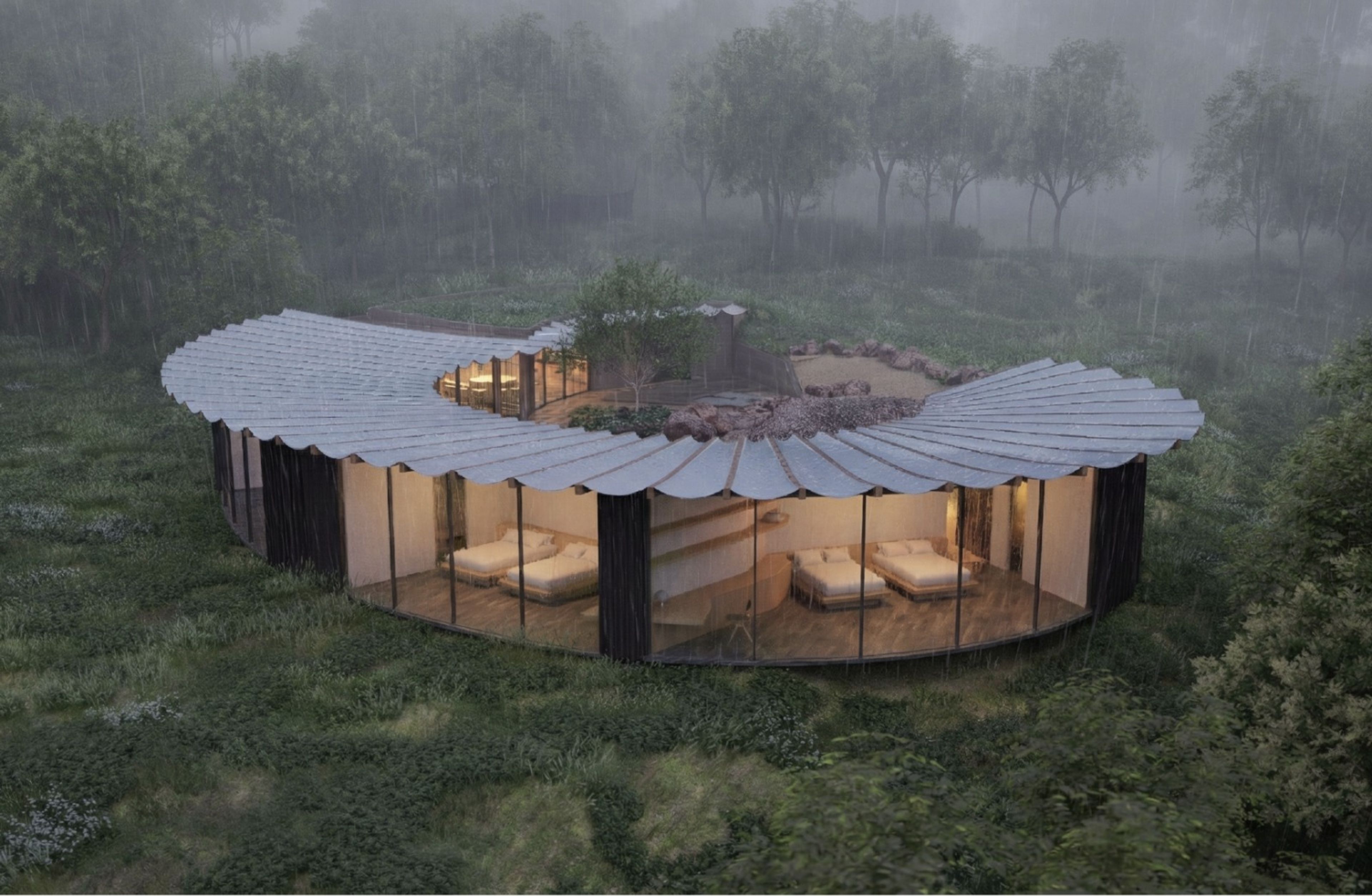
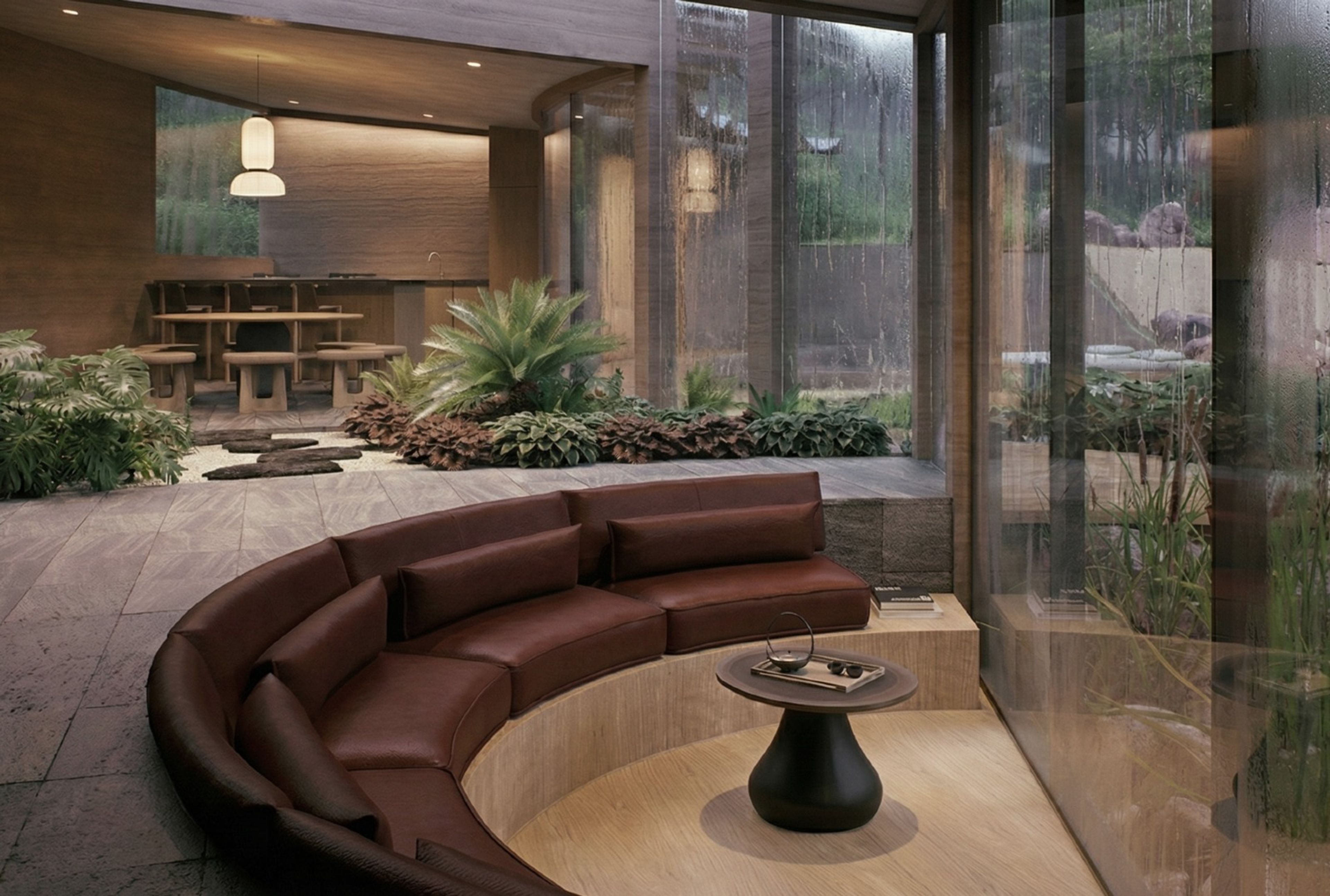
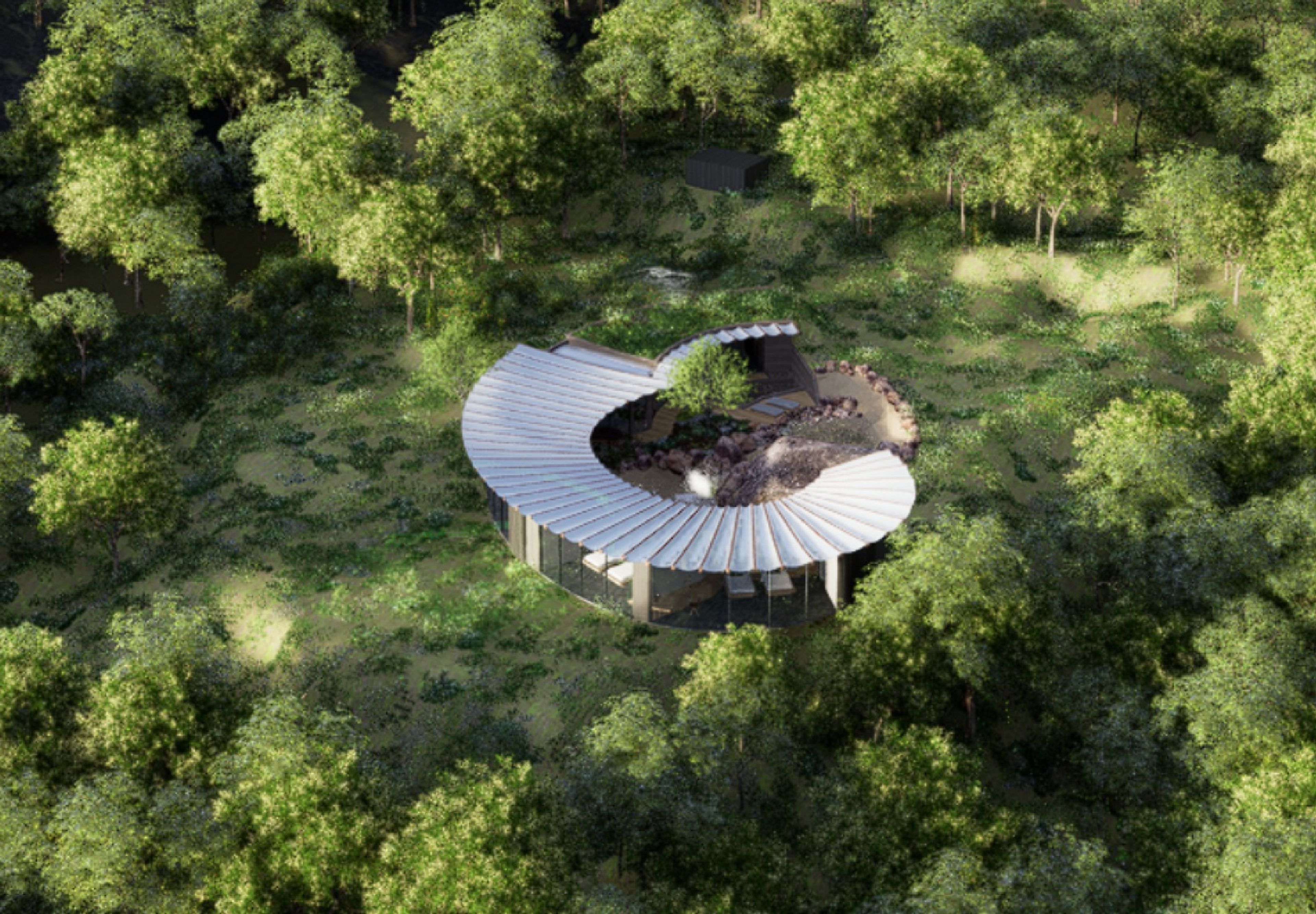
The plan is a single continuous gesture, drawn from the Zen practice of ensō — the brushstroke that closes on itself. The building wraps a rain-fed waterfall at its center, making water the organizing element of the site. The boundary between architecture and landscape blurs at the curve.
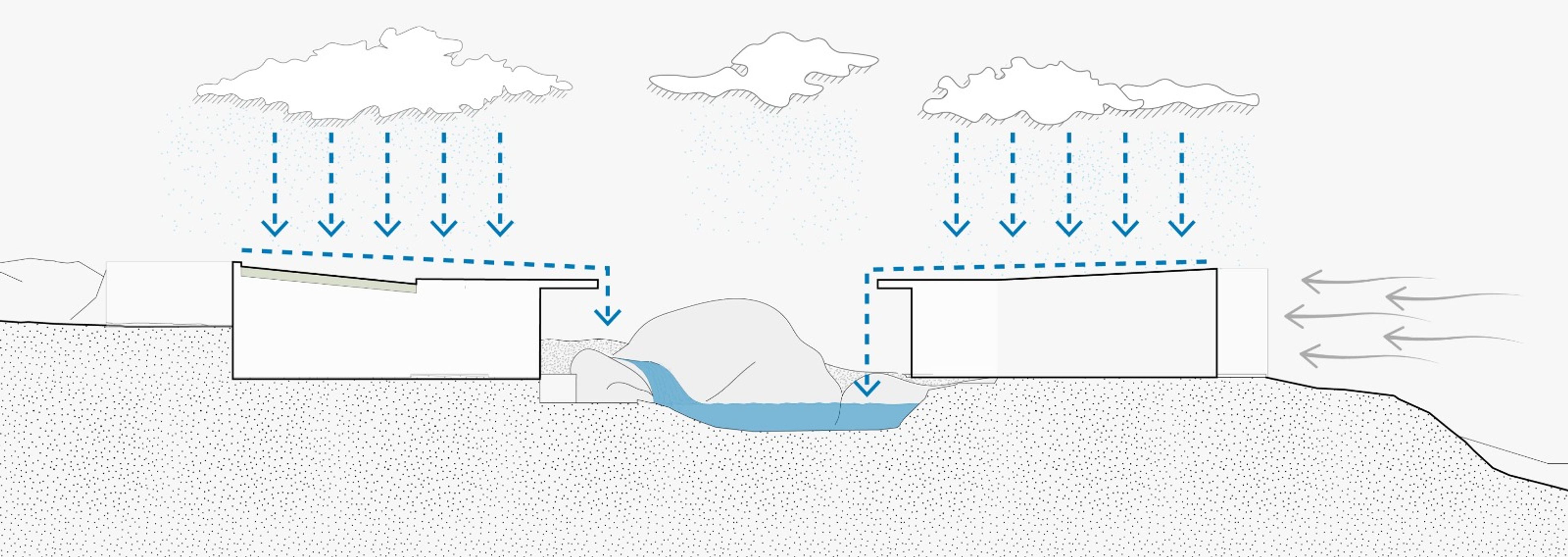
Yakushima is a place defined by water. The island gets some of the heaviest rainfall in Japan, fed by typhoons that push in from the southeast. Rather than treating that as a problem to detail around, the project takes it as the brief. The roof is shaped to collect rain and channel it to a central reservoir, which feeds the waterfall year-round. The waterfall acts as a bioclimatic lung: evaporation cools the air, encourages cross-ventilation, and conditions the central space without mechanical help.
The curve handles the wind. The building's outer arc faces the prevailing southeast typhoons, deflecting them and creating a sheltered interior court. Cross-ventilation works during humid periods; the form blocks the worst of the weather when it arrives.
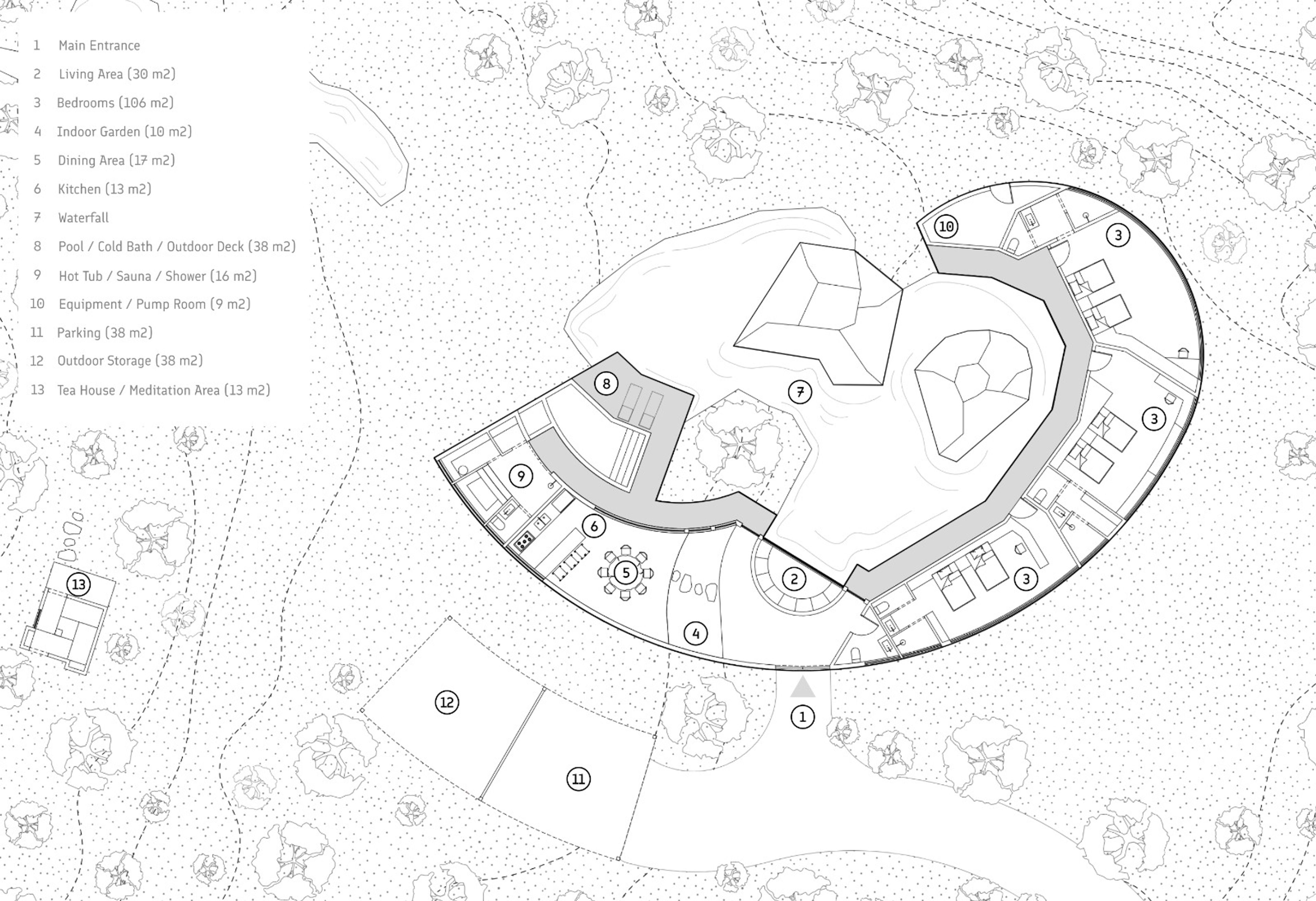
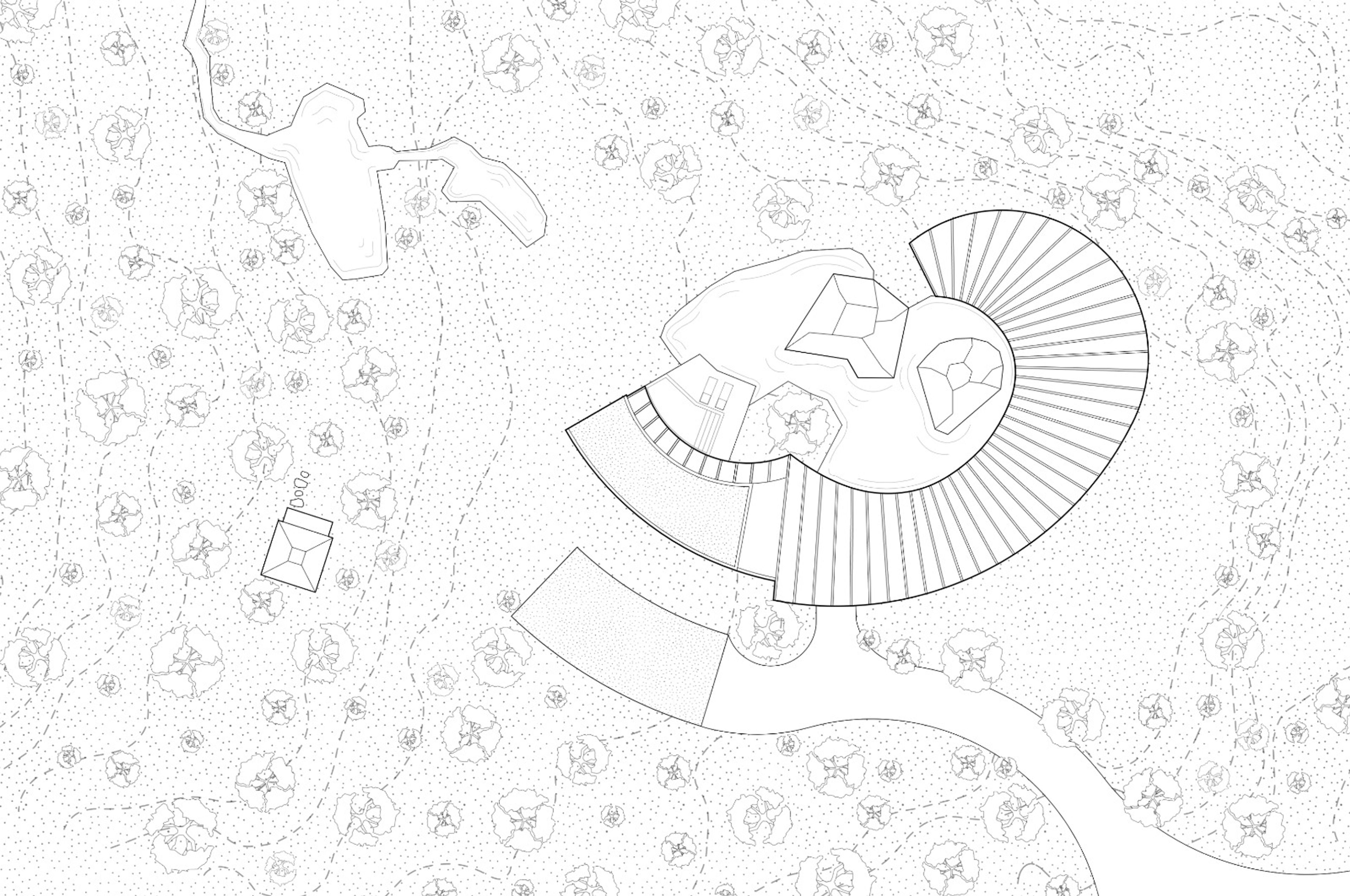
the engawa, made circular
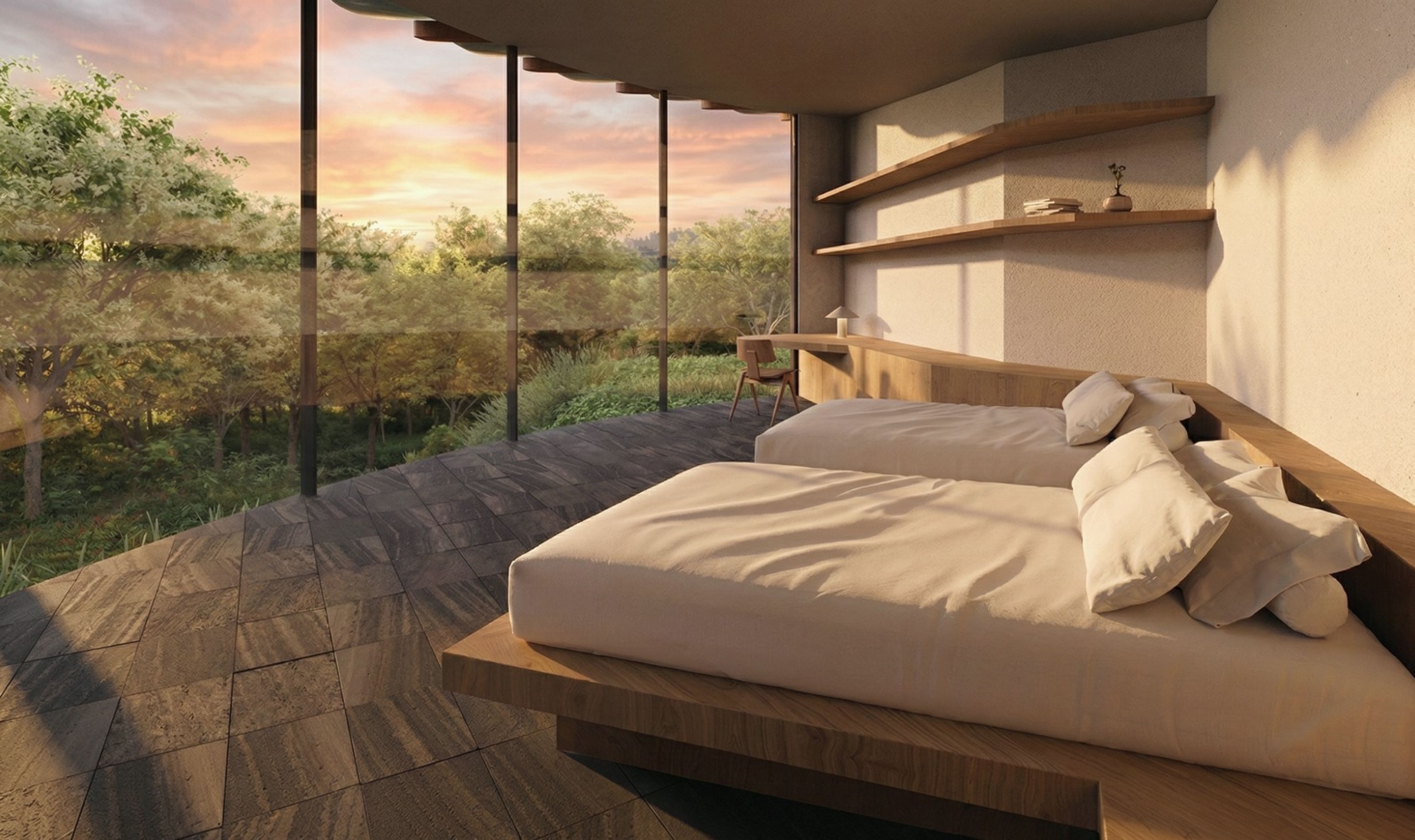
The circulation borrows from the engawa — the traditional Japanese walkway that softens the threshold between inside and out. Reimagined as a closed circle, it wraps the house and becomes the spine of the plan. Communal rooms open onto the central waterfall. Private rooms turn outward to frame quieter views of forest and ocean. At the most sheltered point, a bathhouse sits embedded under a green roof, naturally insulated and ventilated, grounded in stone.
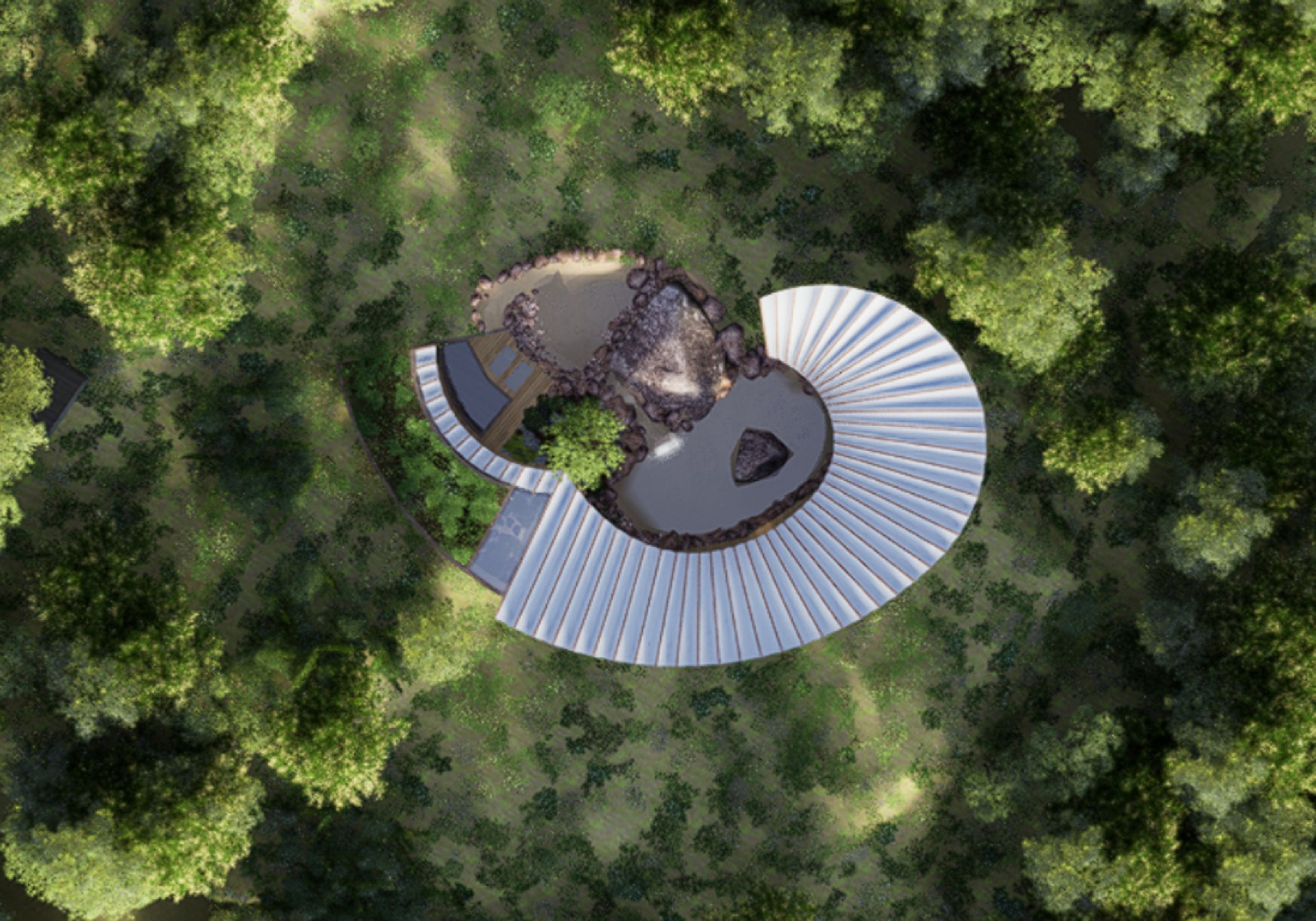
Material reinforces the sequence. Volcanic stone anchors the shared spaces. Yakusugi cedar — the island's own cedar, prized for its grain and longevity — defines the private ones. Shou sugi ban, the charred cedar facade tradition, takes the exterior. Lime plaster finishes the interior surfaces. All four materials are chosen for the same reason: they belong to Yakushima's craft tradition, they're available on the island, and they weather slowly without maintenance.
architecture as a closed gesture
The project's discipline is in what it refuses. No second move. No additive program. The whole building is one curve, one material logic, one organizing element. The brief asked for a hotel on a sacred island; the response was to draw a single line around a piece of water and let the island do the rest.