


refugio sagardoa
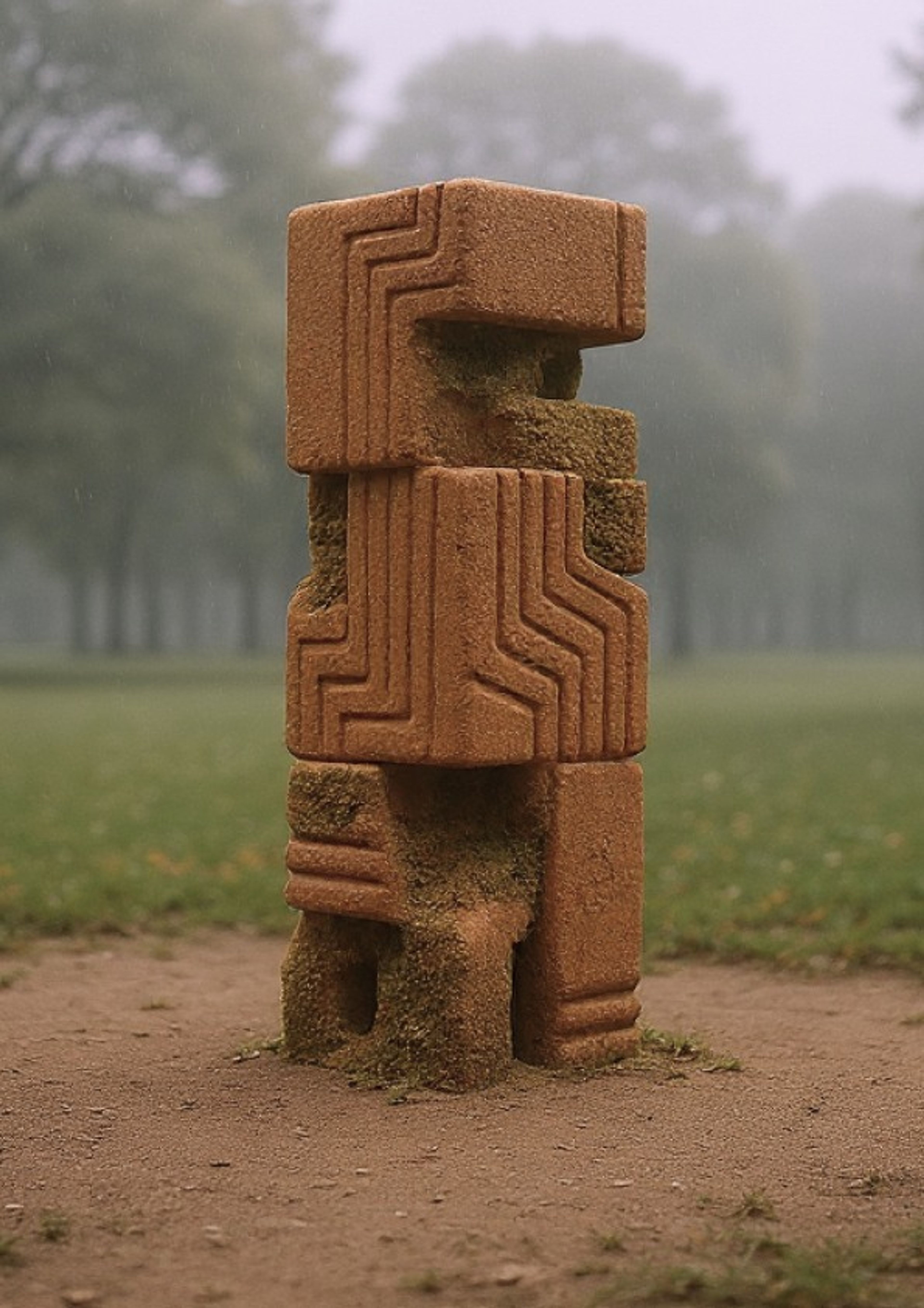
Refugio Sagardoa is a proposal for a biodegradable outdoor sculpture designed to host local fauna — a competition entry for the Urban Fauna Resort at Chillida Leku. Collaboration with Juan Cantú.
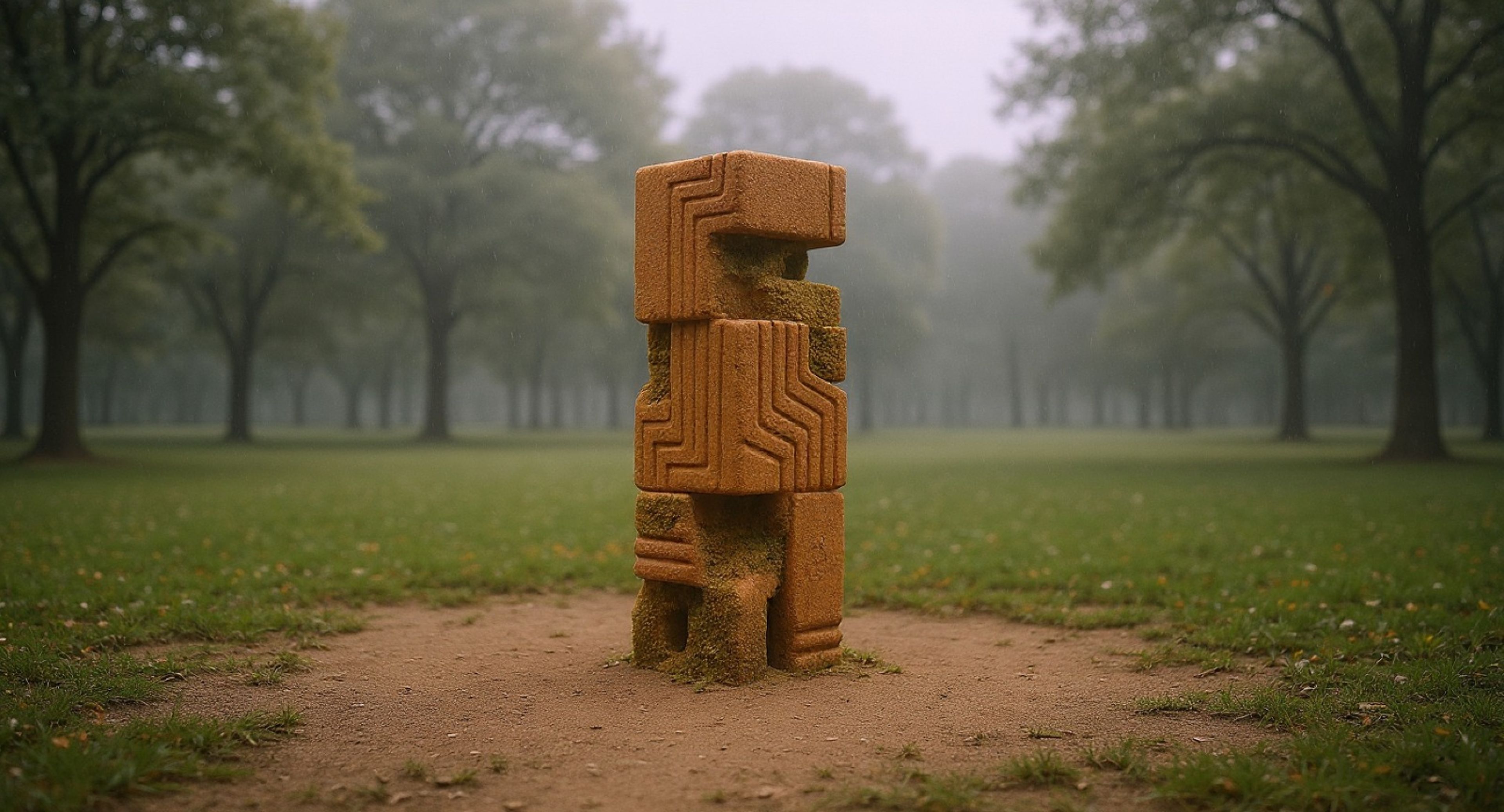
As ecological designers working between biodesign and architecture, we see the built environment as connected to the living world rather than separate from it. Sculpture and public art carry the same opportunity as architecture to make that connection legible.
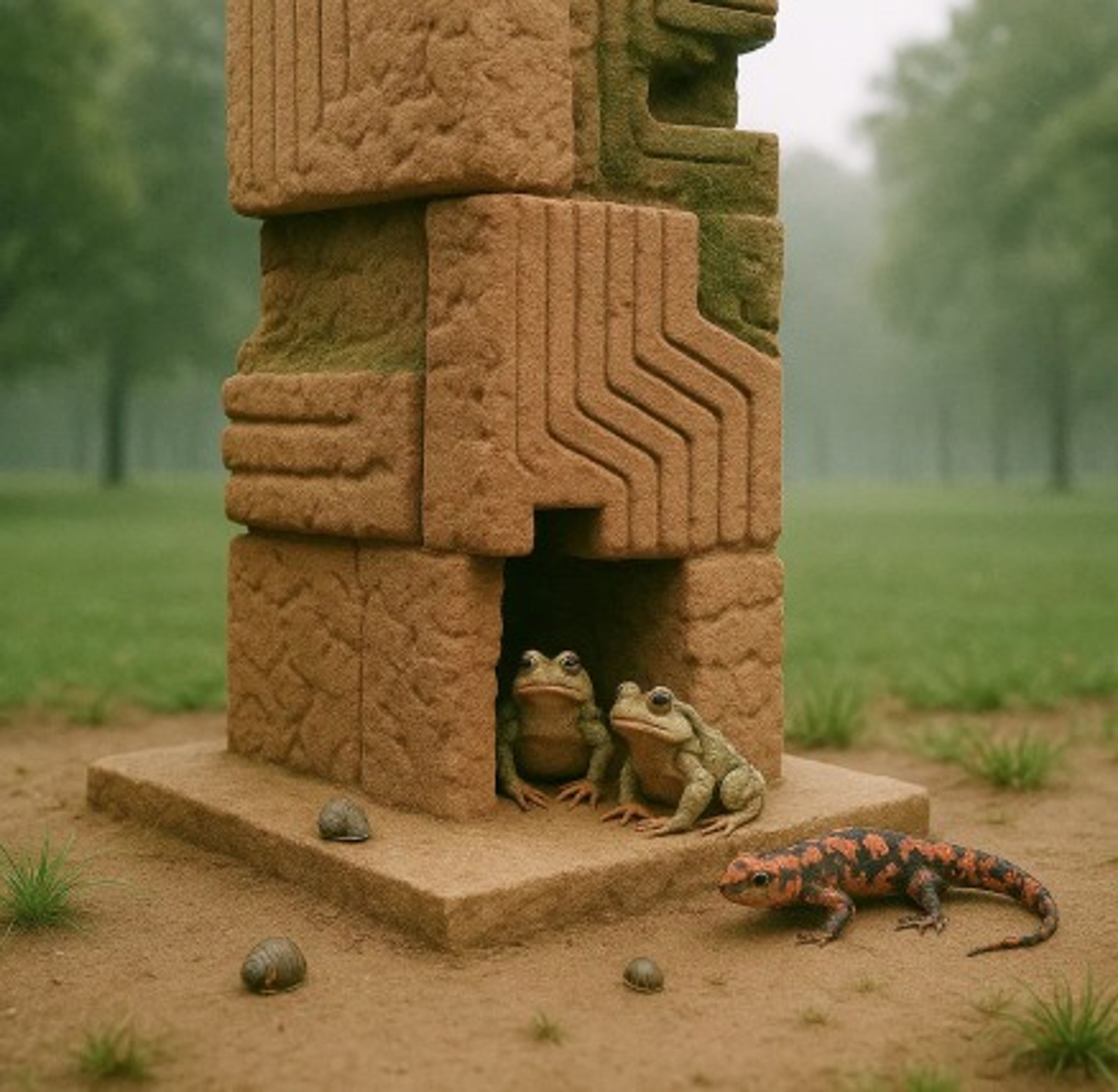
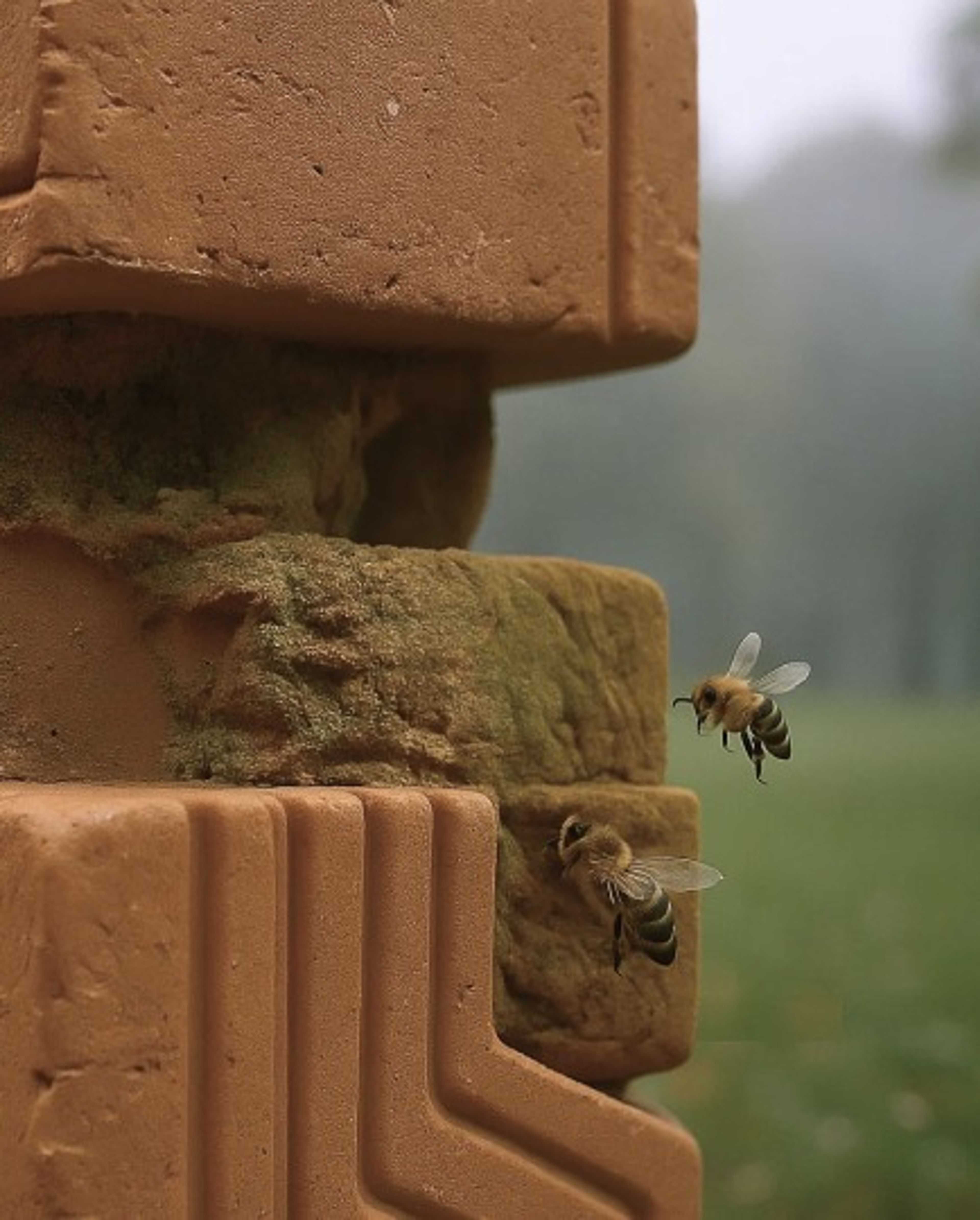
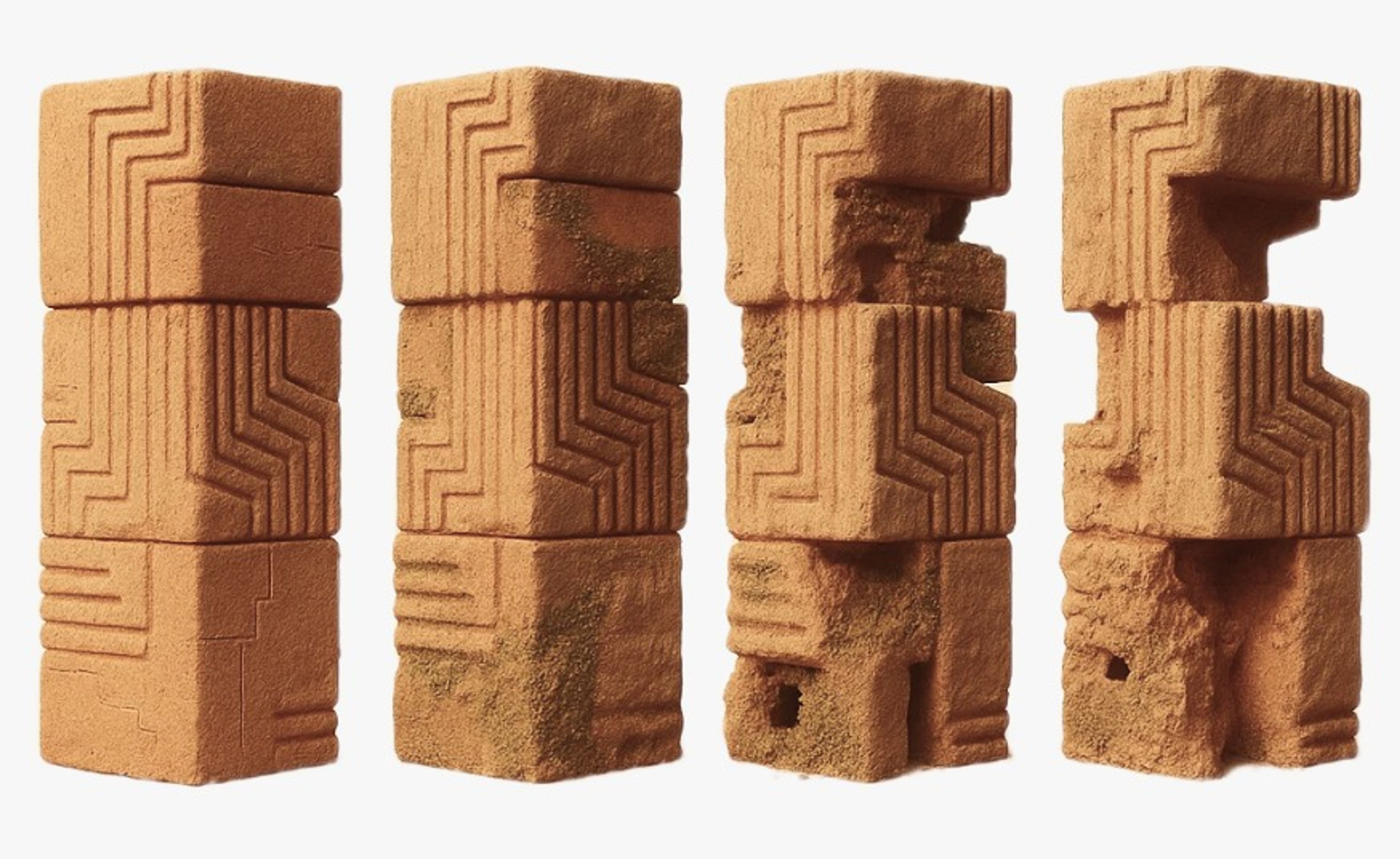
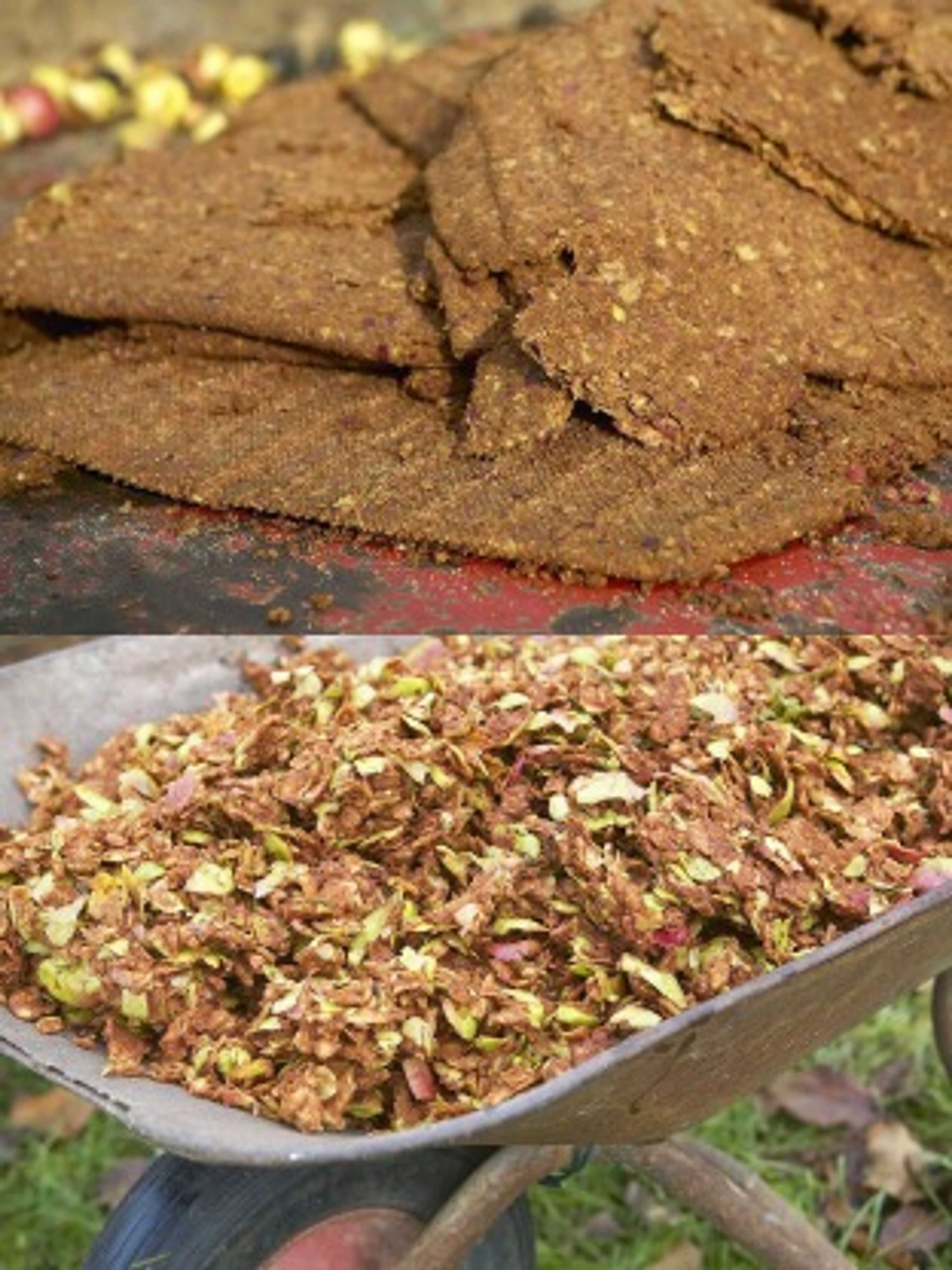
The sculpture is made of interlocking blocks cast from cider waste — apple pomace, a by-product of the Basque cider-making tradition. The form draws on the openness of Eduardo Chillida's sculptures, but here the openness is not built in. It emerges over time, as insects and small species carve out cavities and weather wears down the surface. Each block has a different composition — varying compactness, porosity, and proportion of organic material — so some parts degrade quickly and others remain.
The site is Chillida Leku, Eduardo Chillida's sculpture park in the hills above San Sebastián. The brief, Urban Fauna Resort, asked for sculptural microhabitats for native species. The material followed from the place: apple pomace is the abundant waste stream of a centuries-old regional industry. Collaborators were to include biologists from Aranzadi and local cider houses.
materials
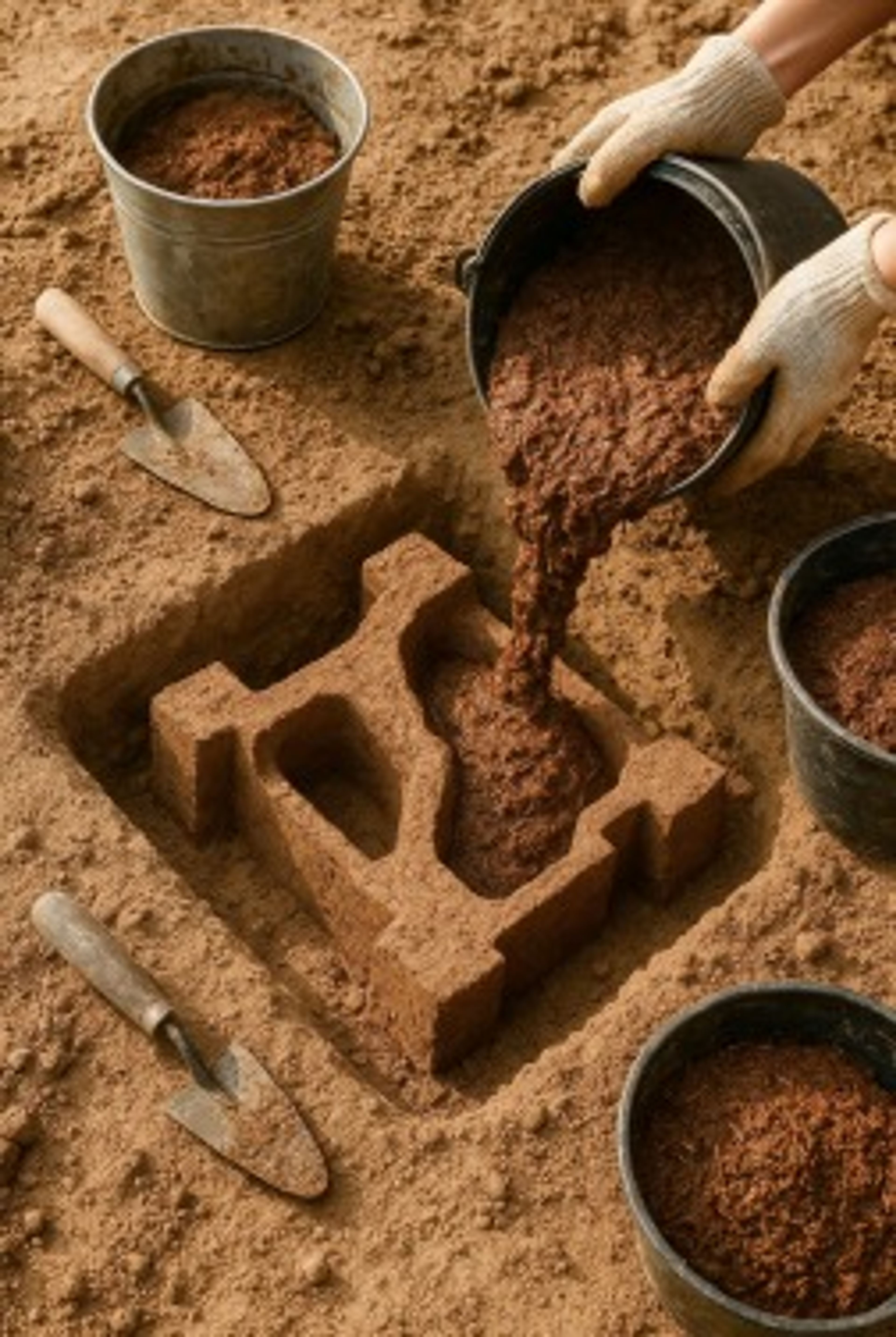
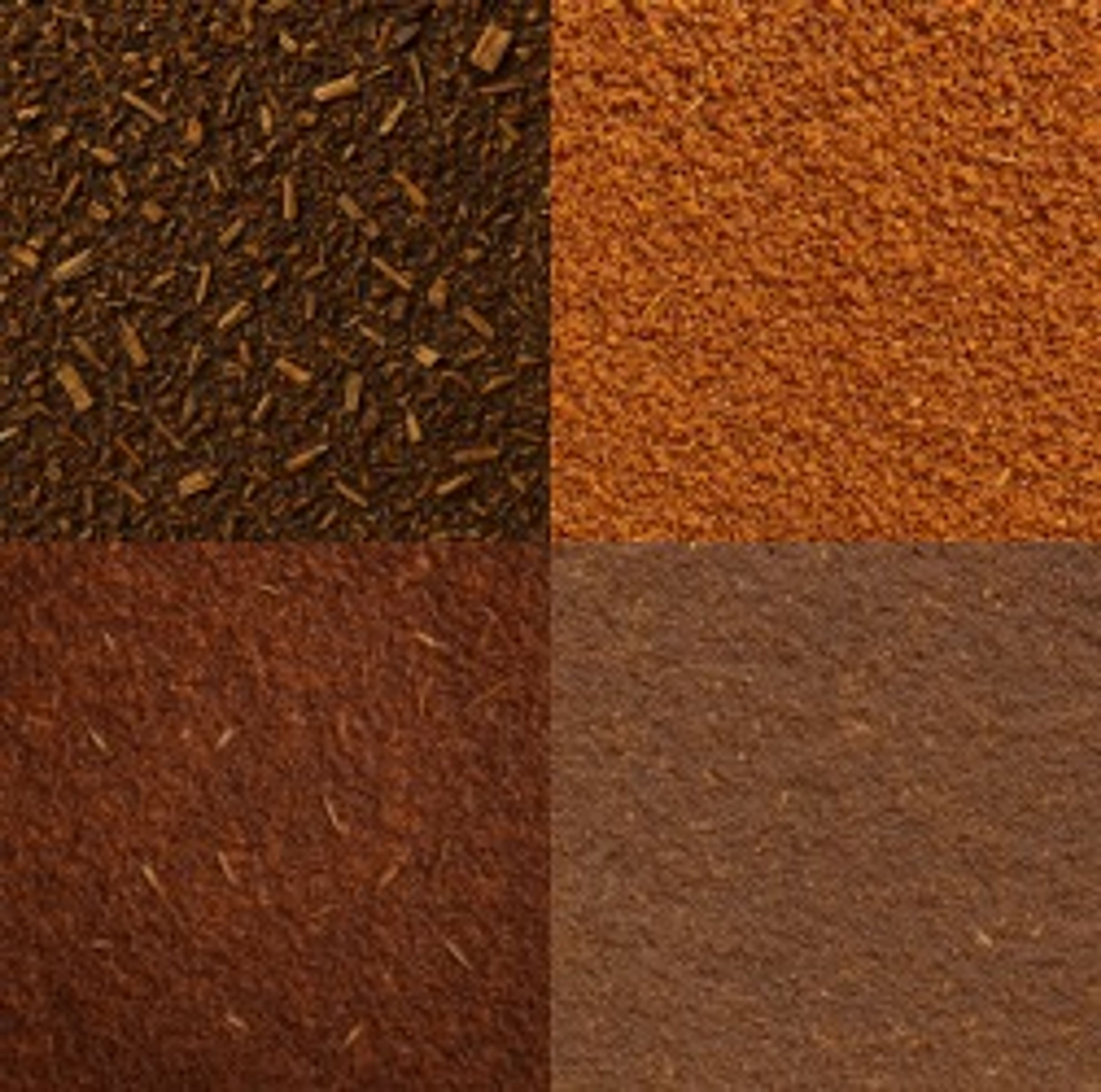
Two biomaterial recipes were developed. A structural mix — apple pomace, soda ash, and clay — holds the form longer. A weathering mix — more pomace, earth-based binders, and natural fibers — breaks down sooner, opening cavities as it goes. The blocks would be cast directly into compacted soil, with the molds carved into the ground itself. No wood or metal formwork.
fauna and microhabitats
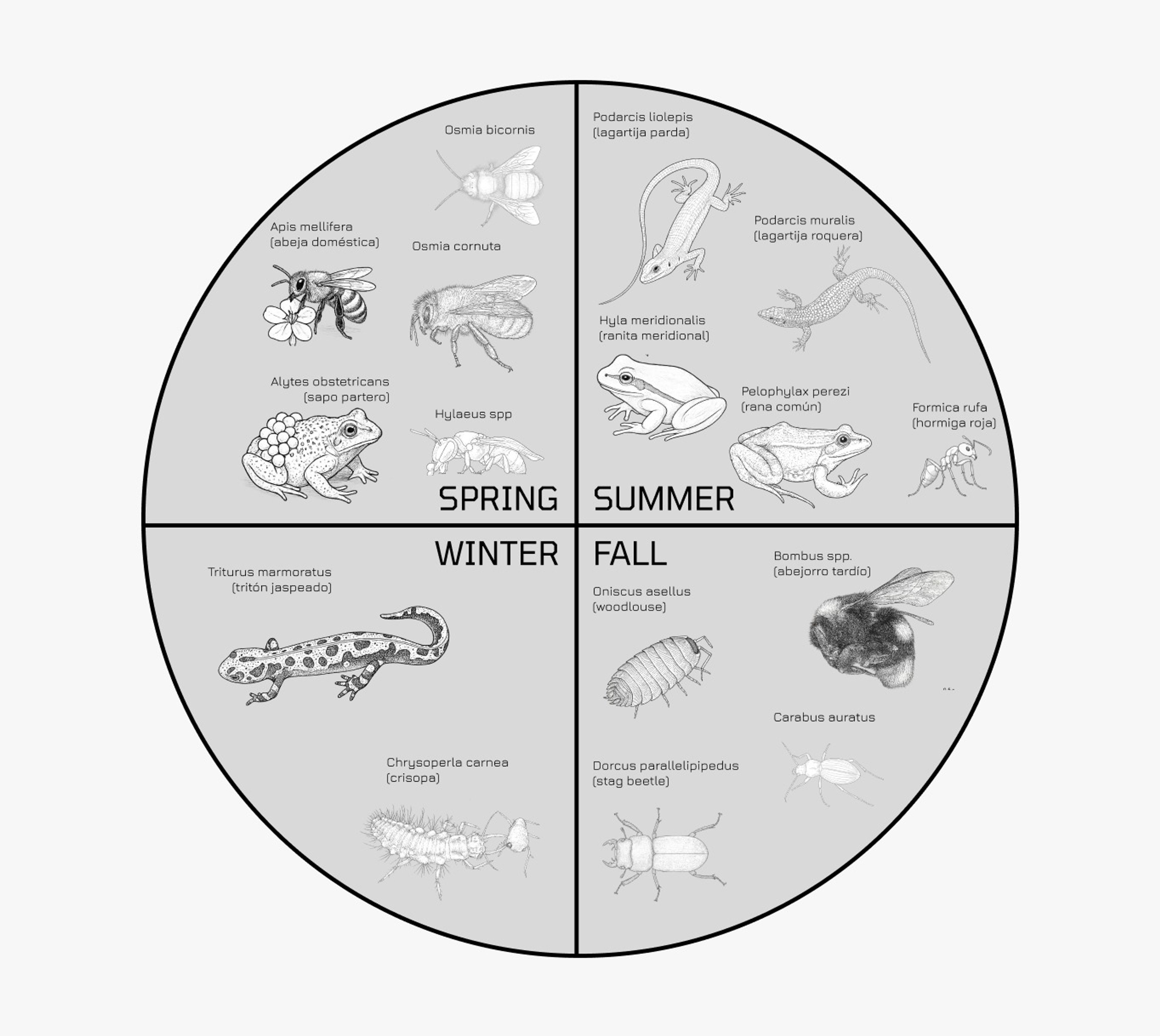
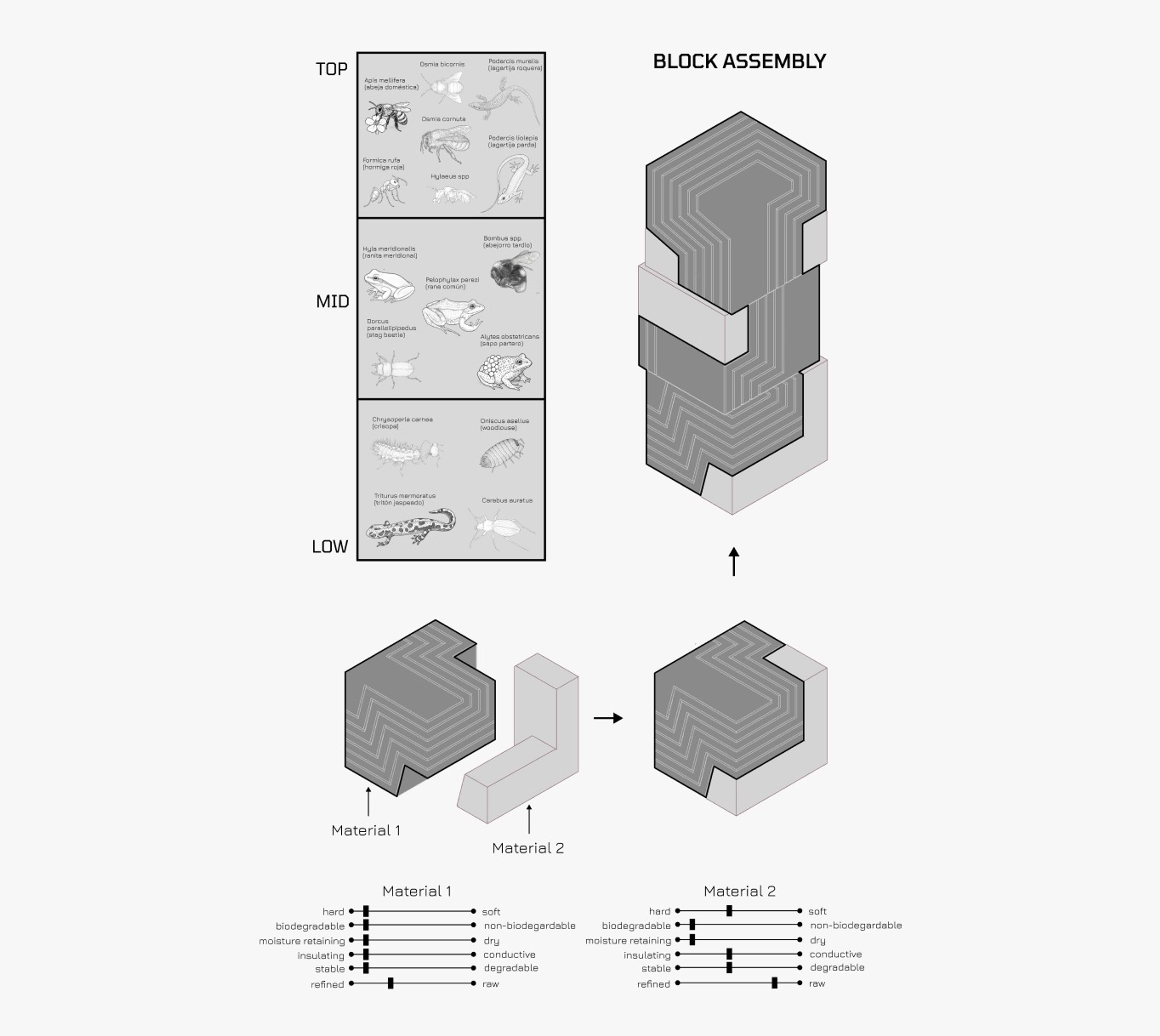
Species are allocated to zones of the sculpture by season and microclimatic need. Top zones, sunny and exposed, are tuned for mason bees, wall lizards, and red wood ants. Mid zones, partially shaded, for tree frogs, common frogs, midwife toads, bumblebees, and stag beetles. Low zones, at ground level, for marbled newts, woodlice, lacewings, and golden ground beetles. Surface textures — porosity, embedded fibers, basking ledges, burrowing voids — are tuned to the needs of each group.
The proposal also includes public workshops, run with local cider houses and nearby schools. Participants would learn about native fauna, mix and press the biomaterial, and co-create smaller refuges to install nearby. A prototype would be built in advance as a test and a teaching tool.
Refugio Sagardoa was not selected. The work remains a proposal, and its methods continue to feed our ongoing research on biodegradable and evolving architecture.