



piedratetl
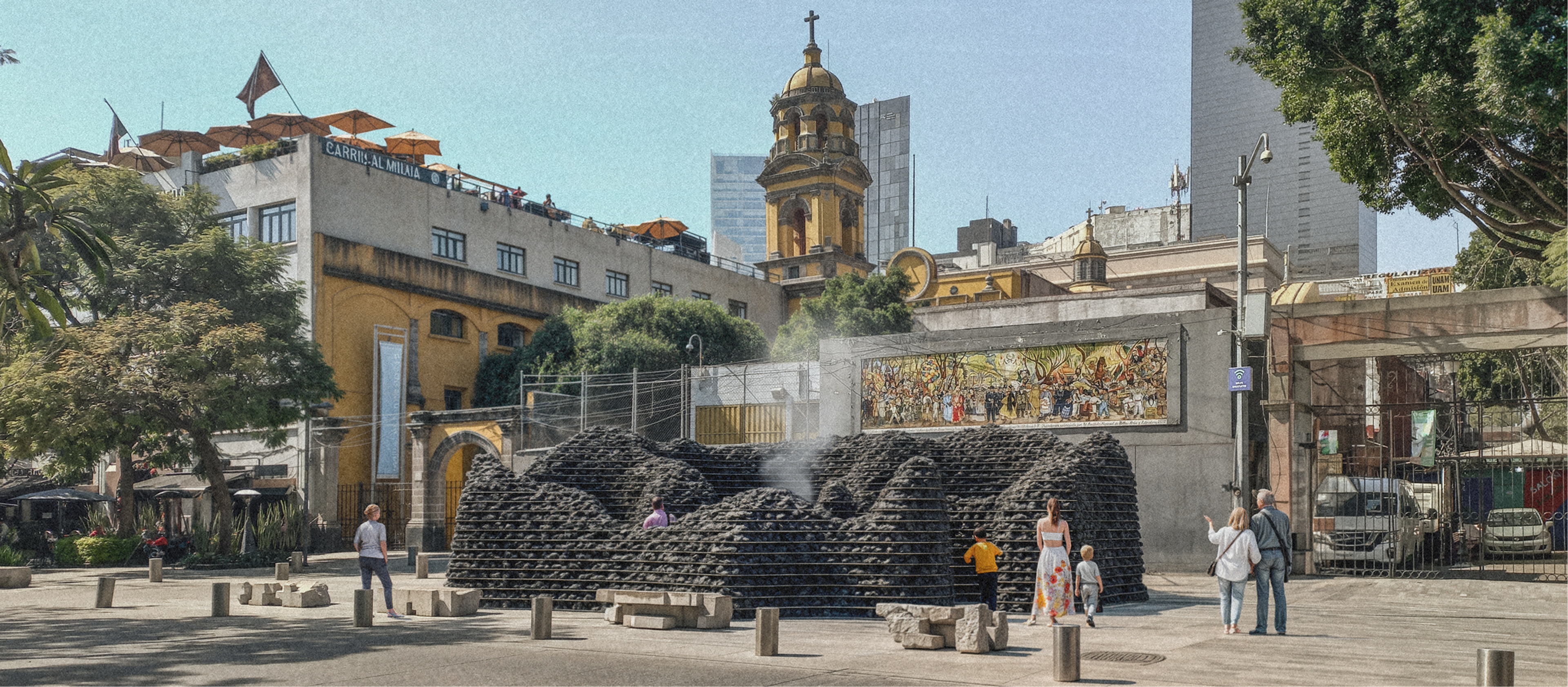
Piedratetl is a proposal for an ephemeral pavilion that honors stone as a symbol of permanence, resistance, and collective culture. Competition entry for Pabellón MEXTRÓPOLI 2025.
The name fuses the Spanish piedra with the Nahuatl tetl — both words for stone. The pavilion sits inside that double reference: an ancestral past held alongside the urban present of Mexico City.
materials and fabrication
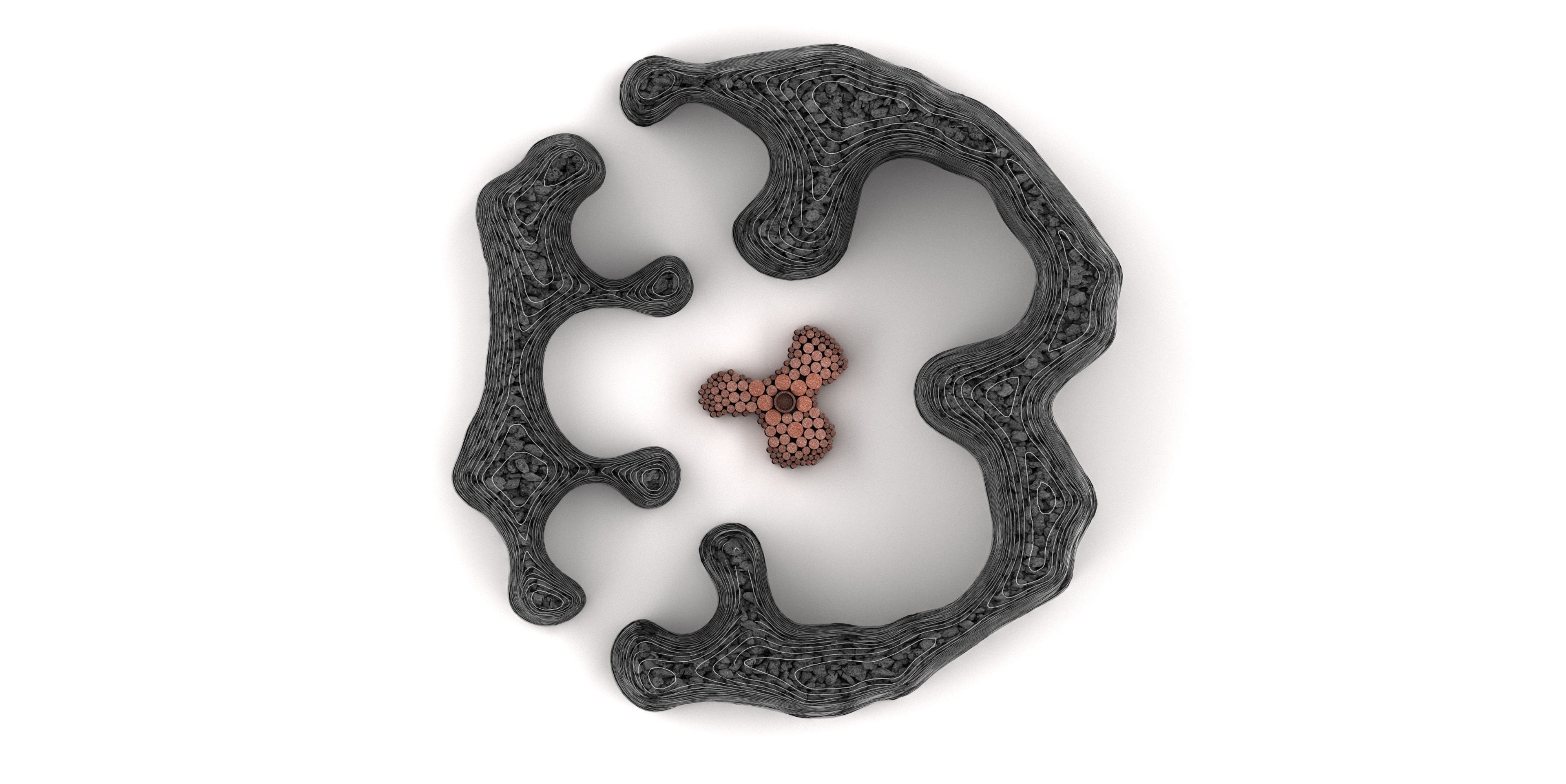
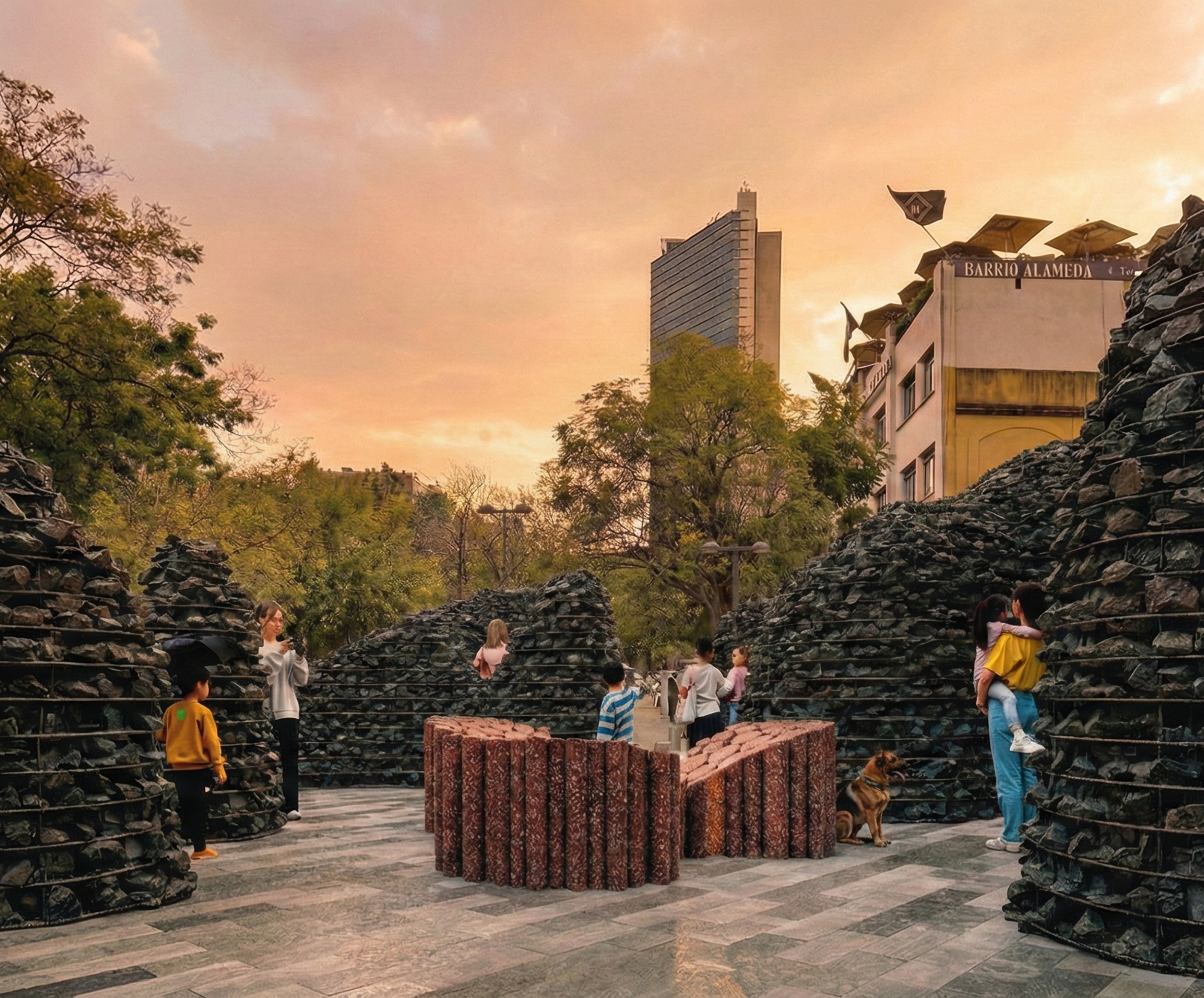
The structure is built from parametric gabions — curved metal cages bent from rebar, packed with tezontle and construction debris. Tezontle, the volcanic stone used in central Mexico for thousands of years, meets rebar, the emblem of contemporary Mexican construction. The two materials carry the same logic: locally available, structurally honest, in continuous use across centuries.
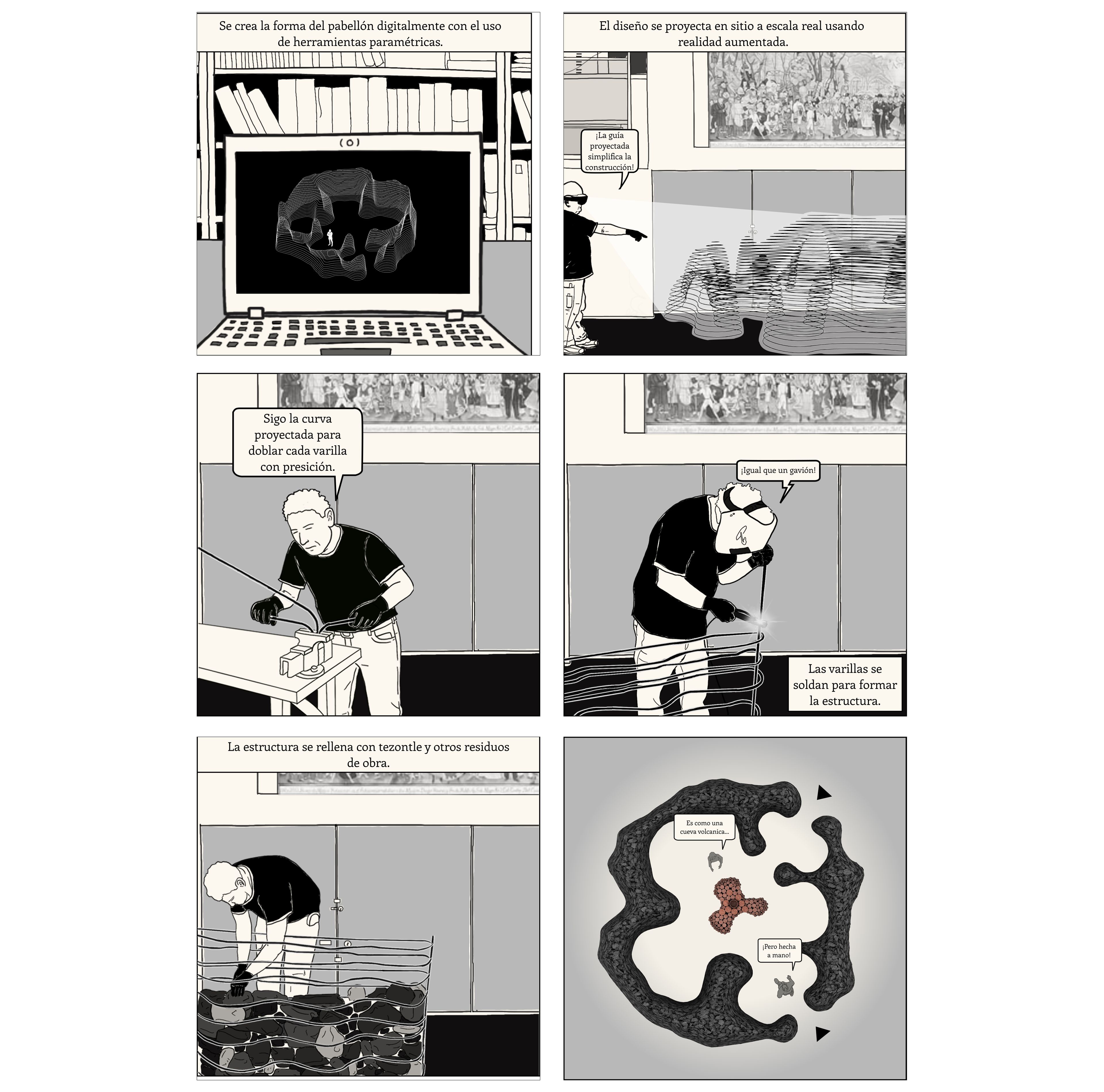
The construction process uses augmented reality. A parametric model is projected at full scale onto the work surface, and the rebar is bent to follow the projection — layer by layer, the way a 3D printer builds form. Once each bent piece is finished, it's assembled on site. The method is fast, low-cost, and accessible: it can be built with local materials and local labor.
the core
At the center of the pavilion is a monolithic piece cast from artisanal terrazzo — regional stones and construction debris poured into molds made from PVC pipe, then sectioned to form a three-dimensional altar, seat, and gathering point. Copal is burned inside it during the festival as a symbolic offering.
Piedratetl proposes a material and symbolic synthesis of the country. Tezontle and rebar. AR and craft. Ceremony and structure. An architecture that reflects Mexico's living identity: complex, hybrid, and rooted deep in its territory.