


la baja house
La Baja House is a speculative residence for La Paz, Baja California Sur — 3D-printed in sand, designed to cool itself through geometry alone.
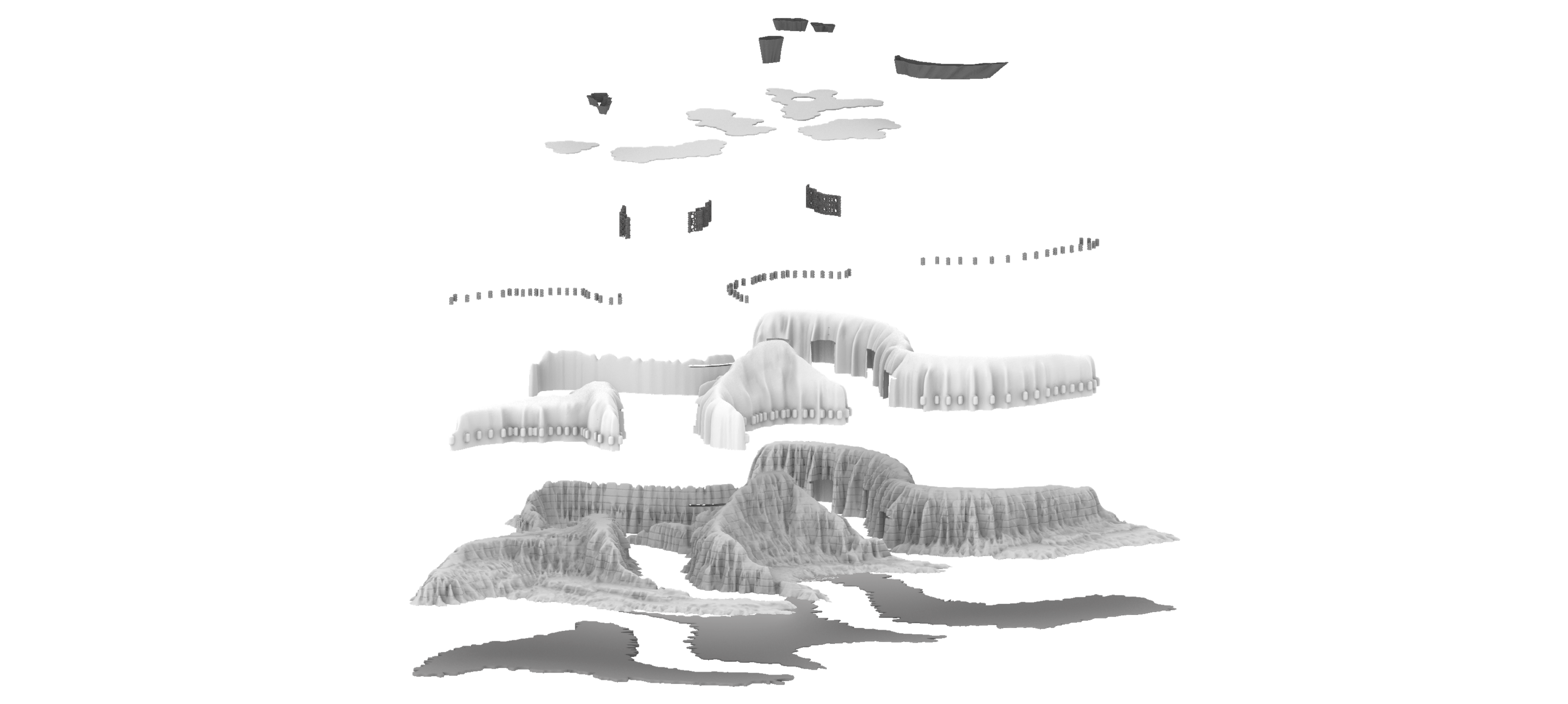
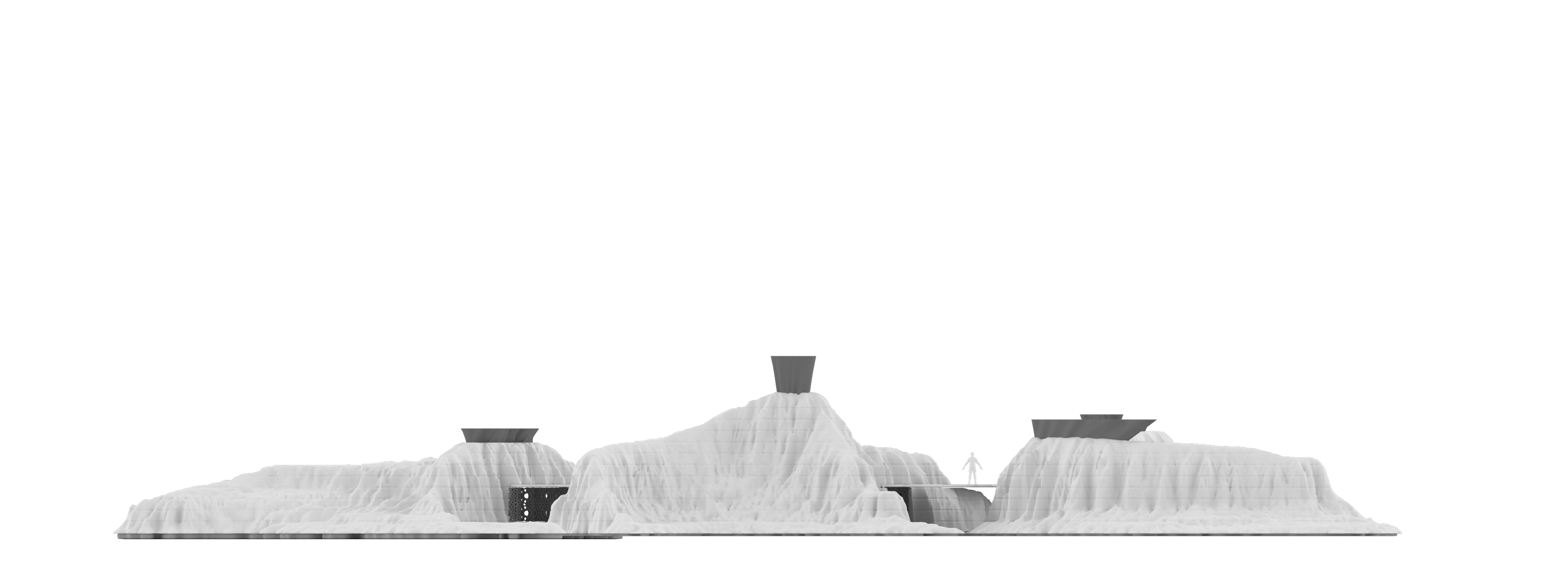
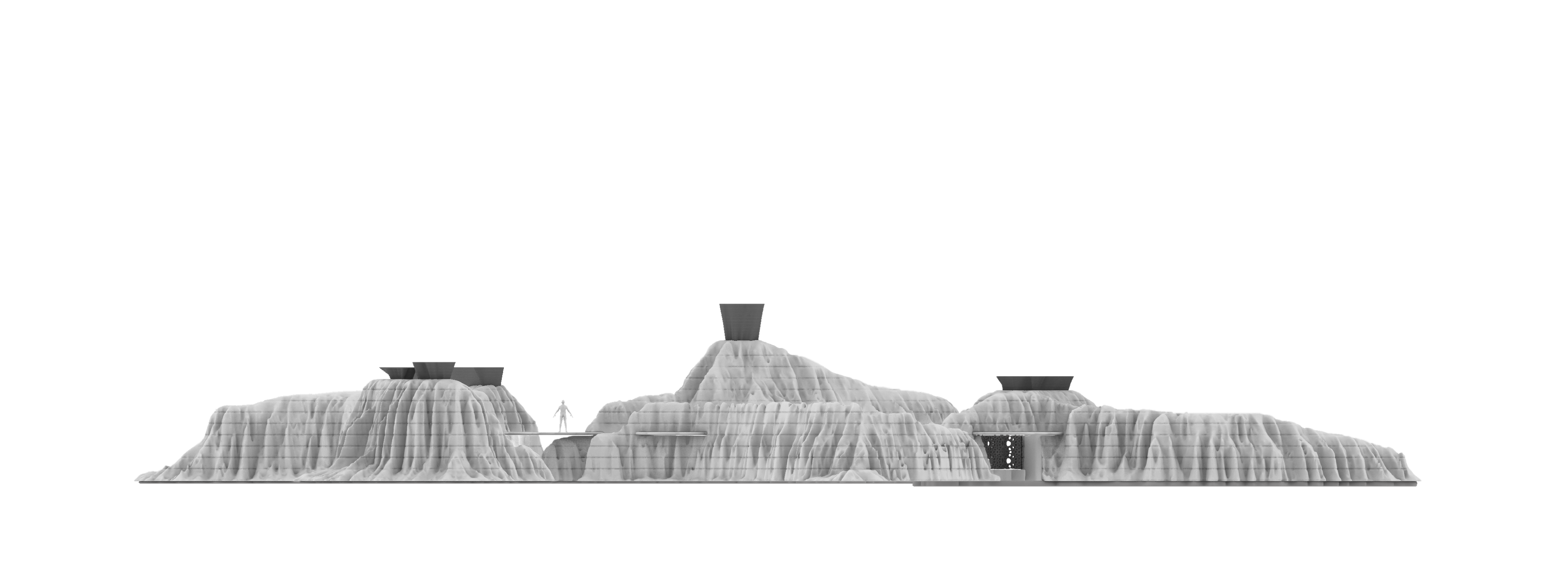
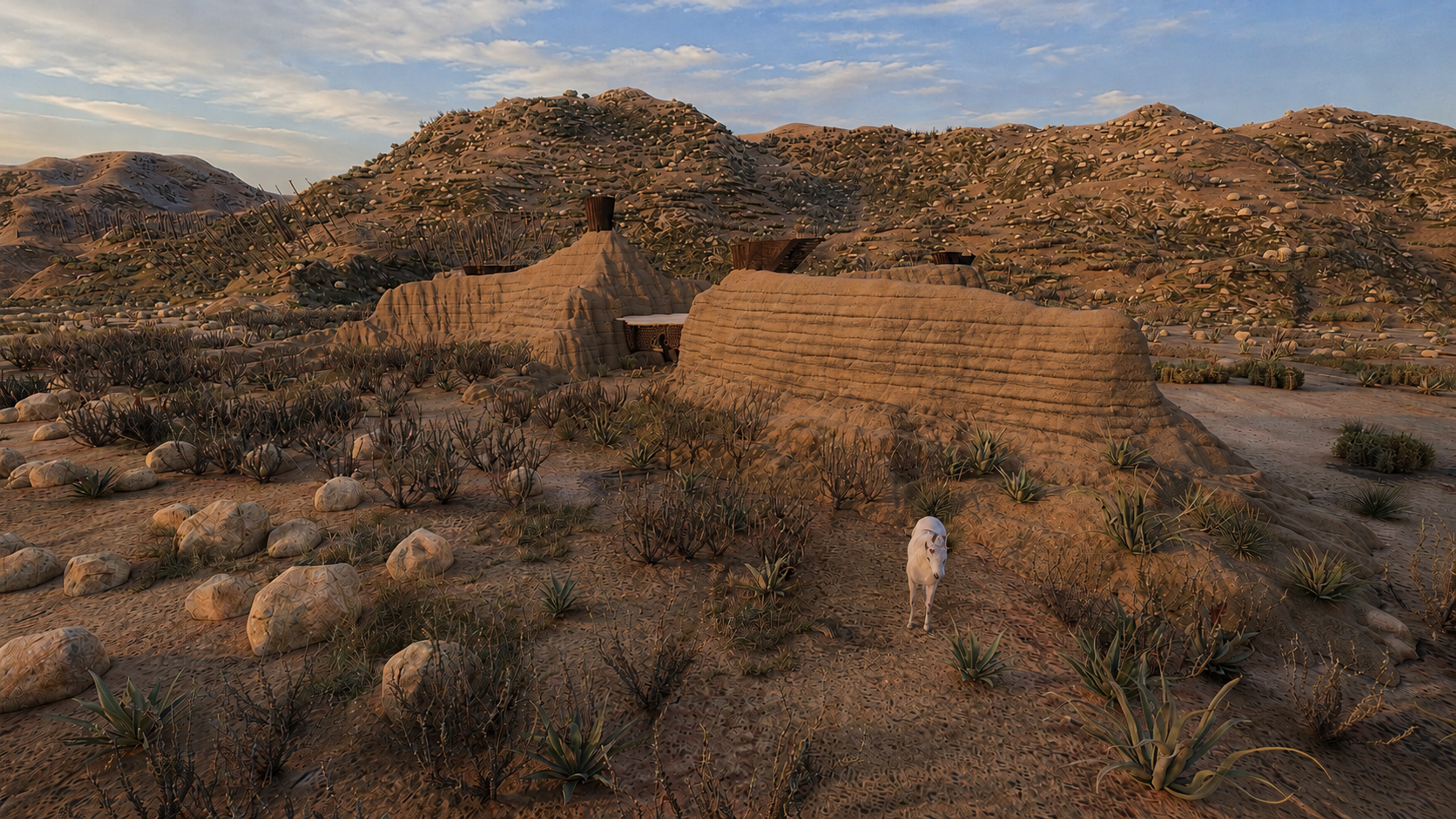
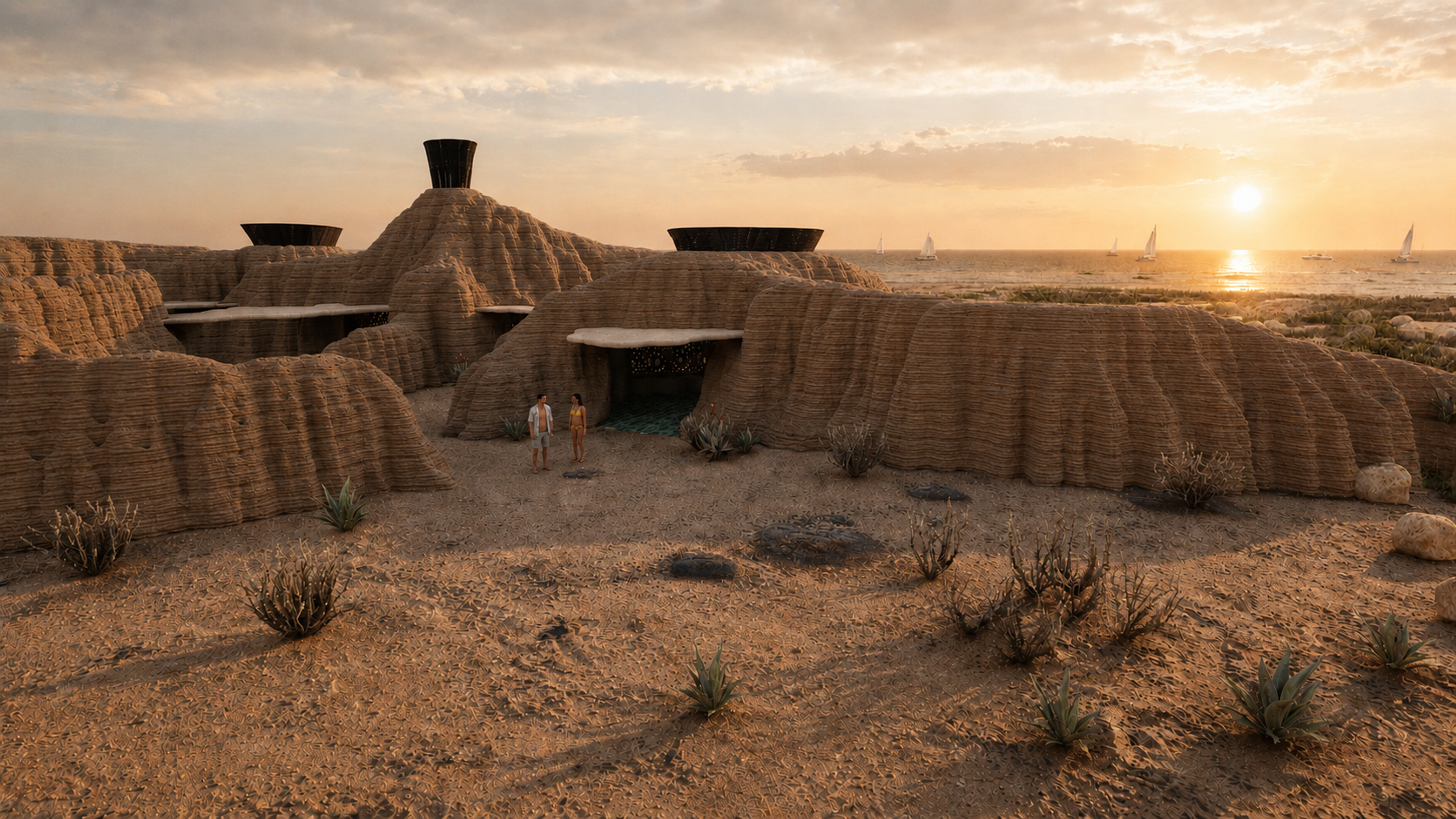
The house is conceived as a topography rather than a building. Walls rise from the ground as eroded forms — printed in sand layer by layer, the same way a 3D printer builds form — and shape themselves to sit inside the desert landscape that surrounds them. From a distance, the house reads as part of the dunes. The architecture is meant to weather. Over time, the sand softens, smooths, and merges further with the ground it came from.
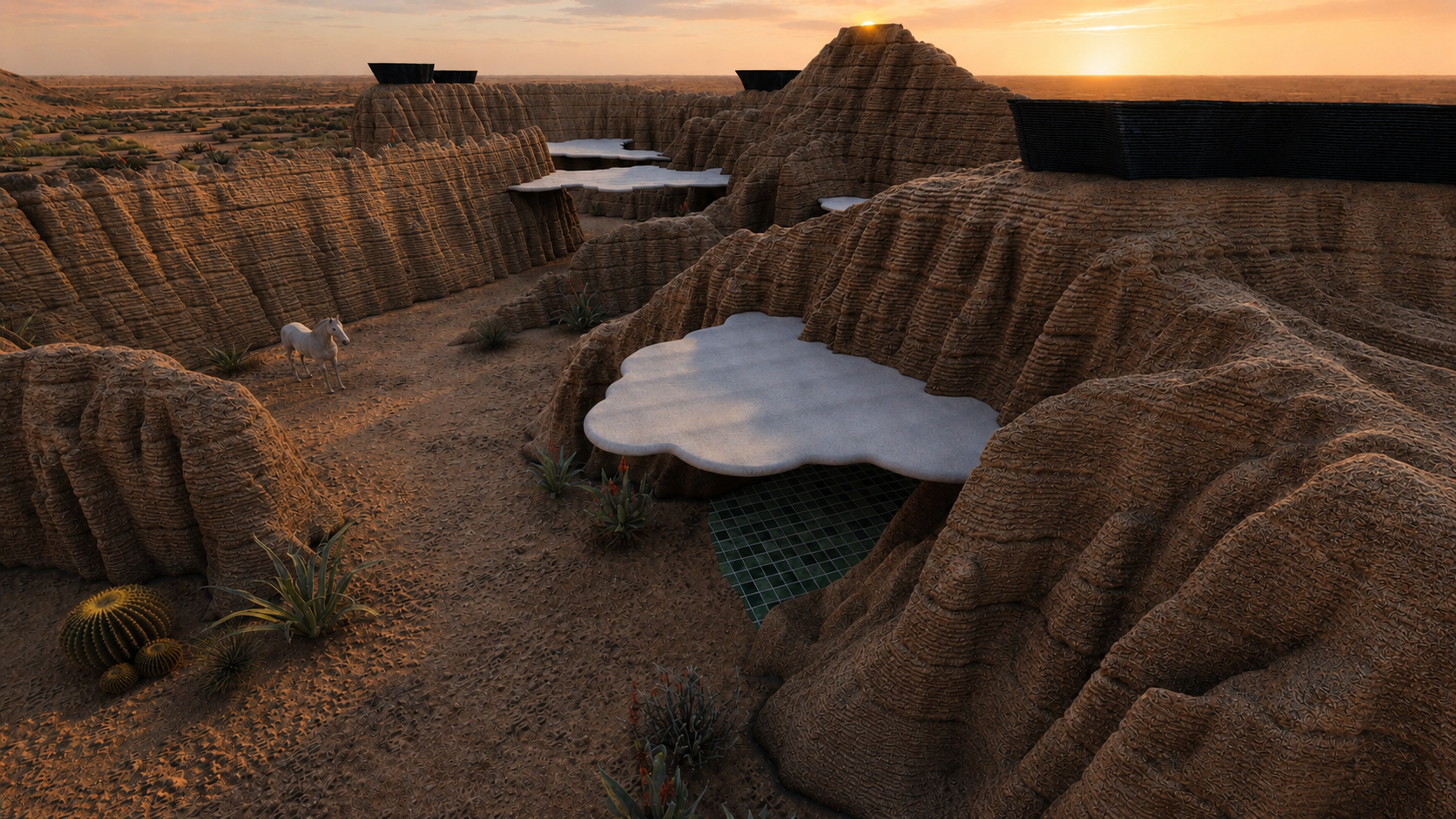
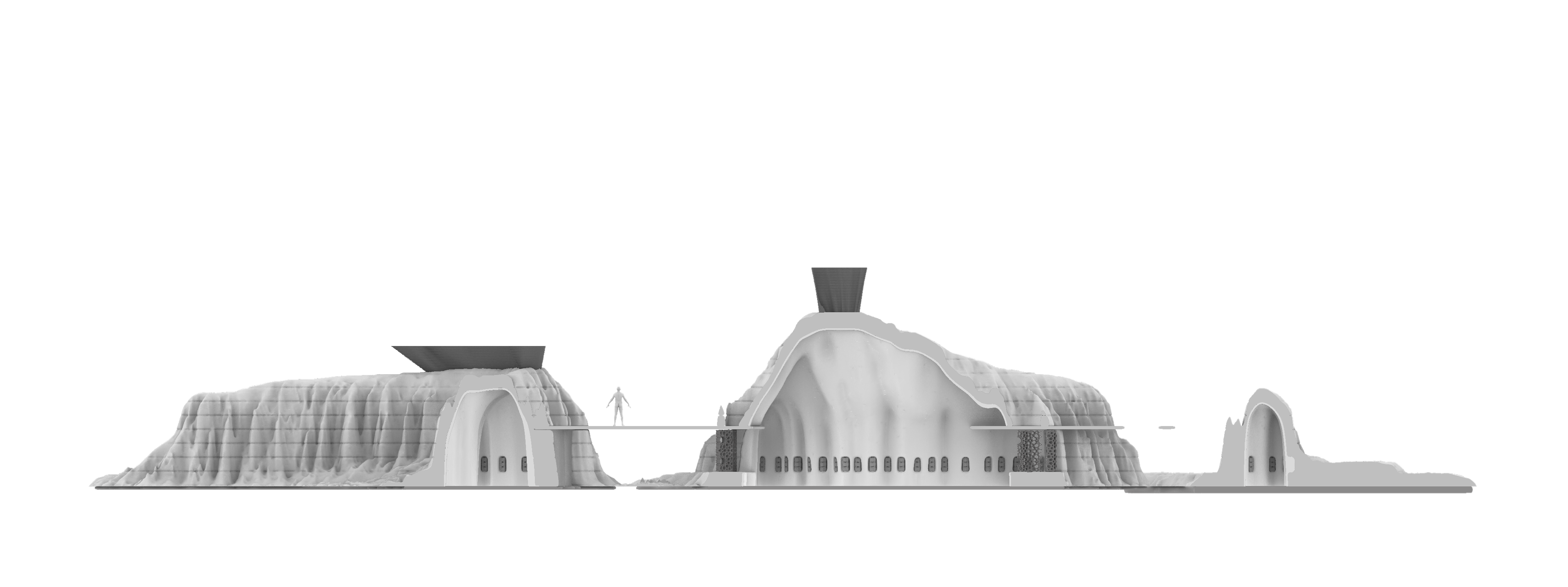
Underneath the topography, the interior is climate-controlled by air alone. La Paz sits in one of the hottest regions of Mexico. The house responds without mechanical cooling, using passive airflow systems tuned to the geometry of the building.
solar chimneys
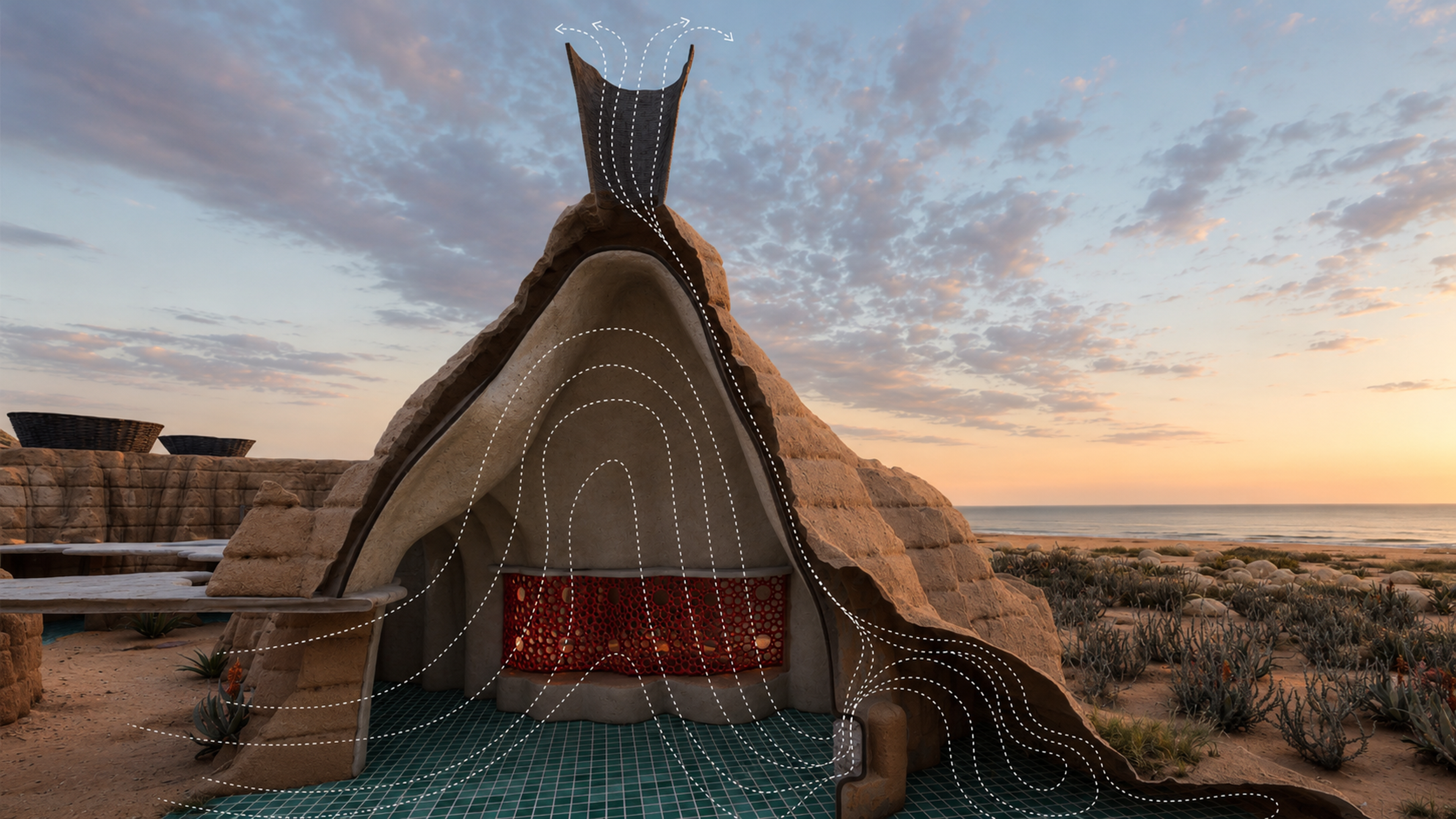
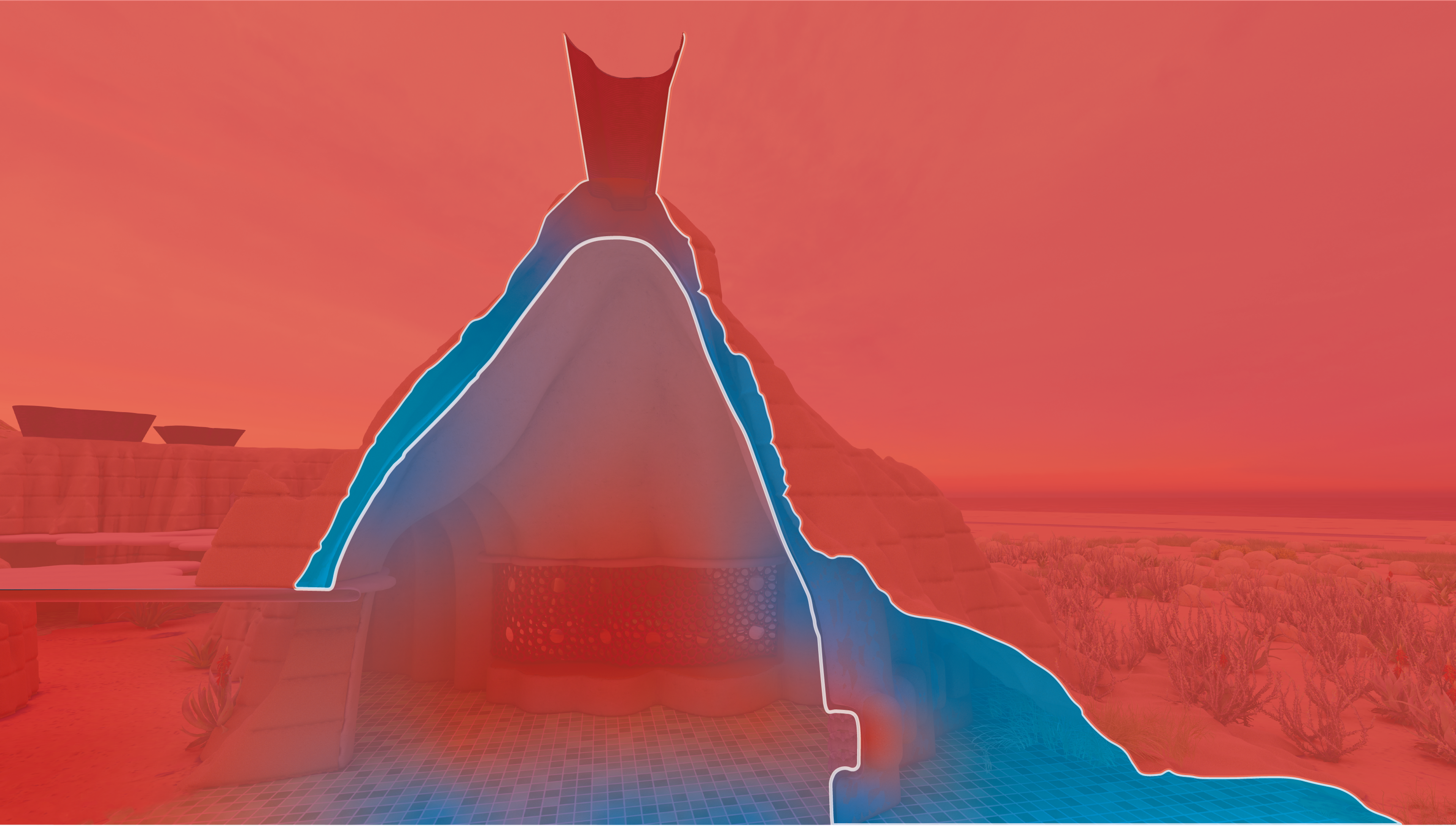
At the high points of the house, dark conical chimneys rise from the sand mass. The dark material absorbs sun and heats the air inside the chimney rapidly. Hot air rises and exits through the top, which pulls cooler air through the rooms below. The hotter it gets outside, the harder the chimney pulls. The cooling system is self-regulating — driven by the heat it's meant to counteract.
bioclimatic Brick walls
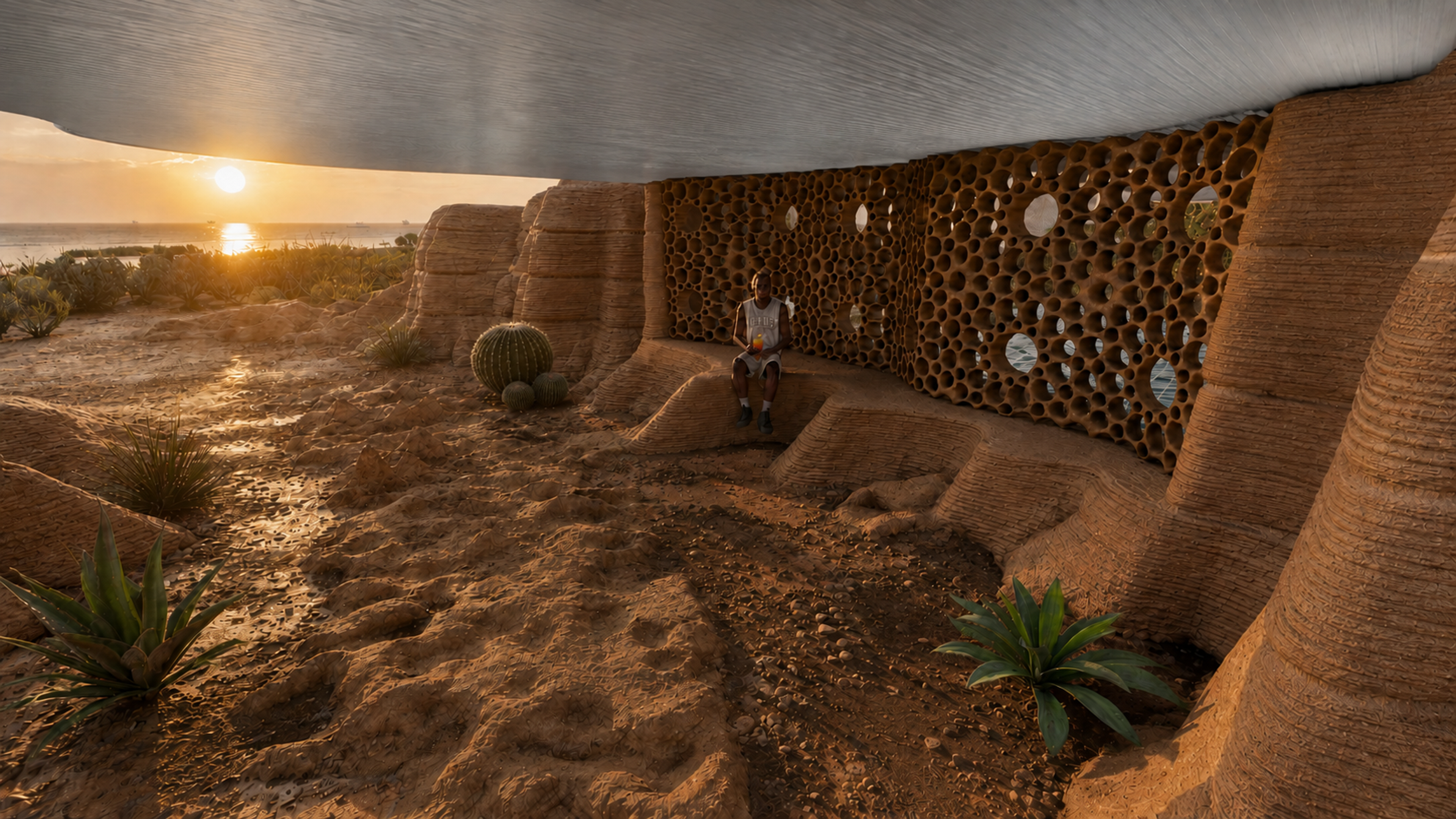
Where the building meets the prevailing breeze, the walls are perforated with Bioclimatic Brick — a geometry developed by the studio for capturing potable water from fog through condensation. Here the same brick does double duty. It pulls humidity from the coastal air during the cool hours, condensing droplets on its inner surface. It also breaks incoming wind into smaller, slower streams that pass through the perforations and cool the interior on the way in. Water and air, captured by the same geometry.
tiled interior
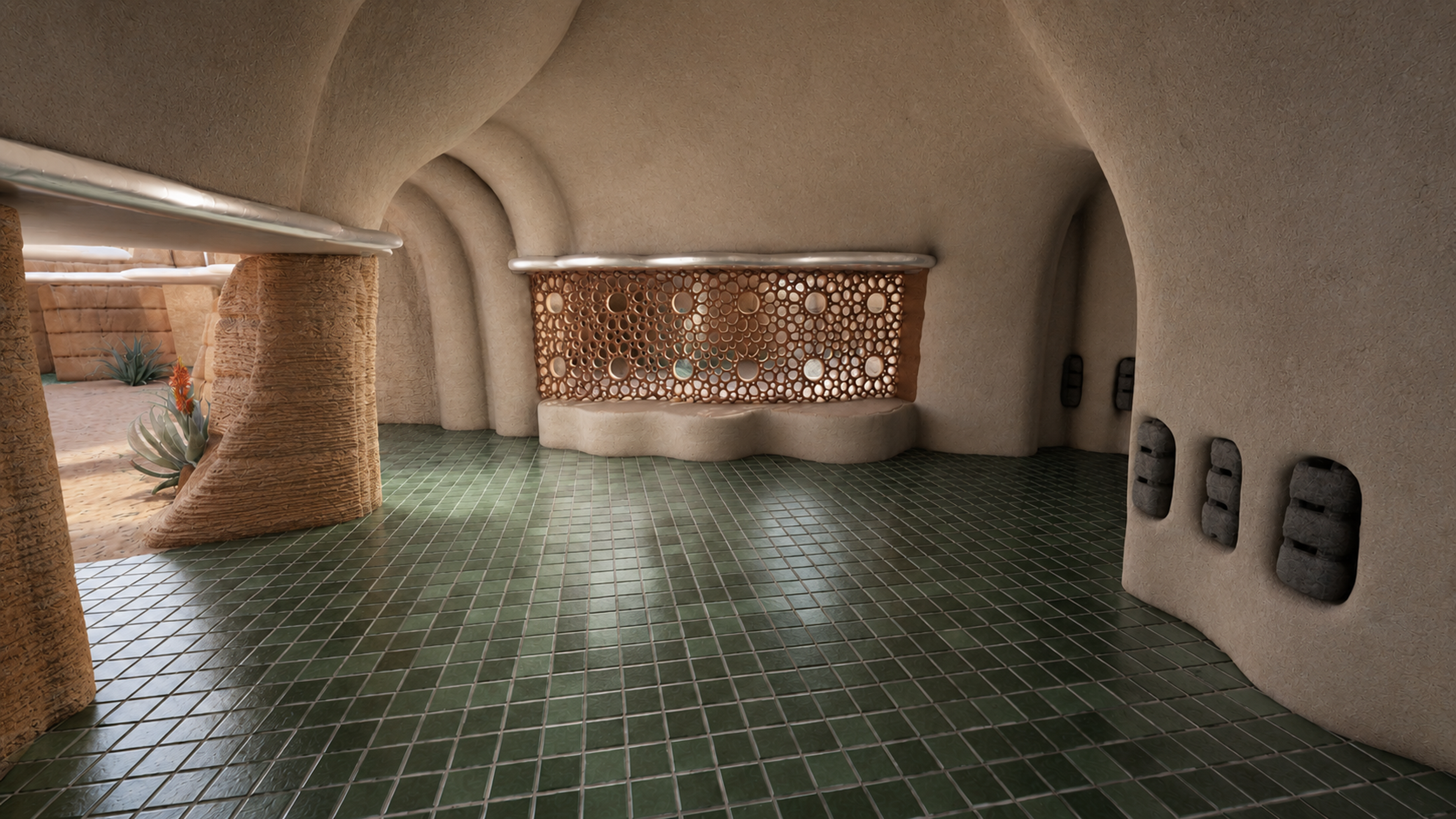
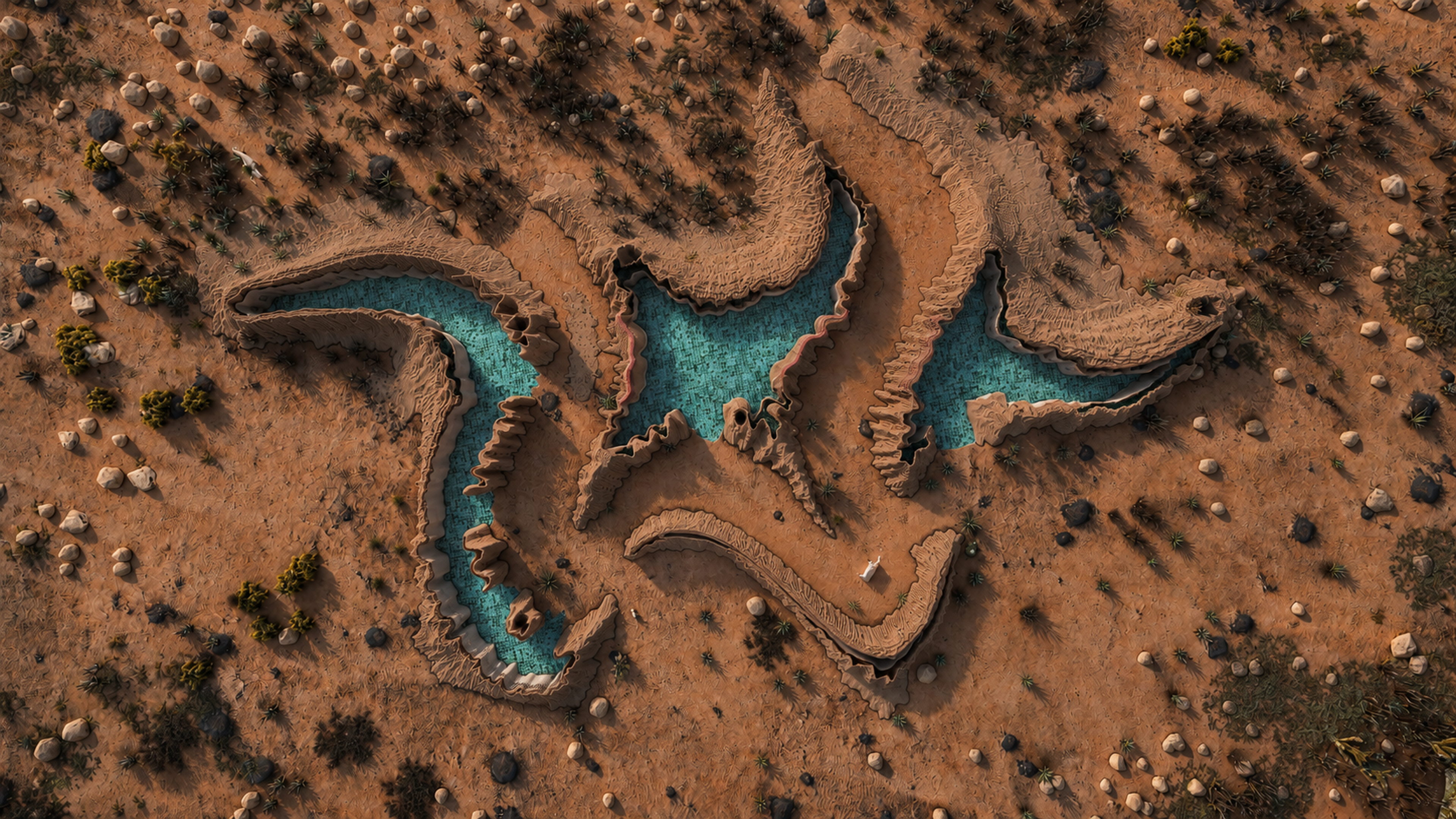
The floors and lower walls are tiled in deep green ceramic. Stone and ceramic both stay cooler than the air around them; the tiled surfaces absorb residual heat from the interior and release it slowly back into the night. Combined with the chimneys and the perforated walls, the house holds a comfortable interior temperature across the full daily cycle without conditioning.
The materials are local. The sand comes from the site. The bricks are fired locally. The ceramic tile is regional craft. The house is a proposal for what desert housing could look like if it took its climate seriously and refused to fight it.