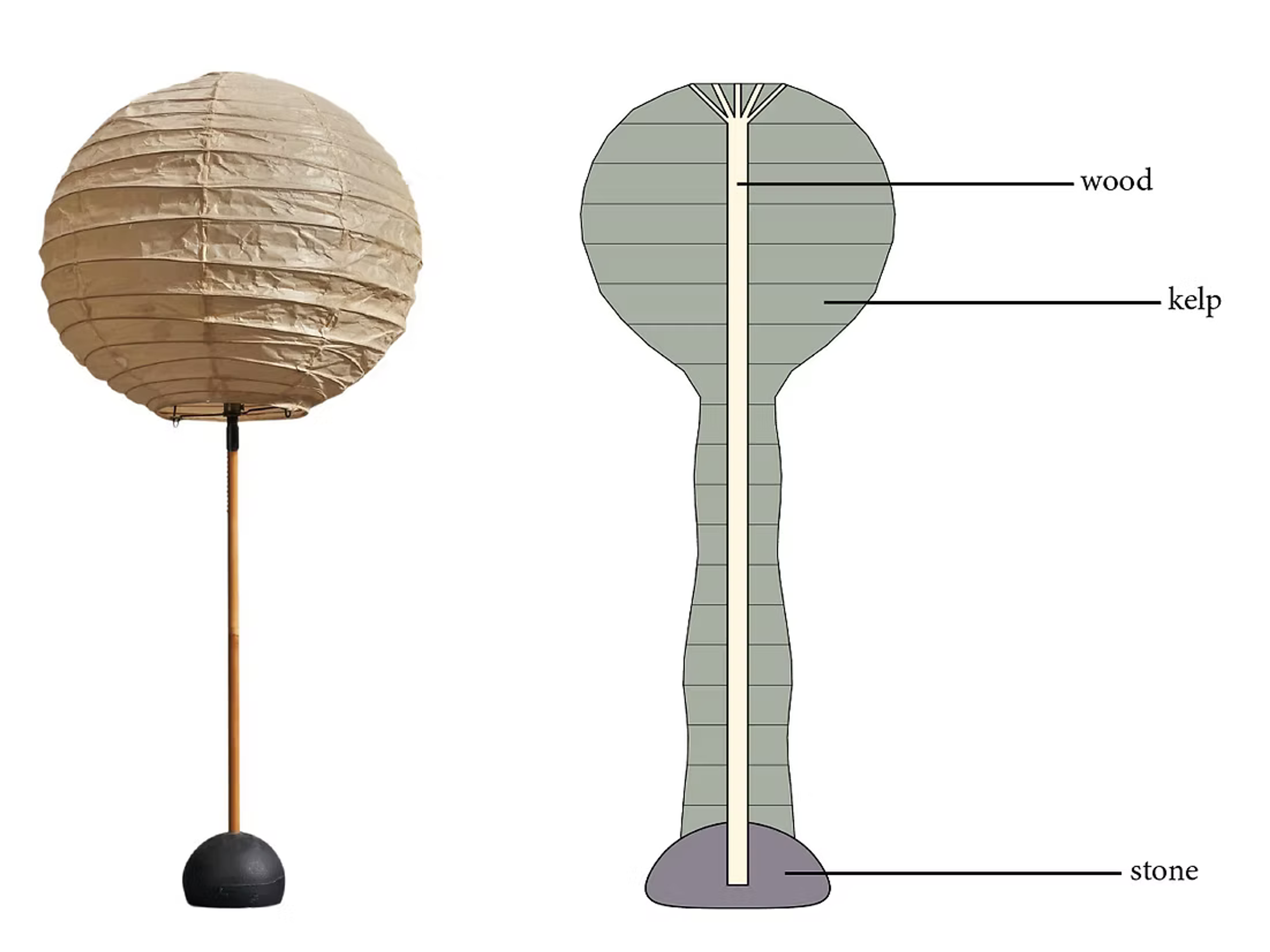



kelp pavilion
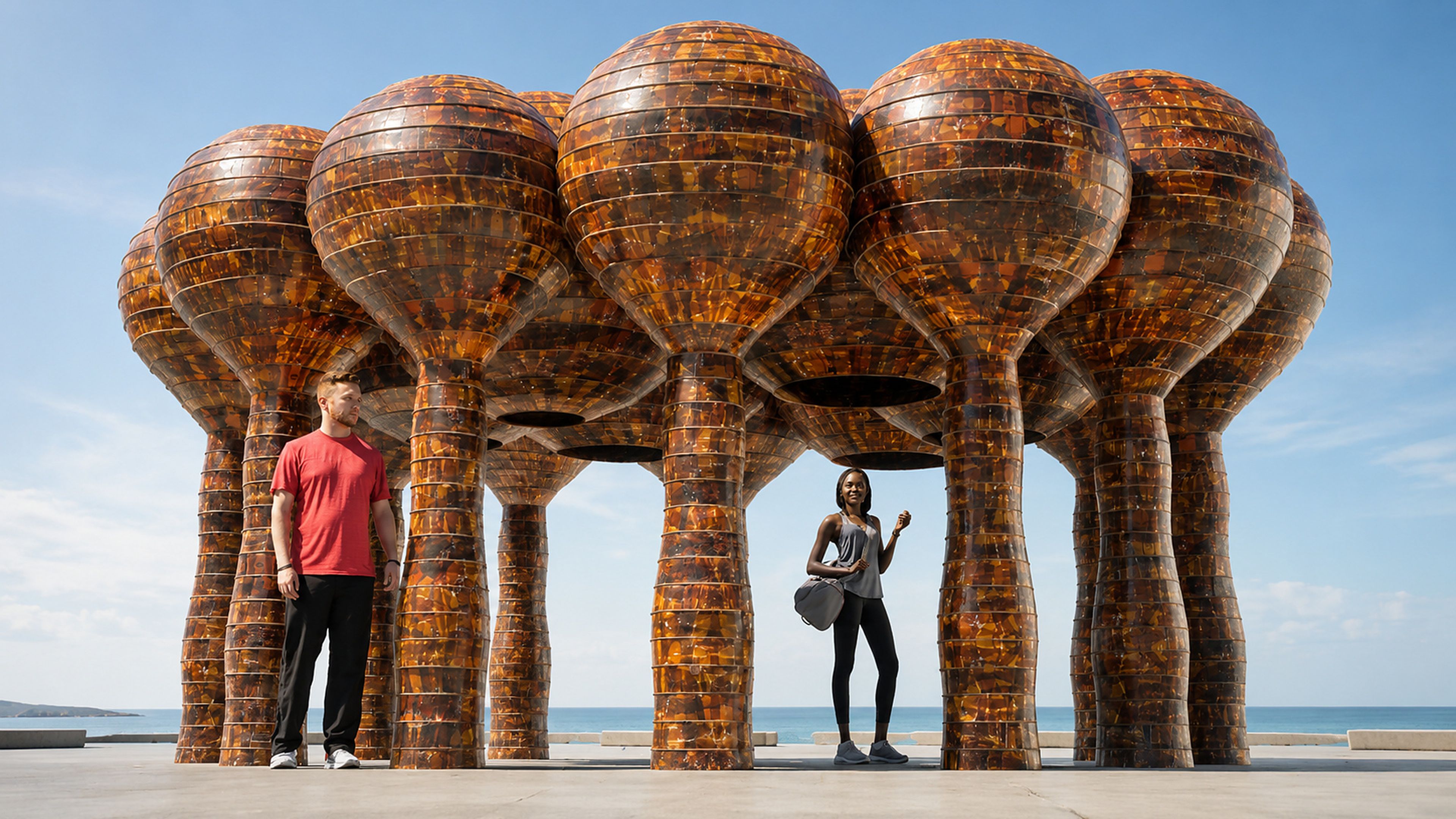
A speculative pavilion clad in translucent kelp biomaterial — a proposal to take the studio's seaweed research from object to architectural scale.
The pavilion exists to answer a question the Seaweed Light Sculptures kept raising: what happens if you scale the biomaterial up? The lamps test kelp at the scale of an object. The pavilion tests it at the scale of a room.
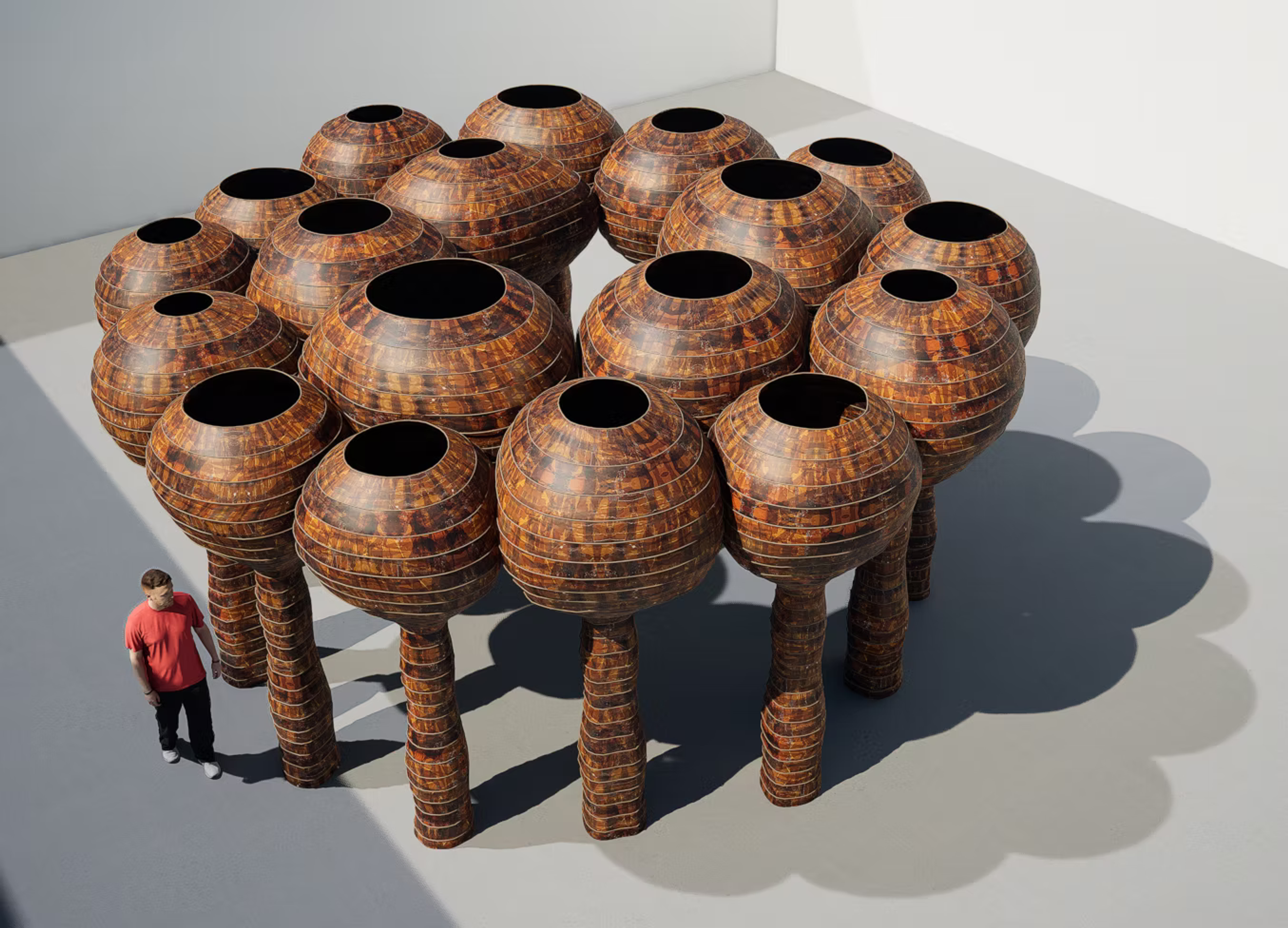
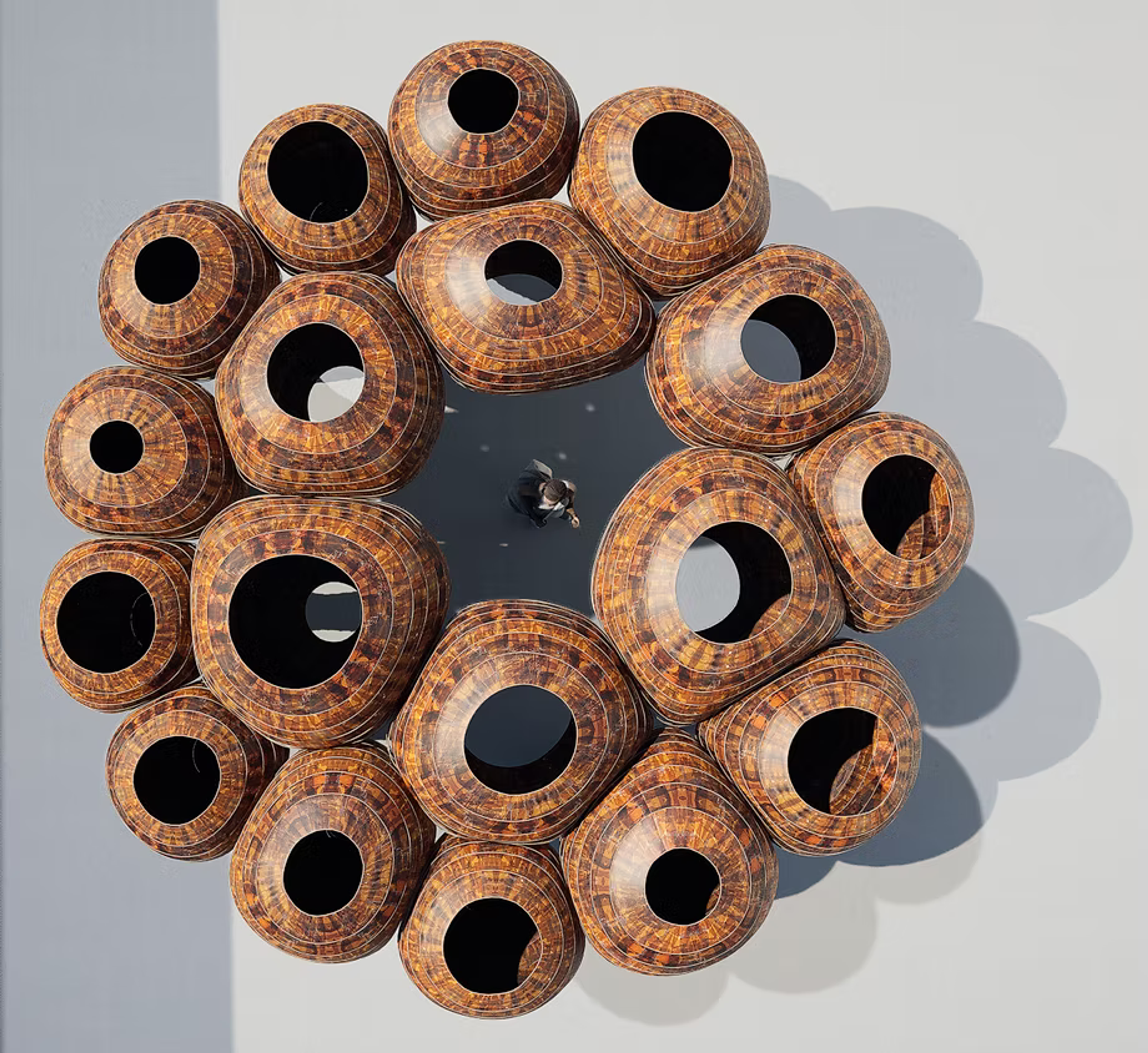
The envelope is built from translucent kelp biomaterial sheets — the same material developed in the studio for the lighting sculptures, here stretched across a structural frame to form a continuous skin. By day, the kelp filters sunlight into the interior the way it filters lamplight, throwing fiber patterns and mineral traces onto the floor. By night, with light coming from inside, the pavilion glows from the outside in. The building becomes a lantern at architectural scale.
The siting is coastal but unspecified. A real pavilion would belong to a particular shoreline — the kelp would come from those waters, weather in that air, age into that climate. The proposal works as a type, not a site-specific design.
kelp at the scale of a wall
Conventional architectural envelopes are designed to disappear behind their function: keep the weather out, the conditioning in. The kelp envelope does that work, but it doesn't disappear. It carries the structure of the organism it came from. The wall holds the memory of the ocean it grew in.
The pavilion is left open in program. Exhibition, gathering, education, shelter — any of these could happen inside. The argument isn't about what the space contains. It's about what the wall is made of, and what it means to build with something that was alive.