



cactus lamps
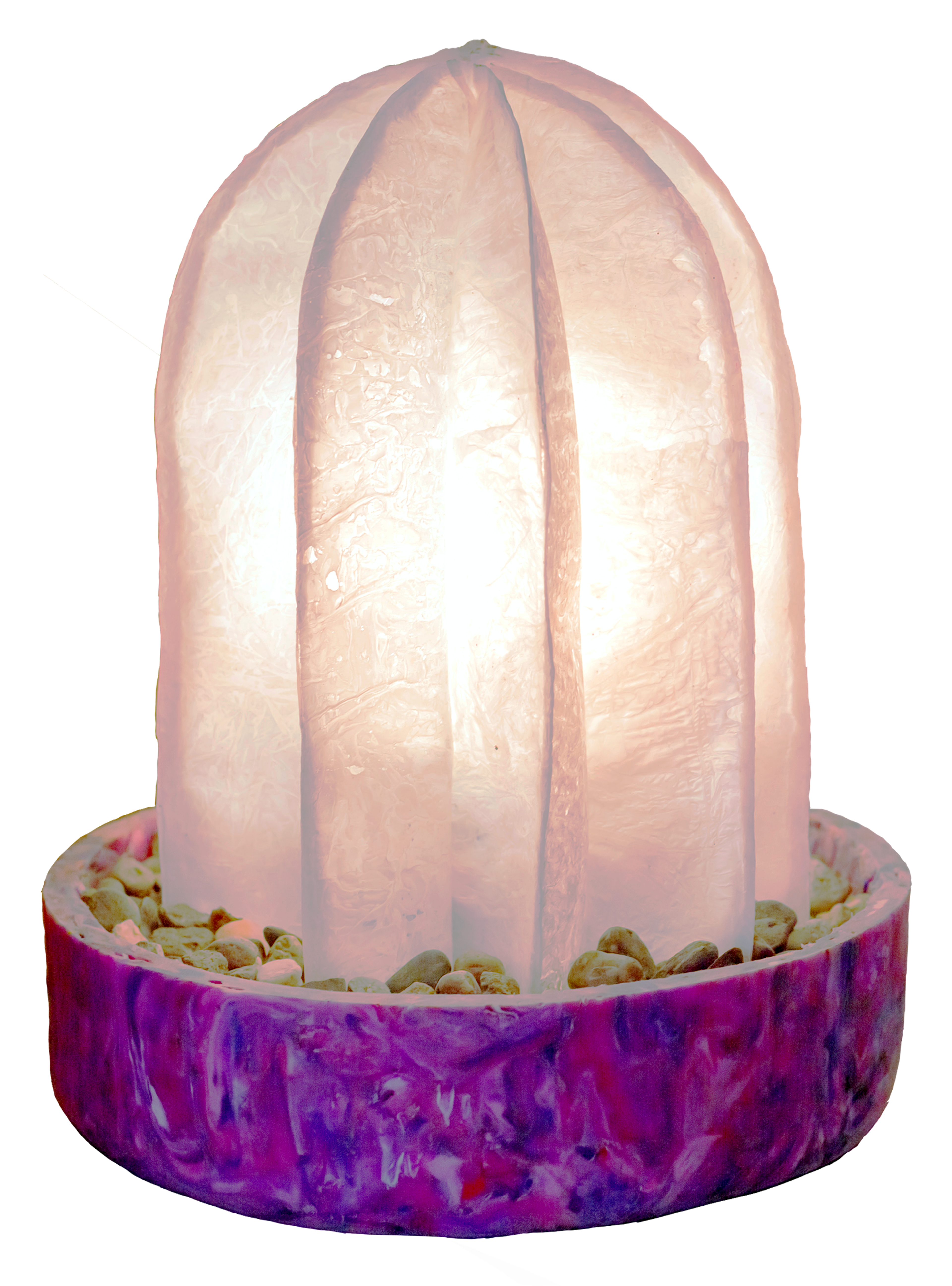
A futuristic craft made from the plastic waste of two cities. Cactus-shaped lamps developed with an artisan family in Tijuana over a year of material research, using bags and bottle caps collected across Tijuana and San Diego. Available on request.
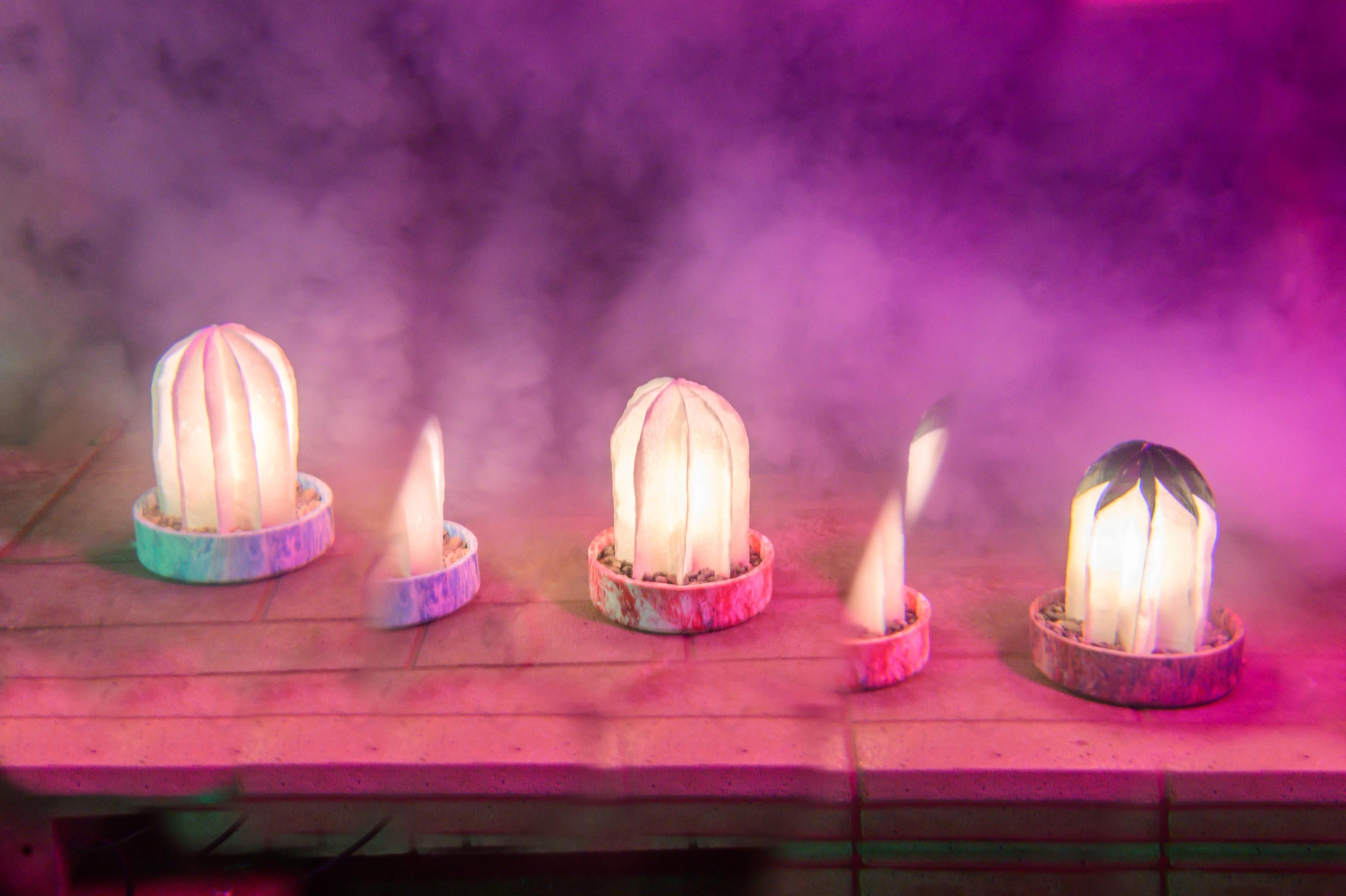
The lamps draw on two references: Japanese paper lanterns, for the warm diffused glow, and the cacti native to the landscape of Las Californias, for the form. The premise is simple — if a local craft tradition were invented here, today, it would have to start with what actually accumulates here. Which is plastic.

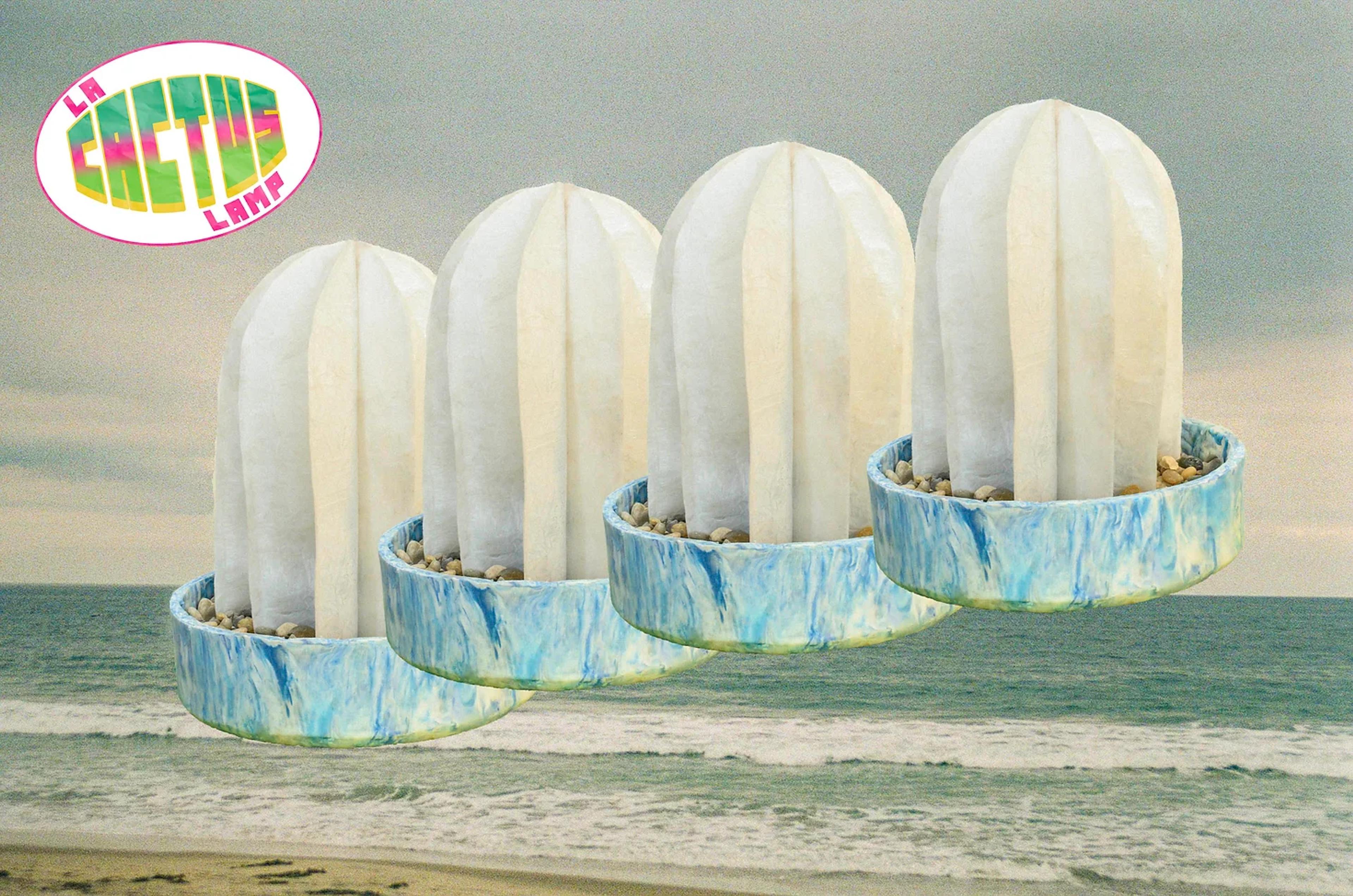
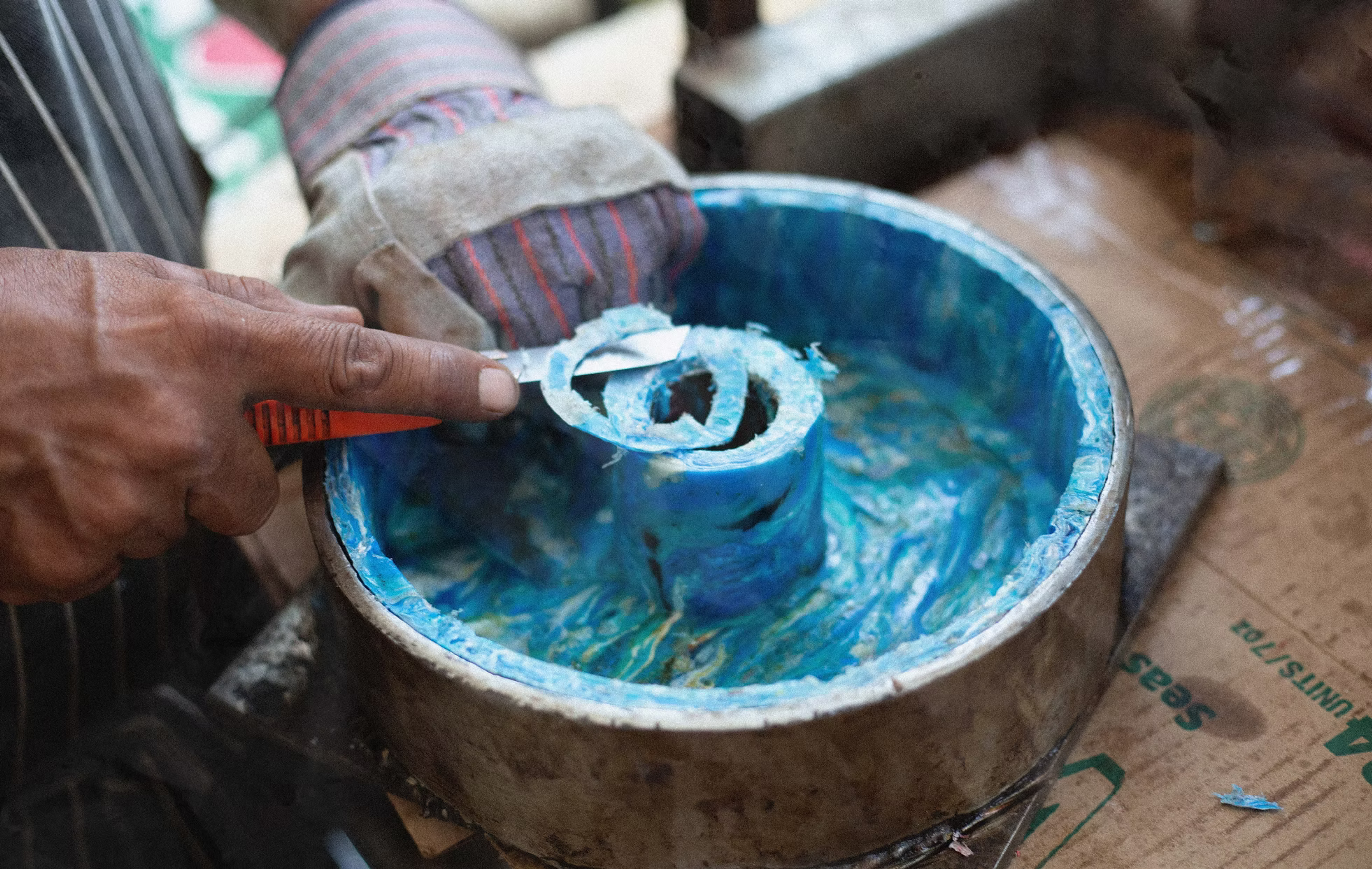
Clear plastic bags collected in San Diego — the grocery and packaging waste headed for the landfill or the ocean — are fused into leather-like sheets, cut, and shaped into the cactus body. The base is cast from harder plastics: shampoo bottle tops and soda caps from Los Laureles Canyon, a barrio in Tijuana where plastic piles up in the channeled river. Melted down, the caps marble into a stone-like material — no two bases the same. We sourced the harder plastics through a non-profit doing cleanup work in the canyon.
vernacular futurism
The lamps are an argument. Craft tradition is usually framed as something inherited — techniques passed down, materials tied to a place by centuries of use. But the materials of a place change. Plastic is a Californias material now, whether we like it or not. The question is what gets made with it.
Each lamp is finished by whoever ends up with it. We ask owners to fill the base with something foraged locally — sand, seashells, rocks, dirt — so the object roots itself wherever it lands.
The lamps are no longer in regular production but are still made occasionally on request.